Suffering with Jesus
Ministries > Leading The Way with Dr. Michael Youssef
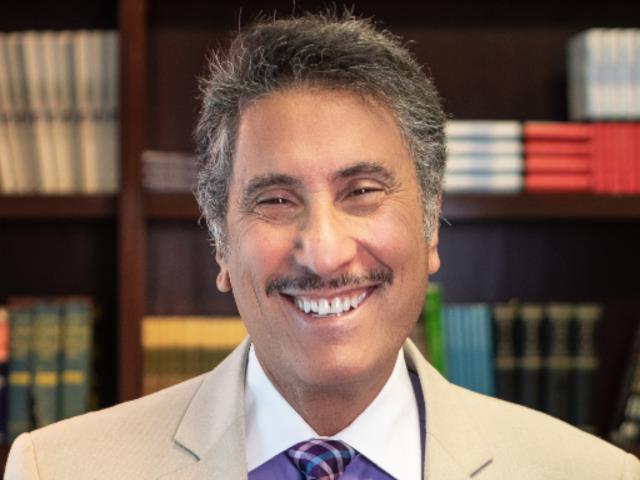
Perspective about God’s patience toward sin is what you’ll hear from Bible teacher, Dr. Michael Youssef, on the next Leading The Way!
References
Dr. Michael Youssef: Our beloved friends, you know, as I get on the road, and I'll meet so many of you. And you tell me, how long you have been watching or listening to Leading The Way for years. And you wanted to give financially in support of this ministry and our global impact for the Gospel of Jesus Christ. But you haven't been able to focus on it, or take the time to just write the check, or go online and make the donation. Now, I'd like to ask you to stop and do that right now. Our ministry together is more important now than ever before. Our greatest opportunity to make a real lasting impact and difference for the cause of Christ is now. And as you know, this is my labor of love. I have no financial consideration with Leading The Way whatsoever. I give it all of my time now, full-time, literally. So would you join me in worshiping the Lord through giving. Souls will be in heaven because of our partnership. I encourage you to give right now. You won't regret it. In fact, it will bring you great joy to know that your dollars are impacting lives. Visit LTW.org for details. That's LTW.org. Thank you in advance. God bless.
Guest (Female): Thank you for joining Dr. Michael Youssef for Leading The Way Audio. Did you know that Dr. Youssef is the author of more than 50 books? Each one points readers toward a deeper walk with Christ and practical biblical challenges to engage with life and culture. Check out available titles and Dr. Youssef's current special offer at ltw.org. Or call us and speak to a ministry representative at 866-626-4356. Now, coming up next, Dr. Youssef continues his practical series called Enduring Wisdom. Join me in listening as Dr. Michael Youssef begins today's teaching.
Dr. Michael Youssef: No one can deny the universality of pain and suffering. No one. We all experience it. Even the believers in the Lord Jesus Christ, those who are redeemed by his precious blood, they suffer. Why? Because we still live in this sinful, fallen world. But unlike what happens to the non-believers, when suffering comes uninvited and unwelcome to the believers in the believer's life, it is not judgment. It is not God's judgment. And so I want to give you four things as to why a believer suffers in this life. First, it is to purify us. It is to purify us as gold and more than gold, actually, more precious than gold. According to Peter in 1 Peter 1:6-7, he said, "You greatly rejoice in your salvation." We rejoice in that we are saved, and we are eternally forgiven, and we are on our way to heaven. He said, "You rightly so, you greatly rejoice. Keep on rejoicing." Even though, can you say that with me? Even though you suffer for a little while to purify our faith, being more precious than gold. Secondly, the second thing I want to tell you about suffering. When it is not the consequences of anything we've done, and suffering comes, what it does, it presses us deeper and closer to the heart of God. Second Corinthians chapter 1, verses 8 and 9, Paul speaking of his suffering. He suffered so much, but then he comes at a point in his life. Second Corinthians 1:8, he said, "Our affliction was excessively beyond our ability to bear." Think about this. The guy who has been through so much, he says, "But this affliction that I'm going through right now," he said, "excessively beyond our ability to bear. I can't take it." But why? He gives us the answer. Thank God I don't have to come up with the answer. So he goes on to say, "so that," "so that we should not trust in ourselves, but in the God who raises the dead." For the lovers of the Lord Jesus Christ, any form of suffering should make us long for heaven. It should make us long for heaven where there is no suffering, no pain, no tears. The third thing I want to share with you, why God allows suffering for his children, the believers, is that so we might have compassion with others who suffer. It's my testimony that my greatest times of growing in Christ and through Christ, are the times of my brokenness and affliction. It is the times when I am in the valley, not on the mountain top. God allows that so he can draw us closer to him. Fourthly, when affliction takes place in a believer's life, it is a preparation for bearing more fruit. More fruit. More fruit. It is for making our testimony more effective. And so don't waste your affliction. Don't waste your suffering. Don't waste your pain. Let it polish your testimony. Let it sharpen your testimony. I think you know this, but it's worth remembering. That for non-believers in the Lord Jesus Christ, this life is as good as it's ever going to get. But for us who know and love the Lord Jesus, this is as bad as it's going to get. Can I get an amen? Because we have a heaven to look forward to. One more thing before I get to my text. The Jewish people in the time of Jesus who were listening to him and hearing him, they've always been taught by some rabbis that all calamities, all affliction, all suffering is a result of sin. And so, as soon as they see somebody afflicted, "Oh! He must have done something bad." She must have done something bad. And our Lord Jesus Christ is trying to correct them here. In fact, you see that clearly in Job's friends, so-called comforters. You know what I'm talking about? Well, he says, "I examine my life." And then this is, "God permitted this for his own." "No, no, no, no, no. You must have done something wrong. You're bad. You did something wrong." And these so-called comforters, miserable comforters. But that's what they were taught by some of the rabbis through the years. And our Lord Jesus Christ is trying to correct all that. In John chapter 9, a man born blind, just think about this, born blind. You know what the disciples asked? "Who sinned?" "Did he sin? Where did he sin? In the womb? Did he sin or his parents sinned? Somebody sinned, that's why he's blind." You see, that is the false belief system, that's the falsehood that some of those rabbis were teaching. And our Lord Jesus Christ was trying to put things straight. Trying to explain God's word accurately. And Jesus is telling them, "Listen, calamities does not always always always or all the time mean that it is a punishment of the wicked." Although those who suffer death are no more sinners than those who survive. In Luke chapter 13, Jesus makes that very, very, very clear. Namely, that we all live on borrowed time. All of us. And the reason God withholds total judgment is because he is merciful and he gives us one more time for repentance. He is patient. God's patience should never misinterpret it as tolerance of sin. God's patience must never be taken for granted. God's patience must never be taken as God's approval of sin. God's patience is because he always longs for people to recognize their stubbornness and their sinfulness and repent. And that's what we're going to see in the text today. Beloved, God's perseverance with the fig tree in this parable that I'll be sharing with you in a minute. It is his longing. Longing for them to produce the fruit of repentance for every one of us. The words in verse 1 are very significant because it says, "Now on the same occasion," this is continuation from chapter 12, "when they heard Jesus talking about the fire of judgment." And the fact that that fire of judgment is coming to the Jews and Gentiles alike, because they thought, "Oh, that's that's for the Gentiles. We're we're the chosen people. Nothing can happen to us. Doesn't matter even how we live. God is going to protect us." So when they heard this and that kind of really goaded them. They goaded their self-righteous, pompous attitude, taking God for granted. Taking the grace of God for granted. And so they asked Jesus about the current disasters. Now, obviously, these are the headlines in the Jerusalem Herald. And they held the headline in the newspapers to Jesus of these two things that have been happening right at that time. One incident, it took place when Pontius Pilate, that Roman governor, that murderous, coward man who ordered the slaughter of a group of Galilean protesters. They were protesting against the Roman occupation. He literally chopped their heads off. And such incidents, by the way, they were very common. They were very common by this ruthless and bloodthirsty governor. Probably the slaughter of these protesters took place around the same time as Passover. You say, "How do I know this?" Well, simply because Passover is when the Jews came to the temple and they offered their sacrifices. And the priests offered these sacrifices, and the blood of the animals will be flowing down. When he murdered them in the temple, their blood got mixed with the blood of the sacrifices. So great was that slaughter and tragedy. The other tragedy was that it took place when 18 people were standing under the Tower of Siloam. That's about just outside of the southwest side of the wall of Jerusalem. And suddenly, that tower collapsed. And those 18 people who were standing under it, they all were killed. One disaster was man-made. Another disaster was a natural disaster. But given their faulty belief system, they immediately jumped to erroneous conclusions. And here's the worst part, they wanted Jesus to agree with them. But far from agreeing with them, Jesus sets them straight. And he points to two very important issues. Don't miss them. Don't miss them. Two very important things that he points to them. First, that what truly matters, what truly matters is repentance. Is repentance. And I'm going to explain that in a minute. And secondly, that God's patience, listen to me, God's patience with the non-repentant sinner has a limited time. It has an expiration date. I'm going to explain that again in a minute. First, he said, verse 2, "Do you think that these Galileans were worse sinners than the others because they suffered this way?" Translation: "Don't be smug. Don't be self-righteous. Don't pat yourself on the back and say, 'Oh, I'm good. I'm better than they are.'" Listen to me. I truly believe that Jesus' answer caught them all, including the disciples, by surprise. The word "no" here is in the emphatic position. "I tell you, no!" That's the emphatic position. Beloved, it is true that sometimes God immediately judges wickedness. I mean, right away. Sometimes he does. We see that in the book of Acts chapter 12, when Herod was allowing people to worshiping him as God. And the next thing, flesh-eating worms were just devouring him. Right on the spot. Sometimes God does that. Something else you need to know. There are also built-in judgments in sinful behavior. It's built in. God doesn't bring it from the outside. It's built in the system. It's built in it. If I become sexually promiscuous and I get sexually transmitted diseases, it's because it's built in. God didn't do that. It's built in the system. If I am commit a crime and end up in prison, it's a judgment that's built in the system. It's there. It's the consequences of the judgment that's built in of a sinful behavior. But these two events here, not the sort of built-in judgment. This is not the built-in suffering. This is not the built-in experiencing pain because of sin. No. There are calamities that befall all people without discrimination. Christians, non-Christians, everybody. Look at COVID-19. The point our Lord is making here is this: The ones who died are not worse sinners than the ones survived. The reason God allows sinners to live so that they may respond to his merciful invitation. Beloved, God is gracious. God is merciful. God is patient because he longs for them to repent. It's the longing of his heart. "I tell you, no! Unless you repent, you likewise shall perish." In other words, take these calamities as God's loving warnings. Take these tragedies as God's gracious alarm bell that is ringing to wake you up from your stupor. All tragedies must be seen as a warning to everyone to turn to the Lord and escape the judgment that is coming upon the world. He's pleading with them and saying, "For your own sake, for your own sake. Let any tragedy be a forewarning for you. Be forewarned that judgment is coming upon rebellious people. Be forewarned that unless you repent and turn to Christ for forgiveness, you will suffer worst fate, eternal fate. Be forewarned that God's eternal judgment is coming to everyone who refuses the offer of salvation that comes from the cross of Calvary." In fact, those who have heard the warning, but they did not heed the warning, they're going to pay a heavier price. Eternal judgment. Their judgment will be more severe, more tragic, unending, unending. Twice Jesus repeats the phrase "unless you repent, unless you repent" in verse 3 and in verse 5. What does repentance mean? A lot of people who really have a confused understanding of what repentance is. They confuse it with feeling bad about what they've done. They think that's feeling bad about it, that's repentance. It is not. Others confuse repentance with an emotional reaction of remorse. Having remorse about what you, that's not repentance. That's why I want to make that very clear. There are two elements to repentance. First, a person, every person, every human being on the face of the earth, must recognize that he or she is a sinner and they have offended a holy God. Born with sin, practicing sin. As such, they are heading for a Christless eternity of suffering and turmoil. Not because God is capricious or vindictive. No, no, no, no, no, no. But because hell, hell is the natural destination of those who offend a holy God. Therefore, you must agree with God. You must agree with God. "I am a sinner." But that's only the first element. Don't stop there. Turning away from sin is only the first element. Turning to Christ is the second element. Turning from sin, yes, but you turn to Christ. Turn to Jesus as the only one who can save you from that dreadful fate. Repentance is not just turning from sin, but turning to the only one who not only saves you from sin, but gives you power over sin in this life. Then our Lord moves in to give us an illustration, a story, a parable. The story illustrates our precious Lord's amazing patience. He tells us how his loving patience in calling sinners to repent one day will run out. Will run out. It shows us how he's persevering and persisting in mercy. But one day, that's going to come to an end. I call this an expiration date. And so to illustrate this, he talked about a fig tree. A landowner owned a beautiful garden. And he comes in, in the middle of the garden, he plants a fig tree. And he plants it well. The fig tree is mentioned at least 50 times in the Bible. Some of these fig trees can grow as high, they're not supposed to be high, but some of them can grow as high as 25 feet. And in addition to the delicious fruit of the figs, the trees have served as an excellent source of shade from the scorching heat of the Middle East. The gardener took very good care of that fig tree. He protected the fig tree. He provided for the fig tree. He placed it in a great location. He watered it regularly. He fertilized it regularly. And yet, to his dismay, he comes in season after season, no fruit. No fruit. This tragic turn of events causes the owner to be perplexed and to be frustrated at the lack of fruit. That tree has tried his patience. And my pleading with you, do not keep on trying God's patience, because that patience one day is going to run out. Verse 7. The owner tells the gardener, "Cut it down. Cut it down. Why should it keep on sapping the nutrients and the sun and the water and stubbornly refusing to produce fruit of repentance?" The gardener pleads with the owner. "Give me one more year. Give me one more opportunity." Beloved, this is the Holy Spirit speaking to God the Father and saying to God the Father to give you one more chance. To give you one more chance, so that Holy Spirit may speak to your heart directly one more time. So that a friend may speak to you one more time. So that you may hear that loving invitation one more time. So that you may be forewarned one more time. So that you may hear.
Related Episodes
Jesus Divides
Thursday, October 1
Be Ready
Wednesday, September 30
Don’t Worry
Tuesday, September 29
Related Videos
About Leading The Way
Along with partners committed to changing the world, Dr. Michael Youssef is leading the way for people living in spiritual darkness to discover the light of Christ. By passionately proclaiming uncompromising Truth through every available form of media, this international team of experts is uniquely providing hope that is revolutionizing lives around the world.
What began as a small local radio ministry in 1988 has grown into an international ministry reaching millions for Christ, including a vast audience in the Muslim world seeking Truth in closed countries. Dr. Youssef's Biblically-based programs are broadcast in more than 28 languages to audiences across six continents. His books, MY Journal magazine, and daily e-devotionals continue to minister to a global audience. Leading The Way utilizes cutting-edge technology to advance the Gospel. Its solar-powered Navigators are reaching into remote villages, and the ministry's KINGDOM SAT TV channel—launched by Dr. Youssef in 2009—is reaching into the Middle East with programming in English, Arabic, and French. Field Teams follow up with viewers, including those in restricted areas, to lead the lost to Christ, disciple new believers, and support the underground Church.
Dr. Youssef and the Leading The Way team are committed to proclaiming the Good News of Jesus with the lost and equipping believers to grow in Christ. Learn how you can partner with this unique ministry today.
About Dr. Michael Youssef
Michael A. Youssef, Ph.D., is the Founder and President of Leading The Way with Dr. Michael Youssef, a worldwide ministry that leads the way for people living in spiritual darkness to discover the light of Christ through the creative use of media and on-the-ground teams. His Biblically-based teaching programs are broadcast more than 18,000 times per week in multiple languages around the world. He is also the Founding Rector of Church of the Apostles in Atlanta, Georgia, and founder of the AWAKE America prayer movement.
Dr. Youssef was born in Egypt and lived in Lebanon and Australia before coming to the United States. In 1984, he fulfilled a childhood dream of becoming an American citizen. Dr. Youssef holds theological degrees from Moore College and Fuller Theological Seminary and a doctorate in cultural anthropology from Emory University. He has authored more than 50 books, including popular titles Saving Christianity?, Life-Changing Prayers, Is the End Near?, How to Read the Bible, Heaven Awaits, and God’s Final Call. He and his wife reside in Atlanta and have four grown children and 15 grandchildren.
Contact Leading The Way with Dr. Michael Youssef
Mailing Address
Leading The Way
P.O. Box 20100
Telephone:
(404) 841-0100
Toll-free line
(800) 337-5323