Divine Invasions – Part 1
Ministries > Pathway to Victory with Dr. Robert Jeffress
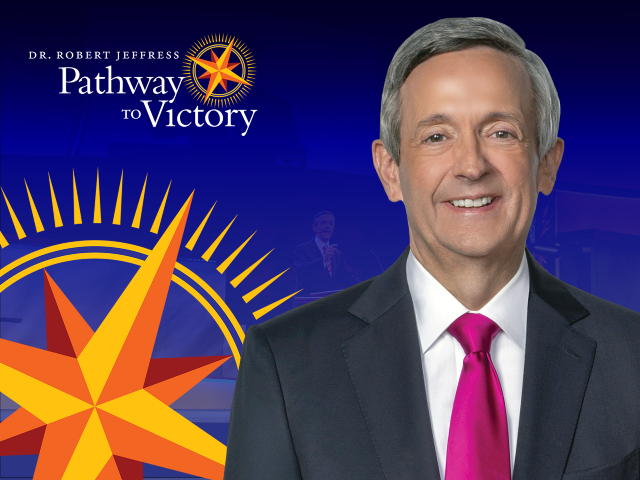
Most of us live with a quiet question tucked in the back of our minds. When the diagnosis comes, when the money runs out, when we’re truly cornered—can we ask God to step in? Dr. Robert Jeffress considers whether we still experience God’s miracles in our lives today.
To support Pathway to Victory, go to ptv.org/donate.
Guest (Male): Hey podcast listeners. Thanks for streaming today's podcast from Pathway to Victory. Pathway to Victory is a non-profit ministry featuring the Bible teaching of Dr. Robert Jeffress. Our mission is to pierce the darkness with the light of God's word through the most effective media available, like this podcast. To support Pathway to Victory, go to ptv.org/donate or follow the link in our show notes. Now, here's today's podcast from Pathway to Victory.
Dr. Robert Jeffress: Hi, this is Robert Jeffress, and I'm glad to study God's word with you every day on this Bible teaching program. On today's edition of Pathway to Victory. You know, we read in the Bible great stories like the parting of the Red Sea, or the feeding of the 25,000, or the raising of Lazarus from the dead, and we think, well, that's really nice. God did some great things in the past, but God doesn't work in the same way today that he used to work. Is that true? Does God still work in miracles today?
Guest (Male): Welcome to Pathway to Victory with author and pastor, Dr. Robert Jeffress. Most of us live with a quiet question tucked in the back of our minds. When the diagnosis comes, when the money runs out, when we're truly cornered, can we ask God to step in? Today on Pathway to Victory, Dr. Robert Jeffress considers whether we still experience God's miracles in our lives today. But first, let's take a moment to hear some important ministry updates.
Dr. Robert Jeffress: Thanks, David, and welcome again to Pathway to Victory. Let me begin this brand-new teaching series with a question. Have you ever looked back on a moment in your life and realized it couldn't have been a coincidence? A need met that no one could have met but God. A close call you walked away from and you still can't explain why. Well, I'm convinced those moments are more than luck. They're what I call divine invasions. Today we begin a brand-new series I've titled Divine Invasions. And I want to address this question: Does God still work miracles today? I believe he does. And over the coming days, I'll show you from scripture how to recognize his hand, how to boldly ask for his intervention, and what to do when the miracle you've prayed for hasn't come. I've poured this teaching into my brand-new book, also called Divine Invasions. It's hardcover, and a book I believe you'll want to pass along to a loved one, perhaps a son or daughter. My book is yours when you give a generous gift to support the ministry of Pathway to Victory. Plus, as an added bonus, I'll include eight Divine Invasions encouragement cards that you can carry with you. Each card pairs a scripture verse with a reminder that God is still at work in your life. You'll be surprised how you'll begin to spot the divine invasions happening all around you. More details about my book and other resources are coming later in the program. Right now, let's open our Bibles and consider the first of seven messages about divine invasions. The day of my father's funeral was also the day I almost died. I'll never forget the service we had, the graveside service up in Van Alstyne, Texas. It was raining cats and dogs that day, and after the service, the funeral director offered to take our family back to our family home in Richardson. As we were turning off of Arapaho Road onto our street, he was trying to make the turn on an unprotected green light. But he wasn't looking at the light. He was talking to me about the ups and downs of the funeral business, and we were engrossed in conversation. But I couldn't help but notice as he was making the turn, a large red Cadillac barreling down the road coming the other direction, headed right for us. I braced for impact, I shouted out his name, and our family members in the hearse shrieked. And then, everything moved into slow motion. Have you ever had that happen? Something happened and it just goes to slow motion. And I remember watching that car coming toward us, and I remember my last thought was, isn't this ironic? I'm going to die on the day of my father's funeral. I watched, and I can't explain what happened next. That Cadillac did not slow down one bit when it saw us. We didn't hesitate, we didn't slow down, but somehow, I watched that Cadillac go right past us and ram into a light pole, obviously killing anybody that would have been in the front seat. What happened that day? I don't know, other than God directly intervened. That wasn't the day I was scheduled to leave this world. Maybe you've had that kind of experience before. What I call a divine invasion. A time that God supernaturally intervened in your life with supernatural power, or protection, or provision, or physical healing. Have you had that kind of divine invasion? They're not common. If they were part of everyday life, they wouldn't be called miracles, they'd be called normicles. We recognize that they are few and far between, but the question is, do they happen at all? Well, as we start today looking at miracles, I think it's good to ask that question. Does God still work in miracles today? You know, we read in the Bible great stories like the parting of the Red Sea, or the feeding of the 25,000, or the raising of Lazarus from the dead, and we think, well, that's really nice. God did some great things in the past, but God doesn't work in the same way today that he used to work. Is that true? There are two views of thoughts on that among Christians. Some people subscribe to the belief called cessationism. Cessationism comes from the word cease. It says that God has ceased to do supernatural miracles in the world today. Yes, he did them in biblical times because there was no Bible to authenticate messengers or their messages. But now that we have the Bible, we no longer have a need for miracles. Cessationism. The other extreme view is continuationism. And the idea that God continues to act today in just the same way he did in biblical times. The gift of miracles wasn't just given to Jesus or to the apostles. It's intended for every Christian. We ought to be continually experiencing miracles. Now, which view is correct? The cessationist view, which by the way is a view that I was taught in one of the seminaries I attended. They were cessationists. There are no more sign gifts or any kind of miracles in the world today. Or is continuationism the right view? Well, I'm going to tell you in just a moment. But let me first of all put this question in perspective. You know, there are a lot of things that Christians can disagree on. There are what we call essentials of the faith and there are non-essentials of the faith. Under the essentials of the faith, we put things like the deity of Christ. You have to believe that to be a Christian. The blood atonement of Jesus for our sins. The exclusivity of Christianity. That Christ is coming back again. The resurrection from the dead. Those are essential beliefs. You can't be a Christian without believing those. But there are some non-essential beliefs of the Christian faith. For example, the issue of how old is the earth? Is the earth 6,000 years old or is it 6 million years old? Now some of you are going to write me letters this week, but I'm going to tell you, that is not an essential issue. But there are some people who think it's essential. They think you can't believe the earth is 6 million years old and be a Christian. And other people who say you can't believe the earth is 6,000 years old and not be a nincompoop. There are differing views on that. The same way with views about Bible prophecy. Now, yes, we have to believe that Jesus is coming back again. But how that works out, people have different views. There are different views of the rapture. Some believe like I do in a pre-tribulation rapture. Some believe in a post-tribulation rapture. You can believe in a post-tribulation rapture and be a Christian. You're wrong, but you can be a Christian who's wrong. We don't draw the line there. What about miracles? I put the miracles in the essential of non-essentials. You know, somebody once said, in the essentials, unity. In the non-essentials, diversity. And in all things, charity. We need to be kind to one another. But I put miracles not in the issue of essentials. But just because it isn't an essential belief doesn't mean it's not an important belief. When you face a problem, you need to know, can I go to God and ask him to dramatically and divinely intervene in my situation, or am I wasting my time? If I ask God for a miracle, is God going to say, I'm unwilling to do that today, times have changed? Or I'm unable to do that? I think what you believe about miracles affects how you pray and how you live. I want to say very clearly, I am no longer a cessationist. I was taught that, I don't believe it anymore. I don't believe God is out of the miracle working business. I believe God works miracles today, just as he did in biblical times. Here's what I believe has changed, and nobody says it better than Dr. Criswell when he said, I believe in faith healing, I just don't believe in faith healers. And I think that's the difference. I think God no longer uses intermediaries to perform miracles. God has eliminated the middleman, so to speak. He doesn't use individuals. He directly produces miracles in our life according to his will. And that's what we're going to talk about in this series. Should we and how do we expect divine invasions? Let me stop here and ask you a question. Have you experienced a divine invasion? Is there a time you can look back and see a supernatural answer to prayer in your life? Can you look back at a time and recall when somebody spoke exactly a word of encouragement that you needed to hear at that time? Can you look back to a desperate need you faced? A need that was met, a need that was only could be met by the hand of God? Can you look back at something that happened in your life that appeared to be a coincidence, but the more you thought about it, the more you looked at it, you realized it couldn't have been a coincidence. It had to be the hand of God. My hope is that in this series, Divine Invasions, you will be encouraged to see God at work. You would ask God to be at work, not only in the world, but in your life as well. Well, that brings up the question, what is a miracle? You know, we use that term miracle all the time today. We have miracle whip, miracle glow, miracle wipes. Everything's a miracle. Well, what is a true biblical miracle? As you look in scripture, you find that there are four Greek words that are translated in some way as a miracle. Four Greek words, and then there's a fifth word that although not used in the Bible, its principle is found throughout the Bible. The first word is the word that is translated mighty works. It's the Greek word dunamis. We get our word dynamite from it. A mighty work. That's a supernatural work that cannot be duplicated by natural agents. And there are two passages in the Bible I want us to look at briefly that deal with mighty works, dunamis. One is found in Acts chapter eight, and it has to do with Simon and Philip. Simon was a false prophet, and we find his work in verses 9 to 11. Now there was a man named Simon, who formerly was practicing magic in the city and astonishing the people of Samaria, claiming to be someone great. And they all from the smallest to the greatest were giving attention to him, saying, this man is what is called the great power of God. And they were giving him attention. Why? Because he had for a long time astonished them with his magic arts. Now we don't know exactly what the source of those magic arts were. Maybe Simon was simply performing illusions, the Jim Wyckoff kind of magic that we all enjoy, but it's an illusion. But it's not just that. The Bible indicate he was getting his power from a much darker source. It was demonic, it was satanic. And so he was attracting attention because he was able to perform that kind of magic. In comes the evangelist Philip. Look at verses 12 and 13. But when they believed Philip preaching the good news about the kingdom of God and the name of Jesus Christ, they were being baptized, men and women alike. Now no Baptist preacher worth his salt can pass over this without making an obvious point. Circle the word believed in verse 12. They believed. Then circle the word baptized. They were baptized. And then draw an arrow from believed to baptized. There is the biblical principle you find over and over again. People believed the gospel and then were baptized. It was always believe and be baptized. Not one time in scripture was anyone like an infant ever baptized first and then they believed. This idea of getting a six-month-old and putting them in a little dress or a little suit and having a priest or a pastor throw water on them, that is absolutely nothing to do with Christianity. In the Bible, it is always believe and be baptized. But I digress, pardon me for a moment. Philip preached the true gospel, and the people believed and were baptized. And notice verse 13, even Simon himself believed, and after being baptized, he continued on with Philip. Why? He observed the signs and great miracles taking place and was constantly amazed. The other instance of that word dunamis is found in Acts 19 verses 11 and 12. It's Paul's preaching at Ephesus. Ephesus had one of the seven wonders of the world, the temple of Artemis or Diana. It was known for its sophistication, but also known for its practice of demonic activity and black magic. And so what did God do? He put a true prophet, Paul, there. Look at verses 11 and 12. God was performing extraordinary miracles by the hands of Paul, so that, get this, handkerchiefs or aprons were even carried from his body to the sick, and the diseases left them and the evil spirits went out. Now, what is he talking about? Handkerchiefs, not these little decorative things like I wear. It was a handkerchief that was used to mop off the sweat. It's literally means sweat clothes, what we would call sweat bands. And they took the sweat clothes off of Paul or his apron, something that tradesmen like tentmakers would wear in their work. Take them off of Paul's body and put them on those who were sick and the sick would be miraculously healed. Now there was nothing magic about that. God was using that to signify that Paul was a legitimate apostle, and there is absolutely no hint in scripture that anybody else has been given that ability. So if you ever tune into Pathway to Victory, and you see them offering for $39.95 handkerchiefs from Pastor Jeffress soaked in sweat for your gift, turn it off. Just say the pastor's gone over the deep end, we'll pray for him. You don't pay attention to me because of that. My authority comes from the word of God. And the way we judge a prophet today is his fidelity to scripture. But in biblical times, that was one of the powerful works that was done. A second word that is used in the Bible for miracles is signs, semeion in the Bible. It simply refers to supernatural works that tell us something about the performer of those works. It's something lesser that points to something greater. For example, one of the signs of a true apostle, remember there was no scripture in the New Testament times, one of the signs of the apostle was his ability to perform signs. Second Corinthians 12:12. The signs of a true apostle were performed among you with all perseverance, by signs and wonders and miracles. In Isaiah 11 and chapter 35 as well, there are signs that the Messiah would perform. One way they would know that the Messiah had come would be his ability to perform certain signs. In fact, the Gospel of John, which is different than the synoptic gospels, the Gospel of John is not chronological. It's built around seven signs that Jesus performed that only the Messiah could perform. It was the way that Jesus was identified as the Messiah. The third word is translated wonders, teras in Greek. It's a word that means literally to be open-mouthed, to stand agape. Have you ever seen something that just took your breath away? You just stood there and went, "Ah, I can't believe it." That's what a wonder is. The word refers to the response of people to miracles. For example, Peter and John, when they went to the empty tomb and saw that it was empty, but the grave clothes were intact, the Bible says they were amazed. They were open-mouthed as they watched that. In Acts 2:22, Peter said this in his sermon at Pentecost, men of Israel, listen to these words, Jesus the Nazarene, a man attested to you by God with miracles and wonders and signs, semeion, which God performed through him in your midst, just as you know. In Hebrews 2 verses 3 and 4, after it was first what? After the gospel was at the first spoken through the Lord, it was confirmed to us by those who heard, God testifying with them both by signs and wonders and various miracles and gifts of the Holy Spirit. That's what the word means. It refers to the amazement that people experience when they see a true miracle. Fourthly, the word works, or ergon. This is a word, works, ergon, that is used almost exclusively of the miracles Jesus performed. The Bible said there were certain miracles that the Messiah would perform, and this would be like a neon sign pointing to Jesus, he's the one. We see a great illustration of this in Matthew 11 verses 2 to 4. Remember John the Baptist? He was Jesus' cousin. He was the one who was the forerunner. The Old Testament said he would proclaim that the Son of God had come. Jesus said there was nobody greater in the kingdom of God than John the Baptist. And yet did you know what? John the Baptist had moments that he doubted the Messiah. If you ever have moments of doubt as a Christian, don't condemn yourself. Don't think it means necessarily that you're not a believer. Even John the Baptist had doubts, and that's why in Matthew 11:2-4, it says, when John, while in prison, heard of the works of Christ, he sent word by his disciples and said to him, are you the expected one or should we look for someone else? John's disciples were being polite to Jesus, but they said, Jesus, you know, you claim to be the Messiah, and yet your own cousin, the person who believed in you most, is in prison. Is it that you don't care, or maybe you're just unable to help him? Should we maybe look for somebody else? A little more qualified? That's what they asked Jesus. And Jesus didn't lambaste John. He didn't condemn him for his doubt. Instead he said, go back and report to John what you hear and see. The blind receive sight and the lame walk, the lepers are cleansed and the deaf hear, the dead are raised up and the poor have the gospel preached to them. All of those are quotations from the Old Testament about what the true Messiah would do. Go back and tell John these things are happening. He was very patient and very compassionate with John in his doubt. But the point is that these works were given to Jesus to do to prove he was the Messiah. In John 10 verses 37 and 38, John wrote quoting Jesus, "If I do not do the works of my Father, don't believe. But if I do them, though you do not believe me, believe the works, so that you may know and understand."
Related Episodes
Miracles Of Power – Part 1
Wednesday, October 7
Divine Invasions – Part 2
Tuesday, October 6
How Can I Prepare For My Journey To Heaven? – Part 2
Friday, October 2
Related Videos
About Pathway to Victory
On each daily broadcast, Dr. Robert Jeffress provides practical application of God's Word to everyday life through clear, uncompromised Biblical teaching. Join him today on the Pathway to Victory!
About Dr. Robert Jeffress
Dr. Robert Jeffress is Senior Pastor of the 16,000-member First Baptist Church of Dallas, Texas. Dr. Jeffress is a FOX News contributor and appears regularly on FOX News Channel’s FOX & Friends , FOX News @ Night , Hannity , and The Faulkner Focus and on the FOX Business Network. Dr. Jeffress has made more than 4,000 guest appearances on television programs that include HBO’s Real Time with Bill Maher and Trinity Broadcasting Network’s Praise .
Established in 1996, Pathway to Victory serves as the broadcast ministry of Dr. Jeffress and exists to pierce the darkness with the light of God’s Word through the most effective media available. The daily radio programs air on over 1,100 stations, and the daily television program can be seen on over 11,000 cable and satellite systems, including Trinity Broadcasting Network (TBN), where it has been the #1 most-watched program since 2020. Pathway to Victory broadcasts are translated into seven languages and reach 193 countries throughout the world in addition to all major markets in the USA.
Contact Pathway to Victory with Dr. Robert Jeffress
Mailing Address
Pathway to Victory
PO Box: 223609
Dallas, TX 75222-3609
Telephone Numbers
Customer Service: 214.969.2400
Toll-Free Radio Offer: 866-999-2965