The Missing Messiah
Ministries > Family Talk with Dr. James Dobson
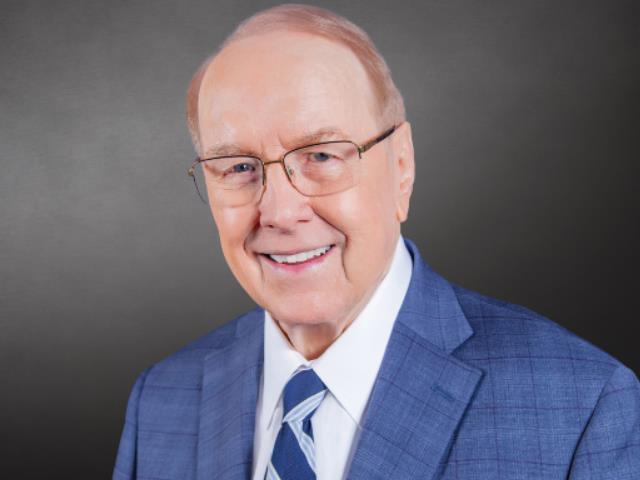
Many Christians know a great deal about Jesus but wouldn’t recognize Him if He walked into the room. On today’s edition of Family Talk, Roger Marsh sits down with pastor and author Mark E. Moore to discuss his new book, The Missing Messiah. Moore explores how culture has reshaped Jesus into a comfortable image, and what genuine Christian community truly requires.
Announcer: Welcome everyone to Family Talk. It’s a ministry of the James Dobson Family Institute, supported by listeners just like you. I’m Dr. James Dobson, and I’m thrilled that you’ve joined us.
Roger Marsh: If Jesus walked into the room right now, would you actually recognize him? What if your Jesus is shaped more by the culture than by what we read in the words of scripture? These are the questions that our guest today here on Dr. James Dobson’s Family Talk have posed in a brand new book. It’s called *The Missing Messiah: The Jesus We Can No Longer Ignore*. It’s a fascinating read that makes you reflect on who Jesus really is, not only in the world but also in your life. Welcome to Dr. James Dobson’s Family Talk, the broadcast division of the Dr. James Dobson Family Institute. I’m Roger Marsh and delighted to welcome for this segment Mark Moore to the program today. Mark serves as teaching pastor of Christ’s Church of the Valley in Phoenix. He previously spent more than two decades as New Testament professor at Ozark Christian College. His life’s passion is to make scripture accessible and relevant to people who are trying to make sense of Christianity, and boy, that seems to be quite the endeavor these days for so many people. Mark teamed up with fellow pastor Kyle Idleman to write this new book, *The Missing Messiah*, and I’m really looking forward to diving into the subject a little bit more. So, Mark Moore, welcome to Dr. James Dobson’s Family Talk. It’s good to have you on the program, especially discussing this important topic today.
Mark Moore: Thanks, Roger. I actually did not hardly recognize myself. You made me sound so good. Thank you.
Roger Marsh: Well, scripture says, let another man praise you, so I’m here to be your guy. Let’s talk about this whole idea. Cultural Jesus versus the Jesus that we know who is our Lord and Savior and redeemer of all mankind. We have a big problem I see in the church right now where there are a lot of people who are saying, "Lord, Lord," and professing faith in Jesus Christ, but they really don’t. I mean, if Jesus did walk into the room, they wouldn’t recognize him. What was the heartbeat when you and Kyle Idleman sat down and said, "This is a book that needs to be written right now"?
Mark Moore: It actually started before I even talked to Kyle about it. A friend of mine came and introduced two ideas. One was kind of familiar to me. The other was brand new. The familiar idea, John 17:3, Jesus defines eternal life as knowing God the Father and the Messiah he sent. Okay, so eternal life, and most Christians don’t feel this. Like, I didn’t feel it this morning. Eternal life is not what you get when you get to heaven. It’s what you get when you get Jesus. It’s here, it’s now. I think that’s part of the problem that what we’re missing is eternal life today, here, now, when it’s at our fingertips. The other thing, Roger, that he introduced me to, and this blew my mind, he said, "Christ and Messiah are not the same thing." And I said, "Well, excuse me, but they are. I mean, I’ve done my homework in the Hebrew and Greek, and *Mashiach* in Hebrew means the anointed one and *Christos* in Greek means the anointed one." He said, "Yes, in the dictionary, they’re the same. But they’re not the same on the street. So many people talk about Jesus Christ as if it’s his last name. We’ve lost the meaning of Messiah." And I love how you introduced it. Many people say, "Lord, Lord," but they don’t really mean it. So what we’ve lost is a Lord, a king, a Messiah, and all we are left with is a savior. Now, that’s enough to get us to heaven. It may not be enough to make us flourish in our days.
Roger Marsh: Boy, that’s a powerful thought when you think about the number of people who have knowledge of Jesus. It’s one of those things where if you’ve ever been, and I’m sure you’ve had these situations come up in your world as well, where you’re at an event and there’s someone who is of note who is going to be the speaker there or maybe it’s an autograph signing, whatever it is. You hear people who are waiting to be around this person and they’re talking about this person. They know all about all the movies he’s been in, all the songs she’s recorded, this, that, and the other thing. Then that person walks in the room and you watch that same person who knew everything about this person turn and look and kind of become gob-smacked like, "Uh, what do I say?" because then you begin to realize, yeah, you talk about them, but you don’t really know them. Have we created, and I’ll draw on Kyle’s writing a little bit, have we created a fan culture in the church where we wouldn’t recognize the Messiah if he walked in the room simply because we’re so busy being fans of his?
Mark Moore: I think that’s a significant part of it, and it’s actually kind of worse than that. We haven’t just made him fans. Again, Kyle introduced the Build-A-Bear concept in chapter one. We have made a Jesus, and a part of this I’m not even critical of because we need to be able to relate to him, but we’ve made a Jesus that looks a lot like the physician we need to heal our boo-boos rather than the Lord we need to send us out to our significance and our calling. I think the real problem is not merely the fan culture but also we have made a Jesus in our own image and then worshipped that instead of him.
Roger Marsh: Mark Moore is my guest today here on Dr. James Dobson’s Family Talk. We’re discussing his brand new book called *The Missing Messiah: The Jesus We Can No Longer Ignore*, and we have a link for the book up at drjamesdobson.org. I love the way you described it. You actually have a chapter in the book called "Christ Is Not Jesus’s Last Name." I’ve heard that there was one famous comedian who had a routine where he said, "For the longest time, I thought my brother’s last name was," and he used the Lord’s name in vain. But anecdotally here in the culture, though, as Christians, we do need to really search for the actual Messiah, not the Sunday school Jesus or the Palm Sunday and Easter and Christmas Jesus that’s shown up in all the pageants. Talk about what that search involves. A lot of times people would say, "I’m looking for Jesus," but wait, I already found him, so why do I need to keep looking? Talk about how we make that transition from the guy who knows all about Jesus to actually start searching for the true Messiah.
Mark Moore: Hopefully this book is kind of an open door to begin the journey. That’s how you start is by actually looking at who the Messiah was. For all the Bible nerds out there, like you are my people, we put in some appendices that have all the prophecies about what Messiah would be and all the, not just the prophecies in the Bible, but the expectations from Jewish culture as well. So there’s a lot of background Bible nerd stuff to help us see what Jesus was really up to. If I were to simplify this, cookies down on the bottom shelf, I think there’s three things that we’re missing today because we’re missing the Lordship of Jesus. Yes, he’s our savior. We get it. We’re going to heaven. Good. But we’re missing him as a living Lord, and that manifests in three ways. One is when we think about salvation, we think about a distant future, going to heaven someday, and we don’t think about a partnership and an obedience to Jesus today. That’s a problem because we’re robbing ourselves of great joy and significance today. Second problem I see is that sin, if Jesus is your savior and not your Lord, sin becomes what he saved me from. It’s very personal and very individualistic. But if you read the prophets, and particularly the Messianic prophecies, sin was about social injustices, widows and orphans and foreigners and immigrants. If we allow ourselves to miss the corporate nature of sin because we’re focused on Jesus saving me, we will go to church and not go into the world and make a difference. And the last thing is we have made Jesus *my* savior. A savior is for me and not *our* king. When we individualize our faith, we screw everything up in the church. I’ll just give one example, maybe two. When you read the Bible, do you read it individually or corporately? Every book of the Bible was intended to be a corporate document, publicly interpreted. Here’s another one. In every church I’ve been to, the most individualistic time is communion. And yet that was intended to be communal. So living life alone and doing faith alone has robbed us of the power of the gifts of the Spirit, the fruit of the Spirit, and the fellowship of believers. That’s a problem.
Roger Marsh: Boy, it certainly is. And as we talk about the customization, I’ve heard guys like George Barna refer to what we have in the culture right now as this kind of syncretistic approach. Jesus is one of many options at the buffet table, and you get a little of him and a little Buddha and you put it all together, and that’s kind of what spirituality looks like to a lot of people. But you guys break it down a little bit further than that. I love your talking about Kyle describes it as a Build-A-Bear mentality or a Starbucks order or something like that. One of the quotes in the book, *The Missing Messiah*, even, "We select the soft hands that heal and comfort, but we don’t look at the calloused hands of a carpenter who made tables then flipped them over." That’s something that we have to reconcile as believers. I think about right now in the culture, there are a lot of people who are in the public eye who are professing faith in Christ, which is wonderful and hopefully living it out, which is even better. But then you get into an election year and you see a politician saying, "Hey, this is what I think Jesus is." One of your quotes from the book, *The Missing Messiah*, "We construct a partisan Jesus who conveniently agrees with our political platform." Talk about why we should be looking at that and saying, "Boy, if Jesus agrees with all my political points, then maybe I’ve created a Messiah that I like rather than knowing the Messiah who he really is."
Mark Moore: Roger, you have nailed one of the most obvious pain points of a Jesus that we make in our own image. This political divide, let me tell you why it’s an issue for me. The single most provocative statement Jesus ever made was "love your enemies." Period. He’s not just talking about Democrats loving Republicans or vice versa. He’s talking about Jews loving Romans that were invading, like, they were occupying their country. It was a poignant reality. And so if we can’t even start with love your enemy or go into all the world and make disciples, how are we going to be true disciples of Jesus? This divide, and the reason it concerns me at an even more visceral level is there’s a wonderful book called *The Righteous Mind*, not written by a Christian, but it identifies the five ways we make decisions. This is true of all humanity of all time. Of those ways we make decisions, those on the conservative right of every culture and time tend to give a balanced evaluation to all five. Those on the liberal left, again, of all culture of all time, tend to prioritize freedom and mercy. So what happens is if we don’t understand what the other is doing, we will not just miss good moral opportunities, we will miss the heart of Jesus. By dividing, our political divide is actually truncating our full experience with Jesus, and that to me is the most devastating thought. I want all of Jesus even if that requires all of me.
Roger Marsh: Well, even and especially since it does. Mark Moore is my guest today here on Dr. James Dobson’s Family Talk. *The Missing Messiah* is the new book. It’s up at drjamesdobson.org. I grew up in the church. My dad was a choir director. I mean, I just, we were there every Sunday. We were pan-denominational. Wherever we were called, we went. So I’m not Baptist or Lutheran or Presbyterian or anything like that. Whoever’s preaching sin and salvation and law and gospel, we’re right there. But I was very painfully aware of the fact that there were a lot of people who used to sing in the choir who were okay musicians and some people who were really gifted. But then I also, as I got older, began to realize there were a lot of folks who were there because they liked to sing and not necessarily because they loved the Lord. It got me thinking, I wonder how many of us look at the church and the congregations on the whole, and what is influencing the modern life in terms of who Jesus is, what the Christ is, who the Messiah is, is really more not the culture shaping us but what’s happening inside the walls of the church. You have a quote in your book where you talk about mastering the art of getting people ready for heaven but neglecting the invitation to bring heaven to earth. You’ve kind of been talking about that. Expand upon that if you will, how that miscommunication has really infiltrated and influenced modern church life.
Mark Moore: Well, you touched on something, Roger, that is close to all of us. We want a Jesus that’s comfortable for us. You’re not going to get away from that because humans are humans and we’re innately selfish and we innately have needs. God actually designed us to have those needs fulfilled. I want to be careful here because you say people came to sing because they liked to sing, not because they loved the Lord. It can actually be a very positive thing that the desires of your heart will draw you into good behavior. So the desire to sing can draw you into good behavior. What you’re observing, though, is like this is center lane of the book. I want to give all our listeners a simple litmus test to determine whether you are missing the Messiah. Okay, here it is. Go to your prayer life and just think through your prayer closet or your prayer list. How many of the prayers would fall, and I’m going to give you two categories, how many of your prayers fall into the category of "Lord, this is what I want from you," and how many fall into the category of "Lord, what do you need from me?" It’s a simple test, right? Personally, I’m still on the other side. Even though I wrote the book, I’m still working towards making Jesus a Messiah. But here’s why I think this is really crucial. I’m going to quote a secular psychologist, Jordan Peterson, has identified this in his own clientele as a psychotherapist. When someone is having mental health issues or they’re having depressive issues or whatever issues, he says the most important thing for you to do is become useful to someone else. Our happiness is dependent on being useful to other people. So when we talk about making Jesus Lord, that’s not just good theology, it’s good psychotherapy. And when our prayers say, "Lord, what do you need from me?" he can then engage us in the kingdom of God as part of his armory to expand the gospel around the world and at the same time, not only does Jesus advance and lost are found, but I find meaning and purpose. So making Jesus Lord is actually more important to your mental and spiritual health than making him your savior.
Roger Marsh: Boy, that is such a powerful statement. It immediately took me back personally, I’m sure a lot of our listeners are processing that. My son, who is the youngest of three in his family growing up, he had two older sisters. He was the last one, he if there’s a tough way to find a solution, Jake will find it, the most difficult way. Come up with a bloody nose and say, "When did that wall get here?" That’s Jake, okay? So but when he got his first job, his sisters had gone to work, restaurants and clothing stores and stuff like that when they were in high school. He was just really hesitant to get into it, and we were all kind of encouraging him to do it. He finally got a job at a restaurant as a food runner. He was the guy when the order was up, big party of ten people or whatever, put it all on the tray, take it out, get the orders right, that type of stuff. I texted him after his first day of work. I said, "How did it go today?" And he wrote back these words. He said, "Dad, it felt so nice to be useful." Wow. I thought, oh my goodness, I mean, I thought, he got it, right away. But as you were describing that whole thing, you see the benefit of it. As Christians, we are designed to serve others, and I think we see Jesus a lot more clearly when we are. Now, that’s not to say, and I know you’re not saying this in this book, *The Missing Messiah*, that, "Well, if you just go out and put in a good word for God today and do something good for the kingdom, then that means you can see the Messiah," but it really does help transfix us. It makes us more like him every time we are doing things that are useful for the kingdom in that second category of prayer.
Mark Moore: Yeah, and I love what you said about that, and let’s actually take that one step further because the greatest moral danger of our day, my opinion, is individualism. I mean, yes, there are certain sins that we can talk about, but our culture has been driving us for over 200 years into radical individualism. That isolation was punctuated in COVID with an 800% increase of mental health issues because we were isolated. This is the real "wow" is if you look at the stats, they investigated, the Barna Research Group investigated every category, religious, non-religious, rich, poor, black, white, Hispanic, Asian. The only group whose mental health improved during COVID was those that stayed faithful to the local body of a religious organization. What’s happening is with the algorithms that are driving everything from social media to AI, they are catering to us. So we have an avalanche of, how do we even say it, the zeitgeist, it’s in the air. We have an avalanche of impulses telling us, "It’s about you. It’s about your needs. It’s about your customization." If we don’t attend to the body of Christ, the value of this book is in knowing Jesus for sure. But the difference between a savior and a king is a savior is for you, a king is for a nation, and in this case, an international nation of believers in Yahweh the Messiah. When you’re not connected to a group of people, sociologists call it a symbiotic community, where I need you and you need me, and less and less people are, you are endangering not just your mental health but your physical health. What we know is that people who are disengaged from communities, they’re isolated, have, I believe it is a 24% higher rate of heart attacks, a 30% higher rate of strokes, a 32% higher rate of type 2 diabetes. And this is scary, 40% higher rate of dementia. Making Jesus Messiah and King is not just about getting to heaven. It is about living the robust life to the full here and now. So I don’t want to take us away from the biblical argument, but the biblical argument and the psychosocial argument turn out to be the same benefit.
Roger Marsh: Powerful, powerful insights from Mark Moore today here on Dr. James Dobson’s Family Talk. As we’re talking about *The Missing Messiah: The Jesus We Can No Longer Ignore*, the book is up at drjamesdobson.org. We are talking to parents and grandparents in particular who are wringing their hands. You should see the emails and hear some of the phone calls we get from not only parents but grandparents, too, who are watching their young ones and saying, "I don’t understand. I don’t understand what’s happened here." I mean, it’s a whole different vibe. It’s a whole different way of thinking, even the ones who are quote-unquote "good church-going Christian kids." It doesn’t make any sense. And I was reading the chapter in your book called "When Jesus Got Weird," and all of a sudden, I love that acrostic, by the way. Can you walk us through that? You’ve got Western Education, Industrialization, Riches, and Democracy. It really does help us understand why sometimes we can kind of culturalize our Christianity and then people would have really passionate disagreements about who Messiah really is.
Mark Moore: Yeah, those are the things that have marked us in the Western world, and we attain our personal values from those things. So by Western, we mean, in the Eastern world, people are more driven by shame than by guilt. The Western world’s more guilt than shame. The difference is guilt is when I cross a line, and it’s individualistic. You don’t smoke or don’t get drunk or don’t sleep around. Guilt is when you don’t live up to a line. You don’t meet your father’s expectation. It’s not sin per se, it’s like it’s the community orientation. In the West, we’re guilt-oriented, not shame-oriented. And obviously with education, we are prioritizing education, but look what’s happening at the university system. It is priced, medical prices and education prices have skyrocketed well beyond virtually any other element that we’re paying for, food, gas, homes. So it’s kind of been priced out of our expectation, and yet if you don’t have a college degree, you are endangering your future economic status.
Related Episodes
Election Preview, Part 2
Tuesday, October 6
Election Preview, Part 1
Monday, October 5
Making the Most of Ordinary Days, Part 2
Friday, October 2
Related Videos



About Family Talk
Family Talk is a Christian non-profit organization located in Colorado Springs, Colorado. Founded in 2010 by Dr. James Dobson, the ministry promotes and teaches biblical principles that support marriage, family, and child-development. Since its inception, Family Talk has served millions of families with broadcasts, monthly newsletters, feature articles, videos, blogs, books and other resources available on demand via its website, mobile apps, and social media platforms.
The Dr. James Dobson Family Institute (JDFI) is a Christian non-profit ministry located in Colorado Springs, Colorado. Founded initially as Family Talk in 2010 by Dr. James Dobson, the organization promotes and teaches biblical principles that support marriage, family, and child development. Since its inception, Family Talk has served families with broadcasts, monthly newsletters, feature articles, videos, blogs, books, and other resources available on demand via their website, mobile apps, and social media platforms. In 2017, the ministry rebranded under JDFI to expand its four core ministry divisions consisting of the Family Talk radio broadcast, the Dobson Policy and Education Centers, and the Dobson Digital Library.
Dr. Dobson's flagship broadcast called, “Dr. James Dobson’s Family Talk," is aired on more than 1,500 terrestrial radio outlets and numerous digital channels that reach millions each month.
About Dr. James Dobson
Dr. James Dobson is the Founder Chairman of the James Dobson Family Institute, a nonprofit organization that produces his radio program, “Dr. James Dobson's Family Talk.” He has an earned Ph.D. from the University of Southern California and holds 18 honorary doctoral degrees. He is the author of more than 70 books dedicated to the preservation of the family including, The New Dare to Discipline, Love for a Lifetime, Life on the Edge, Love Must Be Tough, The New Strong-Willed Child, When God Doesn't Make Sense, Bringing Up Boys, Bringing Up Girls, and, most recently, Your Legacy: The Greatest Gift. Dr. Dobson served as an associate clinical professor of pediatrics at the University of Southern California School of Medicine for 14 years and on the attending staff of Children’s Hospital of Los Angeles for 17 years in the divisions of Child Development and Medical Genetics. He has advised five U.S. presidents and served on eight national commissions. Dr. Dobson has been married to Shirley for 64 years, and they have two grown children, Danae and Ryan, and two grandchildren.
Contact Family Talk with Dr. James Dobson
540 Elkton Drive
Suite 201
Colorado Springs, CO 80907
Phone Number
877.732.6825