Revival for Decades, Not Days, Part 1
Ministries > Living on the Edge with Chip Ingram
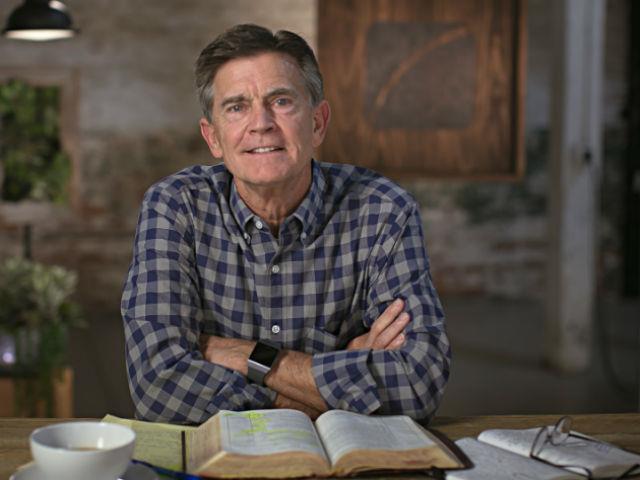
Feeling tired or discouraged in your faith journey? You are not alone. Discover why distraction is the single greatest threat to revival, and learn how to overcome spiritual fatigue by fixing your eyes on Jesus and drawing near to God daily until your soul is truly happy in Him.
Resources
Connect
- 888-333-6003
- Website
- Chip Ingram App
- YouTube
Partner With Us
- Donate Online
- 888-333-6003
References
Unidentified Speaker 1: Today on Living on the Edge, Chip welcomes guest pastor John Dickerson.
Unidentified Speaker 2: So in this way, the sixth revival practice is not really a new one, it's a commitment. Revival practice six is I'm gonna commit to make those first five revival practices that we learned, I'm going to learn to make those a way of life. I'm going to commit to persevere over decades rather than just days.
Unidentified Speaker 1: Welcome to Living on the Edge with Chip Ingram. I'm Dave Drury. Today, Chip's friend and guest teacher John Dickerson begins his final message in our series Hearts on Fire, How God Sparks Revival. Over the past few programs, John has walked us through five revival practices: urgency, repentance, kingdom prayer, a broken heart for the lost, and investing in the next generation. Today he adds one more, and it may be the hardest of all, sticking with it. If you've been feeling spiritually worn out lately, this one's for you. Here's John with a message he calls Revival for Decades, Not Days.
Unidentified Speaker 2: What we're going to learn today is that revival happens when we have a commitment to God over decades, not days. I don't know about you guys, you can be honest, raise your hand. Do you ever get tired of just being like responsible, being a grown up? They call it adulting. Anyone else ever get tired of adulting? I do. Maybe it's because I was the youngest growing up, but like, you know, paying bills, doing taxes, like going to work, all that stuff. Eventually, you just get fatigued. We all get tired. You know who else gets tired? I learned this this week. Bees, bumblebees get tired. Look at this. When bumblebees run out of energy, they power nap on flowers. This is kind of hilarious. You're going to see a lot of bee butts, bee behinds here. Look at this guy. This guy's just passed out, just conked out on the job. The article says worker bees, especially foragers, often take brief rest periods between bouts of activity. These aren't long, deep sleep like they sleep at night. These are quick recovery pauses. When they rest, they might cling to a flower or a leaf. Why do they nap? Well, it says flying and collecting nectar is a very energy intensive activity. Bumblebees' wing muscles generate heat, they burn a lot of sugar, so these short naps allow them to recover, regulate their energy. the article describes how when they're sleeping, their antennae droop down and they don't respond to stimuli. Look at this guy, he just fell over on the job. Like, I've worked enough for today. And maybe my favorite one, this guy just, you know, he's like, I'm gonna turn this flower into a sleeping bag, down for the count. Is it just me, or does anyone else ever get tired spiritually? Like, you're trying to seek God, you're trying to do the right thing, and so often that's not doing the easy thing. And you do that long enough, you can get tired spiritually. I get tired spiritually. Hope you know that. You might think, oh, he's a pastor, he never... No, no, I'm just like you. I get tired sometimes of God. I'm seeking you every day. This maybe feels repetitive, or I feel fatigued. I want to talk with you today about why perseverance matters in your pursuit of God. We've learned that revival is really about your heart, you reviving your love for God. And we're going to learn today about perseverance. Here's the thing, anyone who's ever prayed for revival in your own life, in your family, in your church, though you'll eventually learn that revival work can be very slow work, can be tedious work. How can you not give up when you grow weary? We all do grow weary of living for God. If I could answer that for you from the word of God, if you could leave here today knowing, okay, now I know what to do when I'm discouraged, when I'm fatigued, when I feel like giving up. Would you want to know what scripture says? We're going to find God's answer to this question in the book of Hebrews. This is a book of the Bible in the New Testament, and it's written to believers just like you and me who were weary. They were struggling. They were discouraged. They were tempted to give up. And so God encourages them and now encourages us with these words. God says to us today, let us run with perseverance the race marked out for us. How can you keep going when you're fatigued or discouraged? Well, here's the big idea. Lasting revival requires daily persistence. We saw that word perseverance. Hebrews repeatedly emphasizes that the Christian life is something that we continue over time. It's more than just a one moment decision of enthusiasm. I think about this question for a minute. What is the greatest threat to revival in your life? If revival is you reviving your love for God, what's the greatest threat? Well, there's a lot, right? There's sin, there's Satan, the enemy of your soul, there's spiritual warfare. Those things are all true. I believe today in the context we live in, in the American church, that distraction is the single greatest threat to revival today. So how do we ensure that we don't live distracted? Or when there is opposition and setback, how do we keep our focus on God? Here's a few answers from the book of Hebrews. We'll dig into these. God tells us, let us draw near to God. You're going to learn, what does that mean? How do you do that on a daily basis? Let us hold unswervingly. Think of this like a steering wheel, right? You're not going to veer to the right, you're not going to veer to the left. You, every day you're living for the kingdom of God, and you're not swerving. Let us consider, how can we spur one another, the believers you know, how can you be encouraging them on a daily basis, on a weekly basis? So these Bible verses are all taken from three chapters that you might make a note of this, Hebrews chapters 10, 11, and 12. Those three chapters, it's a great place to go anytime you're discouraged, anytime you're defeated, anytime you just lack motivation in your Christian walk. The book of Psalms, another great place to go, take God your emotions, but these 3 chapters, they'll kind of lock you in, help you get locked in when you just aren't feeling it. And in the middle of those chapters, you get chapter 11, which is the Hall of Faith. And in the Hall of Faith, you hear about people like Abraham and Moses and Noah, and here's what they all had in common. They didn't just follow God for a few days, they followed God for decades. And we see in scripture as well as in history that nation-changing revival, it doesn't result from just one burst of emotion in a moment, a moment of passion. Nation-changing revival results from daily perseverance on your sick days, on your healthy days, on your good days, on your bad days, when you're walking by faith and when you're on a mountaintop and you're just loving it. So in this way, the sixth revival practice is not really a new one. It's a commitment. Revival practice six is I'm going to commit to make those first five revival practices that we learned, I'm going to learn to make those a way of life. If we will commit to daily plant these revival seeds through the revival practices, then we can trust God that he'll send the rain so that those seeds put down roots and bear fruit. The more seeds you plant, just plant seeds. And what Decades Not Days, Revival Practice 6 is about is this, that every decade of your life, you could look back at your last decade and you could say, man, I planted a lot of seeds for the kingdom. Some of them were pretty sloppy, some of them were pretty messy, some of them haven't sprouted up, but every year I live, I look back and there's hundreds of seeds I planted. You know what? We tend to overestimate what we can do in a day or a year, you know, New Year's resolution, I'm going to this or that, and we overestimate what we can do in a short amount of time. But we underestimate what you can do in 10 years if you just have a daily habit. You have a daily habit. I'm going to write a little every day. I'm going to pray a little every day. And you just make these your daily habit, and you're planting seeds, and you look back every decade of your life, and there's a harvest. Hebrews 11 in this hall of faith describes Noah, maybe you've heard of him by faith, Noah, when warned about things not yet seen. What was he warned about? This is an epic story if you've never read it in the book of Genesis. God looks at planet Earth. The population was not massive at the time, but it was incredibly sinful. And scripture says that humans had gotten so evil, so wicked, that everyone was continually sinning against their neighbor all the time. Think of any way a person could sin against another one, physically, sexually, by lying, by stealing. Imagine, like, that's just the whole population. Everyone's constantly wronging each other. And it grieves God so deeply that he says, I just got to wipe it out and start over. And he finds one person who's seeking him. That's what it means that Noah was righteous. Doesn't mean Noah never sinned. He was just like us, but he was seeking God. And God says to Noah, hey, this flood of judgment is coming. Anything that doesn't swim in the water is going to die in this massive flood. God gives Noah the building plans for a massive wooden ship called an ark. If you've never looked at those building plans or a replica of an ark, it was massive, bigger than this room that we're in. And here's the thing, theologians estimate, based on the way Genesis is written, that it took Noah between 30 and 50 years to build the ark. He had sons and son-in-laws helping him. He wasn't working by himself, but still, you've got to imagine he's just like us, right? He gets, what, a month in or a year in, and there's this, frame of a giant ship, and they're working on it every day, and there hasn't been a drop of rain. There's no clouds in the sky. What am I doing with my life? Noah had to live by faith that what God says about reality is true, and even though I can't see it with my eyes, I'm going to trust his promises, and I'm going to build my life around his promises, not just for a few days, but for decades.
Unidentified Speaker 1: You're listening to Living on the Edge with Chip Ingram. We'll get back to today's message in just a moment. But first, did you know there's even more to explore on Chip Ingram's YouTube channel? You'll find full-length teachings, plus short one-minute encouragements, like his videos on how to experience God in prayer. Just search Chip Ingram on YouTube and hit subscribe. Now back to today's message.
Unidentified Speaker 2: What happened? Because of Noah's obedience, then when the flood did come, the ark was finished. Noah, his kids, his grandkids, and he invited other people on, but most of the neighbors said no. Everyone who chose to put their faith in God's wooden vehicle of rescue was delivered from that judgment. In the same way, we all face a judgment. There's two. First is that all of our bodies die. That's just a fact. You don't have to believe in God or spiritual realm to just acknowledge we all die. The second reality is that there will come a time when Christ returns to earth, and this time he's not going to be a baby in a manger. He'll return as a judge, king of kings, and lord of lords. All the evils that grieve you in this world, the genocide, the racism, the rape, all the evils will be judged. And there's one wooden delivery vehicle out of that judgment. It's not a ship, it's called the cross. And it's the work of Jesus on the cross that lifts you up out of that future judgment at the end of your life or at the end of this age. So just like Noah, we're now living here, and God's given us the plans. Here's the plans for rescue. It's not to build a wooden ship, it's to go and make disciples. tell people God loves you, he doesn't want you under judgment, he died on the cross so you don't have to face judgment. Join me in stepping into the ark of rescue called the cross, called a relationship with Jesus. You don't have to pay money, you don't have to do good deeds, you just have to be humble enough to admit, God, I've sinned and I need your help. Now, what's my point in all this? If God had given Noah the plans for the ark, but Noah didn't obey day after day after day for decades, then Noah and his family would have drowned. And so you expressing your faith in what God says about reality and about, you know, a hundred years from now, all our bodies will be worn out. All our bodies will be buried somewhere. Where will you be? How many of the people you love will be there with you in the presence of God? That's the kind of faith that Noah had. He said, I'm going to obey God over decades. I want to tell you a true story from the Third Great Awakening here in the United States. Third Great Awakening was around Civil War time. I'm hoping this story will inspire you to just live faithfully like Noah did for decades, not just for days. Spiritual awakenings that change nations begin with ordinary believers like you and me who simply refuse, I'm never going to stop praying, I'm never going to stop serving, I'm never going to stop seeking the kingdom of God. Here's New York City in 1857. It was actually a pretty dark place spiritually. There was a lot of money to be made, and the kind of people that were being attracted to the city were there to make a buck. You had the tycoons, and you had the working class often being neglected and taken advantage of. Church attendance was declining. Many believers feared that the nation was just drifting away from God. It had been a long time since the second Great Awakening. Well, in the middle of that, there's a quiet man of God who was not a pastor. He wasn't anything official with Christianity. He's just a businessman in New York City who loved the Lord. His name was Jeremiah Lanphier. Here he is. And he decided, I'm just going to do something simple. I'm just going to start having a weekly prayer meeting for businessmen who work in this kind of block that I work in. So he printed up invitations and put them around New York City, around the area where he worked. Well, at noon on the first day for the first prayer meeting, nobody came. So he just prayed by himself for about half an hour. Another time, one person arrived, and then the next time, two people arrived. He said, I'm just going to keep having these prayer meetings, even if it's me or one or two or three. Well, then eventually there was a time where by the end of the hour, six people had showed up to pray together, and they all decided, hey, let's meet here every week, let's have this weekly prayer meeting. Well, then what started to happen is the next block over, some other believers started a prayer meeting there, and then the next block over, some other believers started a prayer meeting there, and this started to spread through New York City. A few months later, it was kind of defining the city, like there was a clear lunch hour at that time, so everyone would stop work for an hour, and the majority of people were going to pray. Then the movement spread, spread from New York City to Boston, spread from Boston to Philadelphia to Chicago and beyond and became the Third Great Awakening. Historians estimate that tens of thousands of people were placing their faith in Christ for the first time every week at these prayer meetings all around the country. And it all started with one believer just like you who said, I'm willing to pray in an empty room. I'm willing to do what I can do faithfully. God can use you in the same way if you'll commit, God, I'm just going to live these revival practices as a way of life. Every day I'm urgent, every day I'm repenting, every day I'm praying kingdom prayers. I've got a broken heart for the lost, I'm raising the next generation, and I'm just going to stick with these. I'm going to learn these, and just like an athlete learning, I'm going to be patient. I know it'll take a while to learn all these skills, but I'm going to show up to practice every day. I want to share with you from the book of Hebrews, four ways to persevere over decades rather than just days. And the first one is this, it's to draw near to God daily. Let us draw near with a true heart in full assurance of faith. You might remember that the heart of revival, if you ask an American Christian, hey, what's revival, you'll get a bunch of different answers. You know, people say it's when there's a lot of salvations or a lot of baptisms or worship's really passionate or the next generation's on fire for God. Those are all kind of part of revival, but the real root and heart of revival is in you. It's in your own heart to be revived for your love for God. How do we know that? Well, every revival in scripture started with existing believers who got right with God and started to love God above everything else. We also know it because one time Jesus was asked this question. It's an interesting question. Jesus, how do you summarize the whole Bible? It's a big book. Can you summarize it all down to one sentence for me? And Jesus, you know, did he go, oh boy, that's tough. I don't know. Now he had a great answer. Here was his answer. Here's the whole Bible in one sentence. To love the Lord your God with all your heart, with all your soul, that's your spiritual being that will live beyond your body. With all your mind, what do you think about? Do you love God with your thoughts? And with all your strength, what do you do with your energy, your talent, your vitality, your ability? If you love God with your strength and your thoughts, your heart and your soul, then you will fulfill everything that's written in this giant book. Every mandate, everything that's modeled will actually start to come naturally to you as you walk with God. So we learned revival begins in your heart. Hebrews 10:22 says, let us draw near to God with a sincere heart. So as you think about the revival practices, things like, okay, I've got my salvation prayer list, I'm praying for my friends who don't know Christ, I'm serving in the church. Don't let those become tasks that you're performing these tasks without a heart relationship for God, because it's all about your heart. Draw near to God daily with a sincere heart. What does a sincere heart mean? It means you're not putting up a religious front. Draw near to God with an authentic, sincere heart. Be your authentic self in his presence, and look at this, with full assurance that faith brings. Why can you draw near to him with all of your mess? Because at the cross, Jesus paid for all your mess. And so now you're his son, you're his adopted daughter if you've placed your faith in Jesus. And every day, I mean, I think of my kids, if they're wounded or if they're dirty, I want them to come to me so I can help them. I don't want them to run from me. So really, this verse is talking about ongoing repentance for relationship. In fact, that's what this next little funny phrase means, having our hearts sprinkled to cleanse us. What in the world does that mean? How do you sprinkle your heart? Like, do you get a little sponge and like, I'm going to sprinkle my heart today? This is talking about ongoing repentance for relationship. And what this means is essentially, you know, when Jesus died on the cross for your sins, all your sins were forgiven, past, present, and future. And when you place your faith in Jesus for the forgiveness of your sins, your place in heaven is secure. Your name is written in the Lamb's book of life. So now when you go out and sin, I don't believe that you lose your salvation or you lose your place in heaven. I don't believe that, but it does create friction between you and God in a practical sense. You don't lose your positional relationship, but your practical relationship gets strained, just like if someone in your family were to sin against you and wrong you, it would strain the relationship until they come to you and say, hey, I'm sorry, will you forgive me for doing that? You say, yes, I forgive you. Now the relationship is restored. And so this is saying every day draw near to God, practice that repentance for ongoing relationship, and be reminded every day, oh wow, God, for that moment I was looking to that thing for my fulfillment instead of you. For that moment I was looking to that person. Lord, cleanse me, sprinkle my heart again. 1 John 1:8 and 9, if we confess our sins, he's faithful and just to forgive us our sins and to cleanse us from all unrighteousness. So having your heart sprinkled to cleanse from a guilty conscience. So you go to God every day, not like I have to do this, I have to go to God every day. No, I gotta go to God every day. He's my lifeline. If I'm not in relationship with him, I start to have a guilty conscience, I start to live under shame, I start to live in my own strength, and so drawing near to God day by day by day is what's going to allow you to live out these revival practices, and then it says, let us hold unswervingly to the hope we profess. Daily closeness with God gives you the daily power you need to stick with it.
Unidentified Speaker 1: You've been listening to guest teacher John Dickerson here on Living on the Edge with a message titled Revival for Decades, Not Days. If you'd like to keep building these revival practices into your everyday life, you'll find John's video study and other helpful tools at therevivalproject.org/livingontheedge. As we heard today, faithfulness isn't built in one burst of emotion. It's built one ordinary day at a time. That's exactly what Chip Ingram's Growing Deeper in Christ, a 365-day journey to true discipleship, is designed to help you do. Just a few minutes each day for a whole year to draw near to God and let his truth take root. And right now there's special pricing on both the paperback and the new leather-bound edition. A wonderful Christmas gift for someone ready for a fresh start in the new year. Get your copies of Growing Deeper in Christ today at livingontheedge.org/offers. A listener named Scott wrote to tell us how God answered a 2 and a half year prayer to break the chains in his life. He said, I decided to cram God's word into my ears in hopes of it landing in my heart. Well, that's what perseverance looks like. Day after day, this program is there for listeners who are tired, discouraged, and wondering if anything will ever change. When you give to Living on the Edge, you help someone like Scott keep going, one day at a time. Give online at livingontheedge.org or call us at 888-333-6003. If you'd like to give by mail, our address is Living on the Edge, PO Box 3007, Suwanee, Georgia 30024. Well, now here's Chip Ingram.
Unidentified Speaker 3: Thanks, Dave. I have a word for those of you that especially have stayed with John and I on this series. It's a word for those of you that are tired. Tired of trying. You're tired of doing the right things. You're tired of obeying and grinding it out, and you just think it'd be so much simpler just to sort of take your foot off the gas pedal and just say, you know what, I just don't see any real big results. Well, I want you to know that you're not alone. And John said something today that just gives me life in my spiritual lungs. Revival work is a slow work. It's daily perseverance. You know, you think about a guy like Noah. I mean, what was it, over a hundred years? He he's building an ark, and a single drop of rain has not fallen, but he stayed with it. He persevered. And here's what I would say to you. The evidence that you're listening to this teaching and that you're tired, and maybe you're struggling with being distracted, is that you really care. and I just want to encourage you, don't give up, don't give in, and don't do it alone.
Unidentified Speaker 1: Next time, John Dickerson continues with the story of a man who prayed for 5 friends every single day for more than 50 years, and what God did after his funeral. Don't miss it right here on Living on the Edge.
Unidentified Speaker 4: Today's program is produced and sponsored by Living on the Edge.
Related Episodes
The Next Generation and Revival, Part 2
Friday, November 13
The Next Generation and Revival, Part 1
Thursday, November 12
Brokenhearted Boldness, Part 2
Wednesday, November 11
About Living on the Edge
Living on the Edge, a discipleship ministry and radio/television program of pastor and author Chip Ingram, is committed to providing everyday believers with tools that help them live like Christians. Each week, Chip will take you through God's Word for insight on topics like strengthening your marriage, understanding love and sex, raising children, and overcoming painful emotions. Today, a daily listening audience of more than one million people can hear Living on the Edge on over 1,100 radio and TV outlets across the United States and internationally.About Chip Ingram
Chip Ingram's passion is to help Christians really live like Christians. As a pastor, author, coach and teacher for more than twenty-five years, Chip has helped people around the world break out of spiritual ruts and live out God's purpose for their lives.
Chip is the author of eleven books and reaches more than one million people each week through online, radio and television outlets worldwide. Chip serves as CEO and Teaching Pastor of Living on the Edge, an international teaching and discipleship ministry. Chip and his wife, Theresa, have four children and twelve grandchildren.
Contact Living on the Edge with Chip Ingram
Mailing Address
Living on the Edge
PO Box 3007
Suwanee, GA 30024
Phone Number
(888) 333-6003