When The Bottom Falls Out - Part 2
Ministries > Unlimited Grace with Bryan Chapell
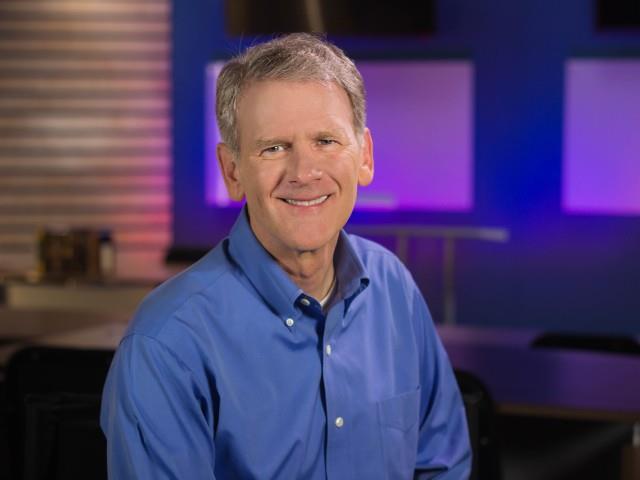
Pastor Bryan shares the second half of a lesson from Daniel, Chapter 2. In our study of the life of Daniel, Dr. Chapell highlights the response of Daniel to great trial and testing. Daniel provides an example to us of how we can praise God, even when the future seems bleak.
Bryan Chapell: He has time and eternity in his hands. The immediate is not the end of the story. The next day is not the final chapter. He has eternity in his mind's eye. He has eternity in his hand. My God controls it all, and I proclaim him in the worst of moments because I believe in a God who has shown his faithfulness for the provision of the rock, who is Jesus Christ.
Announcer: So glad you joined us for today's Unlimited Grace, the audio broadcast ministry of pastor and author Bryan Chapell. In today's episode, Pastor Bryan shares the second half of a lesson from Daniel chapter 2. In our study of the life of Daniel, Dr. Chapell highlights the response of Daniel to great trials and testing. Daniel provides an example to us of how we can praise God even when the future seems bleak. You can find this lesson and many others when you visit unlimitedgrace.com. And while you're there, look for Pastor Bryan's book, The Multi-Generational Church Crisis. This compelling book asks the question of the church, what could be accomplished in the name of Christ if we could better understand each other? Let's hear now from Dr. Bryan Chapell as he shares the second half of the lesson, When the Bottom Falls Out.
Bryan Chapell: This week we're looking at Daniel chapter 2, Daniel chapter 2, as we continue to look at the lives of Daniel and his friends Shadrach, Meshach, and into bed we go, and... Yeah, I learned that when I was a kid, right? So, Shadrach, Meshach, and Abednego, and learn, of course, that they're in a nation of great hardship. They are in captivity. Their families are slaves. There is a cruel king who's in charge, who is willing to lop off the heads of anyone who will disagree with him. And that king is the object of the early portion of Daniel 2. King Nebuchadnezzar sleeps one night, he dreams, the dream awakens him and troubles him. He wants somebody to interpret, and so he calls his wise men, the enchanters, the magicians, the interpreters, and says, tell me what my dream means. Happy to help, oh king, they say. Tell us the dream, we'll give you the interpretation. Oh, no, no, no, he says. If you really have supernatural insight, you tell me what the dream is. Then I'll know you really know something, and after that you can interpret it. Well, as you might guess, they can't tell him what the dream is. As they begin to squirm and maneuver for time, he just gets angrier and angrier until the decree goes out, off with their heads. Not just these, kill every wise man in the kingdom of Babylon. Well, that net is wide enough to catch Daniel, Shadrach, Meshach, and Abednego. If you remember verse 20 at the end of chapter 1, we read this about them as the Lord blessed Shadrach, Meshach, Abednego, and Daniel. In every matter of wisdom and understanding about which the king inquired of them, he found them 10 times better than all the magicians and enchanters that were in his kingdom. If he's going to kill all the wise men, he's going to kill these good men too. What happens next? Well, let's stand and we'll read what happens next. Daniel 2 and verse 17. Then Daniel went to his house and made the matter known to Hananiah, Mishael, and Azariah, which are the Jewish names of Shadrach, Meshach, and Abednego, his companions, and he told them to seek mercy from the God of heaven concerning this mystery, so that Daniel and his companions might not be destroyed with the rest of the wise men of Babel. Then the mystery was revealed to Daniel in a vision of the night. Then Daniel blessed the God of heaven. Daniel answered and said, blessed be the name of God forever and ever, to whom belong wisdom and might. He changes times and seasons. He removes kings and sets up kings. He gives wisdom to the wise and knowledge to those who have understanding. He reveals deep and hidden things. He knows what is in the darkness, and the light dwells with him. To you, O God of my fathers, I give thanks and praise, for you have given me wisdom and might and have now made known to me what we ask of you, for you have made known to us the king's matter. Let's end there for now and ask that our God the king would make known to us his matters. Let's pray together. Heavenly Father, we confess that we might often approach you in the book of Daniel as the God of a Sunday school lesson, removed by cartoon characters and events that seem so remote. But you speak to us by your Spirit as we have already prayed in song this day in your Word, and so we would pray for that ministry of the Spirit even now. Teach us what it would be to live in the land of Babylon, even if that is our home now in many ways. You call us to yourself by your word. Teach us there, we pray. In Jesus' name, amen. Please be seated. If you look at verse 44 toward the end of the chapter, Daniel 2 and verse 44, what does all of that mean about the rock that comes and establishes a new kingdom after all the other things have been destroyed? Verse 44, in those days, that is the days in which this vision will be fulfilled, in those days of those kings, in the days of those kings, the God of heaven will set up a kingdom that shall never be destroyed, nor shall the kingdom be left to another people. It shall break in pieces all these kingdoms and bring them to an end, and it shall stand forever, just as you saw that a stone was cut from a mountain by no human hand, and that it broke in pieces the iron, the bronze, the clay, the silver, and the gold. A great God has made known to the king what shall be after this. The dream is certain, and its interpretation is sure. All right, what's the dream mean? Nebuchadnezzar, you dreamed of all these different elements of a great statue, and each element represents a succeeding kingdom. You're the head of gold, but there are kingdoms that will follow you, ultimately all to be destroyed by this rock cut without human hands, that once it has destroyed everything else, will itself grow into a mountain that eclipses everything else on the earth. What does the dream mean? Okay, spoiler, okay, if you don't want to hear, spoiler alert, right? The rock is Jesus. The coming rock is Jesus, who will be greater than all the preceding kingdoms and will destroy them. Now, that's the thing you might take some joy in, but you be Daniel. Already Nebuchadnezzar has sent out the death certificate for your head, right? Now you're going to go back to Nebuchadnezzar, and you are going to say to King Nebuchadnezzar, the most powerful ruler on the earth at that time, King Nebuchadnezzar, you're about as important as sweat on a flea. You are dust. You are history. You don't mean nothing. There is a time in which you will be succeeded by other kingdoms who will be greater than you, but none greater than the final king sent from heaven who will rule over all. You be Daniel, how much do you want to take this news to Nebuchadnezzar? And yet he is praising God. How does that make sense? He praises God for the good he can see, despite the grace yet unseen. He does not know how it's all going to unfold, but he praises God for what he can see. God has revealed the vision. I mean, he can see that. That's in the present tense. And God has been faithful in another way. Verse 23. To you, O God of my fathers, I give thanks and praise. God has preserved his people, his covenant people, for generations, for millennia up to this point. And Daniel looks back and he says, I recognize that God preserved us so far by revealing the dream. He actually revealed, remember, Daniel, Shadrach, Meshach, and Abednego, their salvation in the preceding chapter by letting them eat vegetable soup. Remember that? So they wouldn't compromise their faith, and yet they were preserved. God has been faithful to them in the immediate, but God has been faithful to fathers past. Daniel looks in the present, and he looks in the past, and he says, there's good I can see, even though I don't know where all this is going yet. If I tell Nebuchadnezzar what I must to be faithful, I don't know where it will go, but I will trust God for the grace yet unforeseen because I have seen the good already that he has done and can do. It's a hard lesson for us because sometimes we think we can't praise God and won't praise him until we see the end of the course. We do understand cause for praise, but what about Daniel? Do you recognize Daniel is praising God, but his people are still in slavery? His people are still in Babylon. He does not know where this will go, and as we get in future weeks into this prophetic portion of Daniel, we are going to recognize he will see generations of pain to come. Not just all good stuff, not just easy stuff, hard things ahead. And still he praises God. Why? He praises God for the good he can see, despite the grace yet Unseen.
Guest (Male): You're listening to Unlimited Grace, the audio broadcast ministry of pastor and author Bryan Chapell. It may seem hard for younger Christians to believe, but people over 50 were raised during an era when 90% of Americans identified as Christian. These older believers were once part of a majority group that understood the mission of the church was to take control of our culture, to halt its evils. At the same time, Christians under 50 have lived their entire lives perceiving themselves as a minority that needs to make credible their faith to a secular, pluralistic culture. These distinct experiences and perceptions have a profound impact on the priorities different generations have for church ministry. It's no wonder that younger and older believers don't always see eye to eye. In his new book, The Multigenerational Church Crisis, Dr. Bryan Chapell asks the question, what could be accomplished in the name of Christ if we could better understand each other? This practical and hopeful book is backed by thorough research revealing how to open the lines of communication, appreciate the experiences that shaped each generation in your church, and unite in one mission to impact your community and the world. You can request your copy of The Multi-Generational Church Crisis when you donate online at unlimitedgrace.com or by calling 844-41-Grace. That's 844-414-7223. And now, more from Bryan Chapell on today's Unlimited Grace.
Bryan Chapell: I reminded some years ago, as I have dealt with some of the layoff things that are happening in our community, of a young man who sat in my office, and he'd recently been laid off. Before he'd been laid off, he had a good job, and with the good job, he and his wife had far overextended themselves financially, purchased things they should not have purchased, were living a lifestyle that distanced them from their family and friends. They were estranged on many fronts, including in the church. And now in his time of need, he came to my office and he was just kind of pouring out his pain and his heartache and his desperation. And as he began to talk, he got angrier and angrier at the church and at the friends and at the company and at God. And toward the end, he just said, I just tell my wife that at least we have each other and kids that we love. And then he just got threw himself back in the chair in the complaint. And then in the silence began to hear echoed the words that he had just said. At least we have each other and kids that we love. And after a bit he sat back up in the chair, kind of a sheepish smile on his face, and he said, I guess God hasn't been so bad to us after all. He didn't know where it was all going. He did not know. But he looked at how God was preserving and had preserved, and he praised God for the good he could see, despite the grace yet unforeseen. If we do that, it has profound effect. After all, recognize that what's happening here in the book of Daniel is something not just written for his age, but for the ages to come. And as he is praising God in the hard situation whose end he does not yet himself know, he becomes a witness to how believers act in times of trial and testing when the bottom falls out. Yes, they bend the knee at the same moment they lift their hands and say, God, I praise you for what I can see, and I trust that your grace abounds in deepest waters. I am going to believe that by faith, even though I cannot make sense of it all yet, I'm going to praise you. And God, I may not see the answer to where all this is going in my own lifetime. Daniel wouldn't. He would be an old man and dead before these prophecies are fulfilled. He's never going to see his people released from captivity. He will never know freedom, even as an old man, and yet he's saying, God, I believe in a grace that goes beyond me, beyond my life, and so he praises God in that moment, and that becomes proclamation. As the witness of God's faithfulness in the trial becomes a proclamation that others need as well. Do you want to see this very unnatural thing that Daniel does teaching us? He begins to praise God in the midst of the trial. Verse 28, as Daniel is speaking to Nebuchadnezzar and saying, you know, you thought wise men could interpret a dream, but they really can't. Who can? Verse 28, there is a God in heaven who reveals mysteries. Now recognize he's just now approaching the king. He may have his head cut off in the next three minutes, but Daniel is saying, I'm going to proclaim my God. Even now, even in this moment, I'm going to proclaim my God. And so in the hardness of the moment, he still says, King, you need to know there's a God who makes himself known even in situations like this. There is a God who makes himself known. It's not the end. Daniel will say even more, verse 34. As you looked at a stone that was cut by no human hand, it struck the image on its feet and broke them in pieces. This God is going to act. How do I know that? Verse 36. This was the dream, and now we tell the king its interpretation. You, O king, the king of kings, to whom the God of heaven has given the kingdom, the power, and the might, and the glory. You're the one who's going to get the message. Wait. King, you have been given power by God? You are the enemy of God's people. You're the one who holds them in captivity, but my God is so great that he has the life of the king in his hand. And what you think you are doing independently has only been given you by God. I think of the word of Jesus to Pilate before the crucifixion. Pilate, you could not do a thing to me had it not been given to you by God. You think you're independent. You are only under the control of God. Here is Daniel proclaiming who his God is. He's the one who makes himself known, and he's the one in absolute control over all things, doing ultimately his will, so that, verse 44, in the days to come of the kings that God is revealing, the God of heaven will set up a kingdom that shall never be destroyed, nor shall the kingdom be left to another people. Daniel offers praise to God, but ultimately he says, because my God not only does he reveal who he is, not only does he control all things for good, he is going to set up an eternal kingdom by what he is doing. He has time and eternity in his hands. The immediate is not the end of the story. The next day is not the final chapter. He has eternity in his mind's eye. He has eternity in his hand. My God controls it all, and I proclaim him in the worst of moments because I believe in a God who has shown his faithfulness for the provision of the rock, who is Jesus Christ. You recognize, of course, that Daniel is looking forward when he talks about the rock who is coming that will establish a greater authority than all the kings of men. We look back. We recognize that this is the Jesus who has come and will come again, and that great God of glory is ours. He has confirmed his presence and his power so that we say, I don't know where all this is going, but I proclaim the God who sent Jesus for my heart when he knew the worst about me. I think about Issa. Did you miss that part where I said he denied his faith, that he turned away from God, that when ISIS said to him, you convert or you'll be killed and you'll never have your children back. And so he said, all right, I'll convert. And then still, when he recognized that was not a path that was going to save him or his family, he turned back to God. What a wonderful message. Anytime is the right time to pray. Even when you've done the wrong thing, even when you've gone the wrong way, God is still listening, and he says, seek me again. And when the circumstances are not turning out the way you thought, we still praise God because we say, "He has been good in the past. He has provided Jesus. He has provided for my sins. Even though I can't make sense of all that is happening, I will praise God for the good I have seen, despite the grace yet unseen." And finally, I'll proclaim him. Why would you do that? Because when your faith makes sense to you in crisis, it will make a difference to your loved ones in their crisis. God is amazing, powerful, working eternally. As I think about 2.5 million, it's troubling thinking of that number, 2.5 million refugees from Iraq, Yazidis and Muslims and Christians, and they're in these huge refugee camps in the Middle East. And Mindy Belles is a Christian correspondent that I, and I know some of you others, read and trying to track that for the church, what's happening in the Middle East right now. And she wrote several weeks ago that the UN-sponsored schools set up in the refugee camps are empty because of fear and suspicion. The Muslim and the Yazidi and the Christian families won't go to the UN schools. But there are schools that are filled up and overflowing with hundreds and hundreds of children who are Muslim and Yazidi and Christian. And those schools are the ones that are being built, supported, and staffed by Christians, who view the crisis as one of the greatest opportunities to witness the gospel that the world may have ever provided. The crisis is the wrong time to be silent. The testing is the wrong time to stop your witnessing. God calls us to say, does your faith make a difference when the bottom falls out? Then tell people how great is the God that you serve of eternity, because they will need that God too. It's not just for the national scene, the international scene. It's what God is calling us to do, to kneel down and to lift our hands and to lift our voices for a world that needs to hear the gospel as much as we do. What are we called to do? To pray, to pray, to kneel down and to lift our hands and praise God and ultimately proclaim him in sunshine or in shadow, because it is the path by which you will find rest for your own soul. Pray. And praise him for the good you can see, even if there's grace yet unseen. And proclaim him for time and eternity. He has it all in his hand with you.
Announcer: That's Pastor Bryan Chapell, and you've been listening to Unlimited Grace. If this message has been an encouragement to you, you can find a collection of more valuable resources at unlimitedgrace.com. When you visit, you will find today's message and many others from Pastor Bryan. Once again, go to unlimitedgrace.com, or you can give by calling 844-41-Grace. That's 844-414-7223. Please be sure to join us next time, as once again we endeavor to put Christ at the center of our efforts so that lives might be transformed by his unlimited grace. This ministry is brought to you by Unlimited Grace Media and continues to be made possible with your generous financial support.
Related Episodes
But if Not - Part 1
Monday, November 16
When The Bottom Falls Out - Part 1
Thursday, November 12
Standing Your Ground - Part 2
Wednesday, November 11
About Unlimited Grace
Unlimited Grace is dedicated to spreading the gospel of God’s grace to all people. We desire for believers everywhere to serve God through faith in His grace that frees from sin and fuels the joy of transformed lives.About Bryan Chapell
Bryan Chapell, Ph.D. is the Stated Clerk Pro Tempore of the Presbyterian Church in America (PCA), based in Lawrenceville, GA.
Dr. Chapell is an internationally renowned preacher, teacher, and speaker, and the author of many books, including Each for the Other, Holiness by Grace, Praying Backwards, The Gospel According to Daniel, The Hardest Sermons You’ll Ever Have to Preach, and Christ-Centered Preaching, a preaching textbook now in multiple editions and many languages that has established him as one of this generation’s foremost teachers of homiletics.
Dr. Chapell is passionate about sharing the truth of God's grace with others, because it provides the freedom and fuel for transformed lives of joy and peace.
He and his wife, Kathy, have four adult children, a growing number of grandchildren, and lives rich with friends, fishing and faith.
Contact Unlimited Grace with Bryan Chapell