An Immigrant’s Story: From Rebellion to Redemption, Part 1
Ministries > Family Talk with Dr. James Dobson
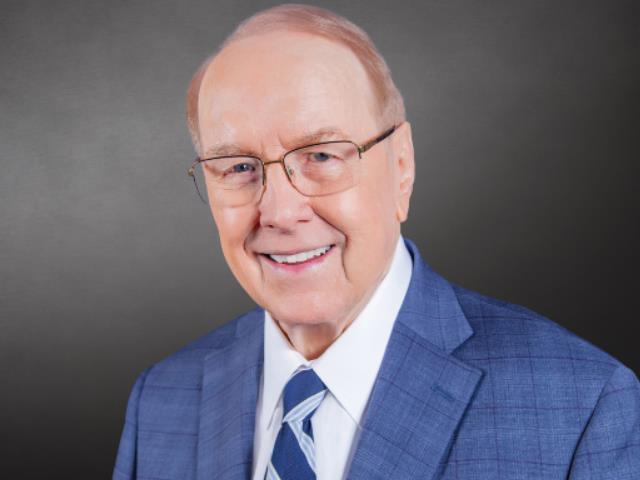
A doctor’s refusal to terminate a pregnancy set one boy on a collision course with the world. On today’s edition of Family Talk, Dr. James Dobson sits down with Emeal “EZ” Zwayne, who traces his journey from war-torn Lebanon to the streets of America, where anger, rebellion, and gang violence nearly cost him everything. Hear how a single night changed the course of his life.
Dr. James Dobson: Hello everyone, you're listening to Family Talk, the radio broadcasting ministry of the James Dobson Family Institute. I'm Dr. James Dobson and thank you for joining us for this program.
Roger Marsh: Well, welcome to Family Talk, the broadcast division of the Dr. James Dobson Family Institute. I'm Roger Marsh. You know, few things frighten a parent more than watching a child make destructive choices. You can teach them right from wrong, of course, you can love them deeply and pray faithfully, and yet still wonder where these choices might lead. For E.Z. Zwayne, rebellion eventually led to violence, expulsion from school, and membership in one of America's most notorious street gangs. His parents could never have imagined where his life was headed or the dramatic change that was coming. On today's edition of Family Talk, you'll hear how God reached a teenager who seemed to be headed down a dangerous path and led him on a road to redemption instead. Now, here's Dr. James Dobson, joined by former Family Talk co-host Dr. Meg Meeker, to introduce today's guest, E.Z. Zwayne, here on Family Talk.
Dr. James Dobson: I want to begin the introduction of our guest, E.Z. Zwayne, and he is with the National Bible Bee. That's where I met him. Before I introduce him further, I want to say that Shirley and I had the opportunity to attend the National Bible Bee. I'm telling you, if you get a chance to do that, don't miss it. It's in San Antonio, Texas, and 4,000 kids around the United States compete with the ability to quote scripture. The way it works is they give them a large section of scripture—large from my perspective, Shirley—and then they have the competition and it comes down to the winner. They can't really miss anything. It's amazing. I'm telling you, we sat on the front row and watched those kids. One of them who won the middle school championship has a speech impediment and he did not miss a single word and he won that division.
Dr. Meg Meeker: Good for him. Wow. And doesn't it make your heart just leap to see these young people who are being trained in Bible knowledge and getting those roots set down very deep? It's so important.
Dr. James Dobson: And they're nearly all homeschooled, as you would imagine. E.Z., it's so good to have you here. I appreciate your being with us.
E.Z. Zwayne: This is such a delight, Doctor. Especially after being a new believer and growing up and listening to you on the radio, never did I think I'd be on this side of the microphone. It is such a joy and what a joy it was to be with you and Shirley at the Bible Bee. Like you, I was sitting there in awe with my jaw hitting the ground.
Dr. James Dobson: We sat together at dinner that night. Twice, I believe.
E.Z. Zwayne: Yes, we did. We had that private brunch and then we sat together at dinner as well.
Dr. James Dobson: And I got so interested in your story and where you've been and how you got to this moment that I asked you to come be our guest and share some of those spiritual experiences and others.
E.Z. Zwayne: And boy was I surprised when you did that. You kept asking me questions. I thought, boy, Dr. Dobson's asking a lot of questions. Then it dawned on me, this is what you've done for almost 40 years every day.
Dr. James Dobson: It's what I do and I do want to know. So, you attended Biola University, where my son Ryan graduated. You're a former associate pastor. You're now President of Living Waters Publications, which was founded by Ray Comfort, a friend of mine, and I really appreciate your joining us today.
E.Z. Zwayne: Oh, thank you, Doctor. It's an honor.
Dr. James Dobson: Your background is really fascinating. You grew up in Lebanon, I believe?
E.Z. Zwayne: Right. I was born in Lebanon in 1975 and, believe it or not, that almost didn't happen. Back in that time, abortion on demand was illegal in Lebanon, but if she got special clearance from her primary physician, she was typically permitted to have one. My mother had done that twice before I was born and when she found out she was pregnant with me, she made a third attempt. But she recounted to me that as she sat in the doctor's office that day, he looked over at her and just simply said, "I'm not going to let you do this one."
Dr. James Dobson: I wonder why he picked you.
E.Z. Zwayne: I don't know. When my mother shared that with me, I have to say, it was during a really special mother-son moment. It was a warm and joyous moment and she looked at me as if to say, "I can't imagine my life without you." It was in that context that she shared that with me. My mother was one of the most amazing women who've ever lived—compassionate, kind, loving. So at that moment she looked and was thinking, "I can't imagine if I had done that." She intimated regret that she had even done that in the past.
Dr. James Dobson: So you didn't know that for a long time.
E.Z. Zwayne: I didn't. No, I was maybe about nine or 10 when she shared that with me.
Dr. James Dobson: What was her reaction when the doctor said, "Sorry, I'm not going to do this"?
E.Z. Zwayne: I think at the time she was probably shocked because he had allowed her to do it twice before. And so I think she realized she had no choice. I mean, if he didn't give her clearance, she couldn't do it. But I know that at the moment she shared that with me, she was looking back on that time and that doctor was probably in her heart and mind the greatest friend she ever had.
Dr. James Dobson: But you turned out to be a really tough kid.
E.Z. Zwayne: Yeah.
Dr. James Dobson: You are the ultimate strong-willed child, as I call them.
E.Z. Zwayne: I was. I mean, I was quite the nightmare at times. Being born in Lebanon when I was, 1975, I was born in September, but about five months before that, a huge civil war broke out in Lebanon that tore the country apart. It was a real difficult time for my family. My mother already had four children—my older brother and then I had three sisters and then I was the youngest of the five. And so times were tough there, times were difficult.
Dr. Meg Meeker: Do you remember those early years of being in kindergarten and early grade school over there during the wartime?
E.Z. Zwayne: I do have brief memories because we was about four and a half when we ended up moving to the United States. So I just found myself one January morning being snatched out of bed, thrown to the back of a car, and driven through the crazy streets of Beirut, Lebanon, only to then be thrown onto this giant tube called an airplane and flown to this new and strange land. At that age, you don't have a say in anything. You're kind of like glorified luggage. They just throw you here, there, and everywhere.
Dr. James Dobson: You had uncles here in the United States.
E.Z. Zwayne: Right. So one of my uncles had immigrated years before. He was younger, got educated here, and started his career. My father was more advanced in age. In fact, he was 65 when I was born. Believe it or not, this January he just turned 105 years old.
Dr. Meg Meeker: Wow.
Dr. James Dobson: I'm 83, Doctor, but plastic surgery works wonders. No, 1975 to now, doesn't quite work.
E.Z. Zwayne: But yeah, so my uncles saw that we were in a bad predicament. The war was tearing the country apart. We had had relatives that died. There were times when food was scarce; you'd have to line up to get bread. The war lasted until 1990.
Dr. James Dobson: Help me remember. Lebanon had a high percentage of Christians at that time.
E.Z. Zwayne: Right. It was kind of split up between the Christian segment or the Maronite Catholic segment, which was the majority, and then you had your Muslim population, Sunni and Shiites, and then you had what were called the Druze. But yeah, it was unique in the Middle East in that the Christian population was the largest segment of the population.
Dr. James Dobson: Well, who was fighting who?
E.Z. Zwayne: Well, it was a really complicated and multi-faceted civil war. So it started in April of '75 and it began with the PLO, the People Liberation Organization of Palestinians. And then there were factions that were joining up with them and that's kind of what sparked it. But then it just got, militia after militia started to form and it got really intricate and complicated. And so my uncle looked and said, "Hey, why don't you come here, bring your children in, and give them a future?" And oh, what a joy it was to come to this new and at first strange land and then to make it home. I just kind of didn't know what to expect. I didn't speak a lick of English. Shortly after arriving, my parents put me into this very dangerous, hostile, and volatile environment called kindergarten. And I'm like, "How did I ever survive that?" And I didn't speak a lick of English and I'm trying to kind of make sense of everything and I started off as a really wild child. I think maybe some of it was a reaction to the new environment, to trying to sort of survive in a place where I'm trying to learn the language and I'm trying to adapt to the customs and cultures, but I became quite the troublemaker.
Dr. James Dobson: You have described some of the really rebellious things that you did and they're really quite remarkable. We won't go into all of them, but you really did kind of take on the world. And I have made a habit of asking grown people who were strong-willed kids what they were mad at. What were you mad at? Why did you declare war with the world, really?
E.Z. Zwayne: I didn't waste any time in revealing my sinful nature, for sure. Even at a young age, I mean, starting off very early I started getting into fights at school, I started vandalizing cars in my neighborhood, I started impersonating a Cub Scout and going door-to-door collecting money for charity, which was my candy fund, of course.
Dr. Meg Meeker: Which really is remarkable given your age. I mean, those are things that you'd hear of a 12-year-old doing, but you weren't 12. No, I wasn't. You were very young. You were five and six and seven years old doing this. Absolutely. And from a pediatric standpoint, if I saw that, I'd think, "My heaven, I mean, that's beyond the strong-willed, that's a disturbed child." Do you think you were angry at coming here? Were you like this in Lebanon before you came over or?
E.Z. Zwayne: I don't think so. I think the dynamic of being raised in a home where my parents didn't speak English, first of all. My father was almost 70 when we moved here. He was retired. My mom was a homemaker.
Dr. James Dobson: He had a hard time with the language too.
E.Z. Zwayne: Absolutely. At that age and then not being in the workplace because he was retired. So my parents never really learned English and I think that there was a bit of resentfulness there in that they didn't participate in my life the way that I was watching other parents participate in the lives of my friends. But again, they were the most loving, kindhearted parents, but it just kind of I think set me off and I thank God for this one thing though, because as bad as I turned out, my brother, my oldest brother Frank, who was 14 years older than me, was kind of a steadying force in the home. Because my parents didn't understand the culture, they didn't know what was going on, they would often, when I'd ask them, "Hey, can I go here, can I do this?" "Well, ask your brother, he knows what's going on." And in the Arab culture, the firstborn kind of has some seniority in the home amongst the siblings. So I think God even at that time, without me realizing it, used him to kind of keep me in line to a degree or I would have gone off the rails even worse than I did.
Dr. James Dobson: You were really not disciplined very well though, were you?
E.Z. Zwayne: Right. I think my parents tried the best that they could, but I don't think they had the sort of understanding that was needed to discipline a child like me. And so the discipline would kind of be hit and miss; it would be sometimes pacifying, sometimes it would be intense. So it was not consistent and it was not timely in the times when it was needed.
Dr. Meg Meeker: And maybe they were tired too. I mean, I think I would be having a five-year-old at 70, that would be hard.
E.Z. Zwayne: Right. And as rambunctious as I was too. I definitely gave them a hard time and they tried their best, there's no question, and I have nothing but gratitude for their attempts. They loved me the best that they could.
Dr. James Dobson: You know who you remind me of? His name is Louie Zamperini. He was a little hellion as a kid. He really was. He created such problems in the neighborhood that the people who lived around didn't want anything to do with him. And he went on and went to a great school, University of Southern California, and he happened to be a great runner. I think he went to the Olympics and he fought in World War II and was in a prison camp and there's a movie about him called Unbroken. And he turned out to be a godly man. He had the temperament that you did.
E.Z. Zwayne: Well, you know, there did come a time in my young life when I was about eight years old and I was growing up in the Catholic church, I did something called my First Holy Communion. And I remember I decided at that time, "I'm going to change my life. I'm going to be a good kid." And I'll tell you, there was a little reformation that took place in me. I stopped lying, stealing, cussing, became mama's boy, became the teacher's pet. My whole life of crime at eight years old was over.
Dr. Meg Meeker: You just decided, "I'm done."
E.Z. Zwayne: Yeah, I'm done. And I reformed, I changed. But you know, you can take a pig off a pig farm, give it reconstructive surgery, throw perfume or cologne on it, dress it up in clothes, put it at a gourmet dinner, but it's still a pig at heart. Once you let it go, it's going to go right back to the pig pen. And it only held for a while and when I hit high school, that's when things really began to spiral out of control.
Dr. James Dobson: And shortly after that is when you found the Lord Jesus Christ. Explain that to us.
E.Z. Zwayne: Well, when I got into high school, my long list of do's and don'ts that I had created for myself to maintain my morality kind of faded to the background. I deceived the student body with my smooth and flattering speech and became my class president, actually. I always had this drive, even when I was a kid when I was in grade school, I used to make up stories that I was part of a royal family that had to come to America because of a coup and I was the little Arab king, I wanted everyone to bow to me. So finally my dream came true in high school; I became my class president and once I sat on my throne, I just started wreaking havoc. And one fight after the other, causing trouble, vandalizing one of my classrooms when the teacher wasn't in there, threatening to kill one of my teachers. So by the end of that freshman year when I was supposed to be the example to the entire freshman class, I end up getting kicked out of my first high school. So they send me to a second high school my sophomore year and that's where things really got worse. I was a rap artist back in that time, believe it or not. I had my artist-producer contract signed and my producers produced some of the top artists in the industry at the time. And so here I was on my way to the big time, I had kind of this pride and arrogance. So my first day on that campus, I connected with one of the kids that liked rap music and he said, "Hey, come and hang out with us at lunch." So I did that and one day turned into two, two into a week, a week into a month, and one day we walked off campus to go to lunch and they said, "Hey, we want you to become a part of our gang." These kids were part of a gang called the Crips. The notorious Crips. That's bad news. Real bad news. And so we walked off campus and, you know, when you become a member of the Crips, you don't sign a contract; you get initiated by having the gang members beat you up for you to become a part of the gang.
Dr. Meg Meeker: Seriously? They beat you up.
E.Z. Zwayne: Yeah. So we walked down an alleyway that day at lunchtime and they began to beat me to a pulp. And there I was, 15 years old, standing there a mess, finding myself a member of one of the most notorious gangs in the United States.
Dr. Meg Meeker: So you stayed in the gang even after they beat you up.
E.Z. Zwayne: Well, that's the initiation. I'm trying to wrap my mind around if somebody did that to me, I'd think, "I don't think this is for me."
Dr. Meg Meeker: Would you mind sharing what goes on in the Crips? I assume this was in the '80s.
E.Z. Zwayne: This would have been, yeah, late '80s, it was almost 1990 I think, '90 to '91 is the time that that happened. And basically, the Crips is a gang like any other gang where you have people that want to belong and they're driven together in a brotherhood of sorts and it revolves around immorality and around crime and rebellion. Violence. Violence, yeah. And so that's kind of what it was all about and I became a part of that world and boy did my life just spiral out of control at that point. I found myself doing things I never thought I would do, saying things I never thought I would say. So it all went out of control and in the midst of all that, I was so distraught one day as one of my sisters began to sort of tell me as the whole family was gathered together that I was worthless, useless, wasn't going to amount to anything, and something in me just snapped. I remember I jumped up, lunged for the kitchen drawer, grabbed a knife, just began to stab violently at my wrist. I just wanted to die. And here I was, in light of my age and where I was, I had everything a kid my age could want; I had popularity, I had power through the gang, I had pleasure through different things, but I was lost and I didn't understand that I was desperate for the God who created me and gave me life.
Dr. James Dobson: How'd you find him?
E.Z. Zwayne: Well, a good friend of mine who grew up with me in our neighborhood one day came to me and said, "Hey, my parents invited me to this event called the Harvest Crusade." With Pastor Greg Laurie, right. And they wanted me to ask you to come along. This was about a month before we were supposed to go. So the day came about when we were supposed to go and actually that morning, about one or two in the morning, he and I were parked off a street in our neighborhood drunk out of our minds. And I remember I looked at him, I said, "Man, this is the greatest feeling I've ever had. I want to feel this way for the rest of my life." Having no idea how the rest of my life was going to be transformed only hours later. So I get home, go to sleep, get up the next morning. This was August 15th, 1991, Thursday. And I went about my same sinful routine and evening rolled around, I said, "Hey mom, I'm going to some Christian thing with my friend Bill tonight." She said, "You liar." And I thought, here I am for the first time in my lifetime telling her the truth and she's not believing me. So we got in an argument and I was a real angry young man. In fact, my bedroom wall was full of posters and it wasn't because I loved the rap groups that were on there only, but it was because there were holes all over my walls. I'd get so angry I'd often just punch holes in my bedroom wall. And so I started to punch the walls and at that moment my friend pulls up and we get in his car and we start heading over to the crusade. And I was angry the whole way there. He said, "Man, what's going on?" I said, "Nothing." He goes, "What's happening?" I said, "Nothing." This is the Greg Laurie Crusade. Pastor Greg Laurie, right. And so we get there and I remember I walked in and I was absolutely in shock. I looked around and I thought we were going to go to some church room and someone was going to get up and tell us little Bible stories. There were about 20,000 people there come to find that night. This was at the Pacific Amphitheatre in Costa Mesa. And I walk in there and I was just blown away and I remember sitting there and as the music began to play, my heart started to soften. I remember looking at these people in the crowd, they were singing to God and raising their hands and their faces were beaming with joy. I remember looking and thinking, "Man, these people are acting as if though God is really here." And little did I know that he was and they knew it. And so when Greg Laurie got up and began to preach the gospel, it was as if though there was no one else in that entire amphitheatre except the two of us. And everything that I had been thinking about in my own heart and mind, he began to touch on. You know, even though I was as bad as I was, oftentimes as people, I think it's natural we compare ourselves to others, right? The man smoking marijuana will point to the heroin addict, the heroin addict will say, "At least I'm not hurting anyone, he's a rapist," the rapist will point to the murderer, even the murderer will say, "Well, at least I'm not like Hitler who murdered millions," right? When we compare ourselves to God's standard of righteousness, his holy law, one lie makes you a liar, one thing stolen makes you a thief. Jesus said if you look at a woman with lust after her, you've committed adultery with her already in your heart. And so when I looked at God's standard, I realized my sinful nature and how much I deserved hell and how much I needed the salvation that Christ provided through his death and resurrection. And then Greg Laurie said something that I never heard, or if I heard it, I definitely never understood it. But he said salvation is a free gift of God's grace. You can know today that you're saved because my whole life growing up, I tried to get my good to outweigh my bad, I tried to earn my own salvation. So when I heard salvation was a free gift, that God was truly willing to wipe away all the wicked sins that I'd ever committed and give me everlasting life, I remember the invitation was given and I just jumped up and ran forward. I remember standing there with tears streaming down my face as I envisioned Christ hanging there on that cross, that crucifix that I saw in church week after week that meant nothing to me, suddenly made sense. And I understood that he bore my sins, that he was my substitute, that he was there to give me his righteousness and I cried out in repentance and faith. And I tell you, Dr. Dobson and Dr. Meeker, I was instantly transformed into a new creation. It wasn't days later, wasn't hours later or even minutes, it was instantaneous.
Related Episodes
The Missing Messiah
Wednesday, October 7
Election Preview, Part 2
Tuesday, October 6
Election Preview, Part 1
Monday, October 5
Related Videos



About Family Talk
Family Talk is a Christian non-profit organization located in Colorado Springs, Colorado. Founded in 2010 by Dr. James Dobson, the ministry promotes and teaches biblical principles that support marriage, family, and child-development. Since its inception, Family Talk has served millions of families with broadcasts, monthly newsletters, feature articles, videos, blogs, books and other resources available on demand via its website, mobile apps, and social media platforms.
The Dr. James Dobson Family Institute (JDFI) is a Christian non-profit ministry located in Colorado Springs, Colorado. Founded initially as Family Talk in 2010 by Dr. James Dobson, the organization promotes and teaches biblical principles that support marriage, family, and child development. Since its inception, Family Talk has served families with broadcasts, monthly newsletters, feature articles, videos, blogs, books, and other resources available on demand via their website, mobile apps, and social media platforms. In 2017, the ministry rebranded under JDFI to expand its four core ministry divisions consisting of the Family Talk radio broadcast, the Dobson Policy and Education Centers, and the Dobson Digital Library.
Dr. Dobson's flagship broadcast called, “Dr. James Dobson’s Family Talk," is aired on more than 1,500 terrestrial radio outlets and numerous digital channels that reach millions each month.
About Dr. James Dobson
Dr. James Dobson is the Founder Chairman of the James Dobson Family Institute, a nonprofit organization that produces his radio program, “Dr. James Dobson's Family Talk.” He has an earned Ph.D. from the University of Southern California and holds 18 honorary doctoral degrees. He is the author of more than 70 books dedicated to the preservation of the family including, The New Dare to Discipline, Love for a Lifetime, Life on the Edge, Love Must Be Tough, The New Strong-Willed Child, When God Doesn't Make Sense, Bringing Up Boys, Bringing Up Girls, and, most recently, Your Legacy: The Greatest Gift. Dr. Dobson served as an associate clinical professor of pediatrics at the University of Southern California School of Medicine for 14 years and on the attending staff of Children’s Hospital of Los Angeles for 17 years in the divisions of Child Development and Medical Genetics. He has advised five U.S. presidents and served on eight national commissions. Dr. Dobson has been married to Shirley for 64 years, and they have two grown children, Danae and Ryan, and two grandchildren.
Contact Family Talk with Dr. James Dobson
540 Elkton Drive
Suite 201
Colorado Springs, CO 80907
Phone Number
877.732.6825