Holy Sexuality, Part 2
Ministries > Family Talk with Dr. James Dobson
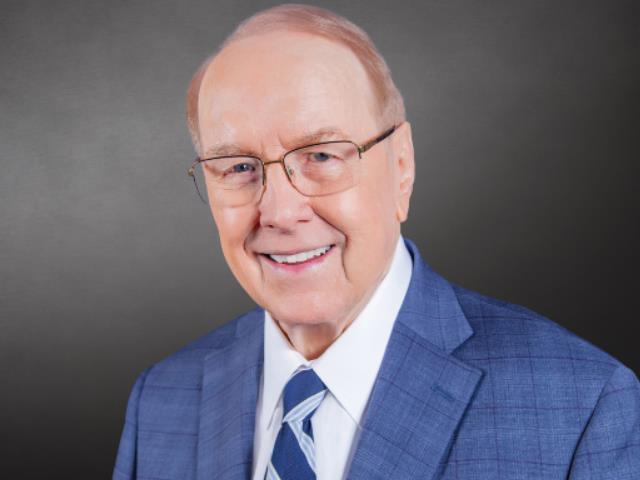
In a culture that’s redefining sexuality, how do parents equip their kids with biblical truth? On today’s edition of Family Talk, Roger Marsh continues his encouraging conversation with Dr. Christopher Yuan, author of Holy Sexuality and the Gospel. Dr. Yuan introduces his new Holy Sexuality Project, a first of its kind video series helping parents and teens understand and embrace God’s design for sexuality.
Dr. James Dobson: You're listening to Family Talk, the radio broadcasting division of the James Dobson Family Institute. I am that James Dobson and I'm so pleased that you've joined us today.
Roger Marsh: Welcome back to Dr. James Dobson's Family Talk. I'm Roger Marsh. On the last edition of our program, we heard one of the most remarkable testimonies you will ever come across. Dr. Christopher Yuan's journey from dealing drugs to federal prison to an HIV diagnosis to finding Christ in a jail cell with a Gideon's New Testament pulled from a trash can, literally. On today's Family Talk broadcast, we're going to pick up that conversation with a focus on what Dr. Yuan is doing today. Equipping parents and teens with the biblical tools to understand and embrace holy sexuality in a culture that has completely lost its footing. The conversation begins right now on today's edition of Dr. James Dobson's Family Talk.
Christopher Yuan: Once you concede that sexuality is—to get philosophical or theological—an ontological category or to put it in layman's terms, that it is a category of personhood, then we're not going to get anything right after that. Why? Because the Bible teaches against that. Never do we make our sin struggle who we are. Never do we make a feeling or a desire who we are. We need to be really clear who we are, that we are created in the image of God. That is something that's essential to who we are. But the world says something different, don't they, Roger? They say no, your sexuality or your gender confusion is essential to who you are. We've never done that before in the history of mankind and the church is buying into that. That's why you hear Christian leaders and pastors that say, "The loving thing is to use this terminology to be winsome to meet them where they're at," they say, or even "it's a way to reach out." But this is very important. We never use sin to win the lost. You use the Gospel to win the lost. We need to very winsomely engage with people even if they're wrongly identified as gay, like myself. And be clear about this because if any of your listeners are hearing this from a pastor or maybe a New York Times bestselling author, maybe even from a video series that your church's youth group is going through and it's even called Christian sexuality, that when they're trying to tell us what gay means, but they've never lived in the gay community, they've never identified as gay. Or even if they did, they say, "I'm a gay Christian." If you look at their past, they were raised in the church and then later came to the realization that they have these same-sex attractions and then they just tagged on the "gay" to who they were as Christians. So they would now be a quote-unquote—and I want to be clear, I'm putting the quotes around that because it's an oxymoron—a gay Christian that they never lived in the gay community. They were either like some authors and pastors, they've just talked to some gay Christians who were Christians all their life, but never in the—
Roger Marsh: You were in it. Yeah, and you were in the lifestyle.
Christopher Yuan: I was in the gay community. Not kind of this so-called gay Christian or a church and then later stayed in the church and just added this label. And for me, before I came to Christ, gay never meant same-sex attractions. Actually, I never even heard of the phrase same-sex attraction. This is why people like myself, we push back so hard on it because this is not quibbling over words. This is not something to agree to disagree like over baptism etc. This is something that is about sexual immorality. I'm not calling people who disagree with me on baptism to repentance, but I'm calling individuals who are caught up in this, still clinging to their sin. But the Bible's really clear that sin is not just an action. Jesus says in Matthew chapter 5, the Sermon on the Mount, if a man looks lustfully at a woman, that word lustfully in the Greek actually is just the word for desire, epithumia. And that word in Greek, translators in English translated it in two different ways, either desire or lust. So it's not that desire turns into lust; wrongly ordered desire is lust. So if a man looks lustfully, desiring the woman, he's already committed adultery, Jesus says. He doesn't say he's good, just don't act on it, which is kind of what this movement, this gay Christian movement is promoting. Just don't act, but the desire's okay. People are even promoting and saying no, gay can be sanctified, which is nowhere in Scripture does it say we sanctify sin. We put it to death. Paul says in Romans that we mortify it. The good old King James word. It's really key and I think that's very important that we talk about this, address this with our kids because our kids are swimming in this. And address this with the pre-teens and helping them go through this. And I think it needs to be best done at home because I think a lot of youth groups are in their attempt to be winsome, they're accommodating to the world and they're causing more confusion. The youth pastor said, "We started this video series and we had to stop in the middle because one of the youth invited her friend who was an open lesbian in a lesbian relationship. And when she just happened to come when this gay Christian was giving his story, and the minute he was talking about he's a gay Christian, this lesbian, not a Christian, nudges her friend and says, 'See, God's okay with being gay.'" So they had to stop it. And this youth pastor even told me, "That was the worst decision that we made because they had to do so much damage control after that." They stopped it. The church had to make a public statement that that is not what we believe, which I'm glad they did that, but the damage was already done.
Roger Marsh: Yeah, you can't unhear that.
Christopher Yuan: You can't unhear that, especially what if that girl didn't come back and they didn't have so she didn't hear the correction. It's tough, right Roger? Because that reminds me of words like Jesus says, if anyone caused one of these little ones of mine to sin. What does Jesus say? It's pretty sobering, isn't it? It's better that a millstone be cast around their neck and thrown into the sea. So we need to be very, very careful with our words. That if we are ambiguous with what we're saying, kind of talking out maybe both sides of our mouth, saying things that are confusing, having all these different stories in a video series where someone says no, it's not okay but then someone does say it's okay. So what is the message? Our kids, teens, need clarity. And so that was our hope, to provide very clear biblical clarity with our kids, with our teens through this video series. And actually, kids love videos, don't they? I wish they would read more books, but they're consuming videos. So we're using video as the platform, the medium, but we're also incorporating animation. There's no other video series out there that is using animation like we're using. We're using some very high quality custom animation. This is a huge project that when we were told, they were like, you need to charge probably three, four, five hundred dollars to recoup. And our board decided, you know what, we're not going to recoup. This is our gift to the church, to parents. So it's only $20. What normally would cost two hundred, three hundred plus—two hundred, many of those don't have any animation. Ours has engaging animation. We need to give God our best and teens so they can be engaged, excited about this. There's a parent guide that comes with it that helps parents and their kids to actually watch the videos, have a little conversation. There's four to six questions. Then they'll watch another ten-minute video, another four to six questions, and then a wrap-up video. So each lesson is about 45 to 60 minutes to be done at home with your teenage kids. And what's so cool is that we have this vision that we're not going to stop with the teens. Pre-teens. Kids age nine to 12 because the battle's getting younger and younger and it's not even the pre-teens anymore, Roger. We're planning to release ones for little kids age four to eight.
Roger Marsh: Oh my, who would have ever thought? And yet there you are in the People's Republic of California where you see the normalization process—and I have that in air quotes—public school. They're saying five-year-olds. I remember talking to a kindergarten teacher, this is probably ten years ago. And we were asked, they had passed a measure to rewrite all the textbooks to include all the contributions of LGBTQ heroes. And I asked her, I said, "Why does a five-year-old need that information?" And she looked at me straight in the eye and she said, "Because kids are talking about it on the playground." I said, "In kindergarten?" And she said, "Yes, in kindergarten." Dr. Christopher Yuan is with us today here on Dr. James Dobson's Family Talk. And we're talking about this Holy Sexuality project, first of its kind for teenagers and they're working on the pre-teen and then basically elementary school version as well. I mentioned that word normality because it's become so common and a lot of people will juxtapose the two. They'll kind of get them mixed up saying, "Well because it's so common it must be normal." And I noticed in one of your videos, you talk about meeting with a mom who had a son who thought he was gay, wanted to live with his boyfriend, and then what she was comparing that to wasn't a whole lot better in terms of the way his brother was living. Can you walk us through how we as Christians need to have better discernment than to say, "Well at least you're not gay"?
Christopher Yuan: Yes. The story was a mother. She came, she was just so broken. She was weeping, could barely get the words out. In those situations, Roger, the most you can do is put a hand on her shoulder, take your time, and just sit with her. She was finally able to kind of get some words out, "My son's gay," and telling me the whole story. And as she was talking, she said, "I wish my son was like my other son." And I thought, okay well tell me a little bit more about your other son. Come to find out, he's about to have a child and I said, "Wow, congratulations. How long has he been married?" "Oh, he's not." And I'm thinking wait one second, you want your gay son to be like your fornicating son? Do you not see the disconnect there? And our moral compass is thrown off, which is why we need to help not only the church but also our kids to understand what I just talked about, that we have to separate sexuality from who you are. And if I could just say one more thing about that, before I knew Christ, that was completely who I was. So I could not hate my sin without hating myself. Why is this such a big deal? It's because now that I have a new mind, the mind of Christ, I can hate my sin without hating myself. So those in the Revoice side B, they can't hate their sin, including not just their actions but also their sinful desires and the attractions that lead to sin. They can't hate that without hating themselves. So that's why they take it so personally when we attack the concept. But the second thing is that we need to have a very clear concept of what is the true, precise biblical goal when it comes to sexuality. Heterosexuality is too broad. That's why this mother was like, "Well as long as my gay son just becomes heterosexual." I put that in air quotes because I think we need to be able to separate sexuality is not who you are. So gay, straight, bi, actually shouldn't be used to describe people. It describes our desires. That's very important because a desire is not a person. So she thought, "Well as long as my son just becomes heterosexual then we're good." No, even men who have opposite-sex attraction—notice I'm saying men have, instead of saying men are, because there's a difference. I am is different than I have. God is the great I AM, so we need to be very careful with our "I am" statements or "you are" statements or "we are" statements. A person has these opposite-sex attractions; he still needs to resist temptations, fight these sinful desires, put them to death. That was the beginning of my chapter on holy sexuality introducing that concept, that the Bible is always challenging us to be more precise, not less precise. Not borrowing secular categories but using our existing biblical categories when they are there. And it's clearly there in Scripture: chastity in singleness and faithfulness in marriage. And what I like about this term, it's a new term that many people might not have heard of, but be sure that the term might be new but the concepts are not. If I'm trying to come up with these new concepts, then I'm most likely going extra-biblical. These concepts are just coming out of the pages of Scripture: chastity in singleness or faithfulness in marriage. The term is new. And notice I'm actually not even using the word celibacy. The reason is because in this conversation around sexuality, celibacy has taken this new form co-opted by this gay celibate Christian movement, this Revoice side B movement, that wants to say who are we to say ever that God can't change us? That's a different Gospel. God definitely changes. The old is gone, the new has come. Never are we to identify with Adam. Never are we to continue to identify with our old man, our dead man. Paul, one of my mother's favorite verses, Galatians 2:20, "I am now crucified with Christ." Paul doesn't say and I'm still holding on, I'm still living, part of me is.
Roger Marsh: I don't identify as crucified. I am crucified.
Christopher Yuan: I am crucified, right, exactly. I am crucified with Christ. So it's very powerful for us to recognize that God is calling us all to holiness. Not calling some to deny yourselves, no. "If anyone would come after me, he must deny himself, take up his cross and follow me." Because very often in our pursuit of communicating biblical sexuality or in what the church and Christians were promoting, especially to youth and young adults, it actually ends up sounding like behavior management. Years ago we had the chastity movement, which I think oftentimes we might try to throw out the baby with the bathwater. I think it was good. I don't think they were bad. It's just when we confuse pleasing God with trying to do right. That is where we need to communicate. No, it's because of our love for God that then we want to do right. It's not that we do right to please God. There's a very big difference. So they throw chastity out. Chastity is a very good thing. Purity is a biblical concept. So we need to avoid the behavior management. But today, I think where the pendulum has swung now with our young adults and with our kids is they are living a theology of nice. Just be nice. Just be a good person, just stop being the oppressor, weighing on the whole worldview that these individuals are victims and we need to just stop being nice. And we're actually hearing that, I hear this very much even among parents. And where do I see that? It comes in when they say, "My job is to just love." I'll be honest, I used to say that as well. So if you're hearing that, you're a listener or watcher, and you're like, "Oh, I say that," I did the same thing. Here is why that's wrong. Obviously, it's not the love that's wrong. Of course we're called to love. Here's what's wrong: it's the "just." Christians, we are not to just love because then that makes love an end in itself. In other words, it's not that love is the goal and all we do is just love because love doesn't save. And I know some might be thinking, "But wait, isn't God love?" Yes, God is love, but love is not God. Love is only one character of God; He's got many others. But we don't want to make love God. God is love, but love is not God. So what is the goal? Our job as Christians is to love unto Christ. The "you do you" mentality, it's the Corinthian way to live. "You do you" is what many of these approaches are doing. If your son or daughter wants you to use pronouns, just give in and don't distort God's truth and just do that. No. Or if your son or daughter wants to change a name, just go with it, just meet them where they're at, or whatever crazy thing like that. Or all these different things where we're accommodating "you do you" more than being full of grace and full of truth. I'm not saying we hit people over the head. So if your kid says, "I don't want anything to do with you, you've cut me off," clarify. Say, "Nothing can change my love for you. I'm sad that you want to cut me off, but I will never cut you off." And so even though they say don't contact me, I say continue to. Send them texts, just a few characters. And you don't have to make it long: "Love you. Thinking about you." And leave it at that. And pepper them with love several times a week so that they don't forget who loves them. That parents, you love them unconditionally and God loves them. My mom would sign every card, "Love you forever." You know that little kids' booklet, Love You Forever mom. She would sign it love you forever. I didn't know what it was at that time. She showed me later and I was wrecked for like a month. But then she would write, "But God loves you more." We have to remind our kids we love our kids unto Christ. And that was the focus of the video series as well, that I did not want to create a video series that was how to not sin or just behavior management. Because that would be missing out on the most important thing, which is Christ. Because if I don't lift up Christ, if I don't point our kids to Christ, they're going to miss out on everything. Because how can we say no to our flesh if Christ isn't abiding in us? In the pinnacle of the whole series, lesson seven, we're talking about marriage and I talk about how actually marriage is temporary, Matthew chapter 22. And then I talk about my dad. He passed away three years ago. And I talked about how my mom's now a widow. It was just a tender moment. I didn't know where I wanted to put this in while I was recording it in the studio. God gave me this. I was like, you need to make this here in lesson seven at the end. And I shared the Gospel. And I said, "Kids, this is the most important thing about this whole video series, more than my desire—more than you just understanding what holy sexuality is. I want you to know Jesus Christ." And I told the kids this too as well, my testimony. Maybe some of your listeners, Roger, haven't heard a story like mine before. They're out there, aren't they? That a guy used to identify as gay and now no longer do. And that is a core part of my testimony. But to be honest, that is not how I summarize it. This is how I summarize it: I once was blind and now I see. I once was lost and now I'm found. I once did not believe and now I believe in the Son of God, and His name is Jesus. That's my testimony.
Roger Marsh: And a powerful one it is. From Dr. Christopher Yuan, great conversation today about the book Holy Sexuality and the Gospel and now this film series, The Holy Sexuality Project, a first of its kind video series that is designed to help parents and grandparents—
Related Episodes
Making the Most of Ordinary Days, Part 2
Friday, October 2
Making the Most of Ordinary Days, Part 1
Thursday, October 1
Tuesday, September 29 – Holy Sexuality, Part 1
Tuesday, September 29
Related Videos



About Family Talk
Family Talk is a Christian non-profit organization located in Colorado Springs, Colorado. Founded in 2010 by Dr. James Dobson, the ministry promotes and teaches biblical principles that support marriage, family, and child-development. Since its inception, Family Talk has served millions of families with broadcasts, monthly newsletters, feature articles, videos, blogs, books and other resources available on demand via its website, mobile apps, and social media platforms.
The Dr. James Dobson Family Institute (JDFI) is a Christian non-profit ministry located in Colorado Springs, Colorado. Founded initially as Family Talk in 2010 by Dr. James Dobson, the organization promotes and teaches biblical principles that support marriage, family, and child development. Since its inception, Family Talk has served families with broadcasts, monthly newsletters, feature articles, videos, blogs, books, and other resources available on demand via their website, mobile apps, and social media platforms. In 2017, the ministry rebranded under JDFI to expand its four core ministry divisions consisting of the Family Talk radio broadcast, the Dobson Policy and Education Centers, and the Dobson Digital Library.
Dr. Dobson's flagship broadcast called, “Dr. James Dobson’s Family Talk," is aired on more than 1,500 terrestrial radio outlets and numerous digital channels that reach millions each month.
About Dr. James Dobson
Dr. James Dobson is the Founder Chairman of the James Dobson Family Institute, a nonprofit organization that produces his radio program, “Dr. James Dobson's Family Talk.” He has an earned Ph.D. from the University of Southern California and holds 18 honorary doctoral degrees. He is the author of more than 70 books dedicated to the preservation of the family including, The New Dare to Discipline, Love for a Lifetime, Life on the Edge, Love Must Be Tough, The New Strong-Willed Child, When God Doesn't Make Sense, Bringing Up Boys, Bringing Up Girls, and, most recently, Your Legacy: The Greatest Gift. Dr. Dobson served as an associate clinical professor of pediatrics at the University of Southern California School of Medicine for 14 years and on the attending staff of Children’s Hospital of Los Angeles for 17 years in the divisions of Child Development and Medical Genetics. He has advised five U.S. presidents and served on eight national commissions. Dr. Dobson has been married to Shirley for 64 years, and they have two grown children, Danae and Ryan, and two grandchildren.
Contact Family Talk with Dr. James Dobson
540 Elkton Drive
Suite 201
Colorado Springs, CO 80907
Phone Number
877.732.6825