Making the Most of Ordinary Days, Part 1
Ministries > Family Talk with Dr. James Dobson
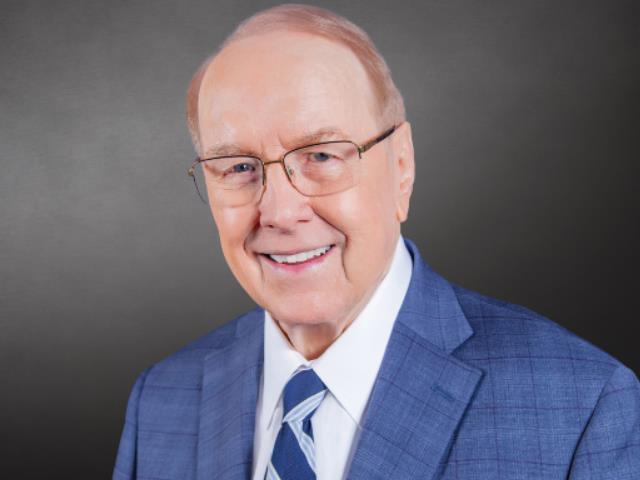
The most lasting memories rarely come from expensive vacations. They grow from ordinary days made extraordinary. On today’s edition of Family Talk, Dr. James Dobson sits down with Gloria Gaither and Shirley Dobson to explore simple, meaningful ways parents can shape their children’s hearts and minds. They share why small moments matter most, and how everyday interruptions can become God’s work.
James Dobson: Welcome everyone to Family Talk. It is a ministry of the James Dobson Family Institute, supported by listeners just like you. I am Dr. James Dobson, and I am thrilled that you have joined us.
Roger Marsh: Well, welcome to Family Talk, the broadcast division of the Dr. James Dobson Family Institute. I am Roger Marsh. Today, we are bringing you a very warm conversation featuring Dr. Dobson and two remarkable women, Shirley Dobson, of course, his wife, and Gloria Gaither. This is a recording that goes all the way back to a book that Shirley and Gloria wrote back in 1983. The book is called Let's Make a Memory. Shirley Dobson served as the chair of the National Day of Prayer Task Force for 25 years and is the author of several award-winning books. Gloria Gaither is a celebrated speaker, teacher, and award-winning lyricist. You have probably sung a Bill and Gloria Gaither song or two in your lifetime. Back when Mrs. Dobson and Gloria Gaither wrote their first book together, they were busy moms raising kids and literally in the thick of it all. 22 years later, they teamed up again on a sequel, Making Ordinary Days Extraordinary, and sat down with Dr. Dobson to look back on those parenting years and to talk about what really matters once the children have grown. Get ready for a heartfelt discussion that is timeless in nature. You will not want to miss a minute of what Dr. Dobson has to say with his guests, Shirley Dobson and Gloria Gaither, on today's edition of Family Talk.
James Dobson: Well, Shirley and Gloria, it is a real pleasure to have you back to talk about a summer subject. I want to know what the last 22 years has meant to you and especially as you look back on what we were talking about there when you were a full-time mom. Well, you weren't full-time; you had a lot going on in your lives, but you were giving a good part of your lives to your children. How do you feel about that era when you think back on the responsibilities of all that it means to raise children? Are there warm memories, or do you have different perspectives on it? Gloria, take a run at it.
Gloria Gaither: I was thinking about the awards. They do not mean much compared to three kids and watching them give birth to their children. The product of the whole philosophy of your life is whether or not somebody else will pick up on it, and the somebody else that you have the most primary responsibility for are the kids that grow up in your household. Bill and I, early on when we were trying to do prioritizing, we used to say to each other, "If we save the whole world and lose our kids, we will have lost."
James Dobson: Shirley, when you compare the responsibilities of motherhood with the other things you have accomplished and enjoyed in your life, where does it rank?
Shirley Dobson: It definitely ranks number one. In fact, when I was preparing for this broadcast and perusing through the book, I actually got a lump in my throat and felt a sense of sadness that those parenting years are over. When you think about taking a small child and they come to you with a blank slate, being able to mold that little child and to put into them so many things, and when you realize that you have an eternal soul there that you can mold, not only for God, but just the character of that child, it is awesome to think of.
James Dobson: Well, the responsibility comes with an awful lot of stress and pain too. Raising kids is not the easiest thing anybody ever did. Talk to the women right now with all these kids and they always need something, and they make messes, and their noses run, and you can never feel like you have gotten it done. What do you say to those that are there saying, "Fine for you to say now that you've gone on to these other things, but I'm on the battlefield every day"?
Shirley Dobson: I remember thinking, "I'm a college graduate and I have a teaching credential, and I could be out full-time teaching." Here I am with all these messes and kids, and my whole life is 100% dedicated to these kids. I remember calling up your mother, and I was bemoaning the fact of all these problems with the kids and all. She just paused and she said, "Shirley, these are the happiest days of your life. You do not see it now, but in looking back, you will one day realize that this is the happiest time of your life." Not that there weren't days of frustration, there were. And not that there weren't times when you would like to maybe put motherhood aside and get into a career. Some women can do both, I do not know how they do it, but I feel like I gave 100% of my everything to my kids and if I had to do it over again, I would give 110%.
Gloria Gaither: At that point, you are not sure if you are being successful. I remember a thing that Bill did, a recording when our kids were babies, called I Just Have to Be Successful as This Little Boy's Dad. It told about everything else, and when your kids are little, you think that, but then you look back now and say, "I wonder if I was successful." Shirley, there is a wonderful day coming when one of your children will call you on the phone and they will say something like this, "Mother, how did you do it?" And you will say, "Yes!" We had a funny thing. You were mentioning the book Let's Make a Memory, and because our kids were entering the smart aleck stage of their life, nine and 13 or 14, they used to have a saying after our book came out. It got a lot of attention and every time we went, they would say something about, "Oh, it's so nice, how did you make a memory?" or "Gloria, would you make a memory?" My kids picked up on that. So anytime we were at the supper table having a knockdown-drag-out over something that happened in school, someone was bound to say, "Mother, are we making a memory?" Believe me, I have had my books thrown in my face too. "Why don't you live what you write about?" It is hard to do day by day. Lest anybody thinks that we are perfect and we did this all right, I just want to set that straight.
James Dobson: Well, Gloria, I have been pondering that question.
Gloria Gaither: Maybe this is my new thing I am learning, but I am coming to believe that God's will for my life is the interruptions. I remember praying when I was a kid for God's will for my life and I sort of thought it would be like a package on my path. If I did all the right things and went all the right places, I would find this package on my path with a ribbon tied around it, and it would say, "Gloria, God's will for your life. Here's your husband and your children and your career." I long ago discovered that God's will for my life was the path, not the package on the path, and certainly not the destination. But now I am coming to believe that God's will for our lives is the interruptions. I think we choose careers and begin certain path directions just so that we will be on a certain track where God can interrupt us with those people. If I was a nurse, God would interrupt me on that path. If I am a writer or a performer or a mom or whatever, and if moms that are hearing this understand what I am saying, I do not care what career you are in, it is the interruptions. So if you are saying, "I want a perfect house, I want to have supper on time, I wish I could do something with my career," trust me, God's will for your life is the interruptions. Today it may be a snotty-nosed kid. It might be, "Mommy, can we make some Play-Doh?" It could be your neighbor that rings your bell and she is not on your list, and she says, "Could we pray? My daughter's pregnant." I do not care what it is, but I look back over my life now and I look at scripture. If you look at the story of the people in scripture, God's will for their life was on the way to the road to Damascus such and such happened, or Philip comes to this Ethiopian eunuch. He did not start that path to go to him. I really do believe God's will for our life is the interruptions.
James Dobson: In the midst of the interruptions, however, you have to take care of those kids.
Gloria Gaither: Well, they are the interruptions right now. A lot of career gals are sitting out there saying, "I'm never going to do what God's will for my life is." Trust me, this is God's will for your life. This interruption, this piano practice, this skateboarding, whatever it is, this is God's will for this moment. The interruptions is where God works.
James Dobson: And God has something else for you when that job is done. Shirley, you and I used to talk about that a lot, that when this assignment is finished, and it will be very quickly, God has something waiting for you. Just on cue, the National Day of Prayer came along and fell on Shirley's shoulders. She wasn't looking for anything, but the Lord was ready with that next responsibility.
Shirley Dobson: At first, I did not see it as an answer to prayer. I wasn't thinking of anything quite that big. I was thinking maybe of teaching a Sunday school class or something, but no question that that is where the Lord wanted me and it opened up just right on time.
James Dobson: We have mentioned Let's Make a Memory a couple of times. It was an immediate success. Does that surprise you all considering the work that you did back there?
Gloria Gaither: I remember when we wrote that book, Shirley, I do not know if it was in your presence or not, but when I took the manuscript to show to Bill, he said, "I do not know if that will sell. This is just dumb stuff everybody does." Thanks, Bill. But both of us had a hunch that we were on our second generation of unparented kids. We are now in our third. Most of the time, the family has broken or somebody is not present, and in some cases, the parents are just not there on either side. And yet we have these young couples that are getting married to each other and want to do it different. They want to do it right, but they are not sure what that looks like. We have gotten so many letters in these last intervening years of exactly that, young parents who said, "Thank you for fleshing out in a practical way what family looks like. I never would have thought to do this or that on my way to raising my kids."
James Dobson: As the title implies, your purpose there was to teach parents how to make memories with their kids. Shirley, why is it important to do that? Kids forget a lot of what they experience as children, so why go to the trouble to plan things with kids to make memories?
Shirley Dobson: I grew up in a family that had absolutely no traditions. I came from a dysfunctional family. It was all my mother could do to keep a roof over our head and to feed us. Then I met Jim Dobson in college and we were married. Your family was a southern family that was just steeped in these wonderful traditions, and I saw the value of that. I saw the cohesiveness that that brought your family and the identity. The pace is so much more hectic today than it was 20 years ago, and parents are just barely hanging on. What we wanted to do with this book was to give simple ideas on ordinary days to make them extraordinary.
James Dobson: Well, you got one step ahead of me because we were talking about Let's Make a Memory, and now that that book is no longer in print, you all have brought out a new edition of a similar book. It is not the same, it is not a revision really, it is a completely new little book. This one is called Making Ordinary Days Extraordinary. Gloria, give us the theme of this first book as you attempted to write it.
Gloria Gaither: I think people think, "I am not an artist, I do not do crafts, I do not have time for that, we both work." There are all kinds of excuses. What Shirley and I would really love to convince every mom and dad, and by the way, this book would be great for single dads because you do not have your kids a long time. You might have them for a weekend, and you can do some wonderful life-changing things in that short time. For single moms too. All of the parents I talk to say, "I just can't do that, I'm not handy." We wanted to convince you that with just stuff you have around the house, not any great amount of effort, you can just make something. Jim, I want to take exception with one thing you said. I think kids do remember a lot of what they grew up with.
James Dobson: Nobody comes on this show and tells me, Gloria, that I do not know what I am talking about. You can't do that or that I am wrong. Oh, they remember a lot and it goes into a memory bank, it is down there some place, but many kids can't tell you a lot of what happened before they were seven years ago of age.
Gloria Gaither: I think just one incident though, something that happens that intersects your life. I will give you an example. When I was no more than four or five, I have this vivid memory of being with my cousin at my grandmother's house. She had this huge garden, and she pretty much let us get by with next to murder. She said, "Okay, you guys can play with anything in the garden that is too ripe." You tell that to a four-year-old, and we went out and we picked two big cucumbers and two old carrots, and we made mud pies. We actually chopped these real vegetables into our mud pies and our salads. Then there was this container there with this wonderful water that we could mix the dirt with right there by the garden. So we got our big old coffee can and we are stirring up this mud. My grandfather came out and said, "Where'd you kids get that water?" We said, "Right there out of that wonderful container, it's great." It was kerosene. Kids do remember small incidents like that. We also took the wallpaper that grandmother trimmed off of the end of her rolls of wallpaper and wallpapered the shanty. She let us do that. I remember mowing my initials in the backyard with Grandpa's push mower. Kids remember amazing details.
Shirley Dobson: Talking about single dads and single moms, in the book there is one event that is called Moonlight Magic. The psalmist David said, "The heavens declare the glory of God." So why not on a summer night take a blanket out, spread it out in the backyard, lie down on the blanket with your kids, and look up at the stars at night? It just opens up an incredible discussion about the universe and how God created that. There are just all kinds of things can come out of just a simple event.
James Dobson: So it becomes a spiritual journey as well. A little bit beyond Twinkle, Twinkle, Little Star, I wonder what you are. There is a whole lot more we can tell kids than that.
Gloria Gaither: I think Shirley's hit on something really important in teaching children. I used to think that experience was the best teacher, but maybe as I have gotten older, I have decided experience is the only teacher. At least we have to make theory a part of our experience. What she is talking about there, I think we like to call teachable moments. We can say, "Sit down, shut up, we're going to have worship," or we can take advantage of the really important things that happen or help to make them happen so that becomes a part of a kid's experience.
James Dobson: So the suggestions in this book, Making Ordinary Days Extraordinary, often lead to a scripture or a scriptural principle.
Gloria Gaither: Absolutely, and make it real. I remember planting bulbs, for instance, with my children, and how dead they looked. I remember them commenting on, "Surely these don't grow." It was in the fall and it was going into winter, and why were we doing this? Which turned out to be a great spiritual metaphor that lasted all winter. Because come spring, I said, "Come out and let me show you what happened to those dead things we put in the ground." That precipitated a great Easter discussion about unless a grain of seed fall into the ground and die, it abideth alone. The kids to this day remember that and they are grown.
Shirley Dobson: Another one that I really like in the book is School Day Surprise. That is where you just choose an ordinary day and you show up at lunchtime. Your kids do not know you are coming, it is a surprise. You grab one of them, take them to the front office, check them out just for the lunchtime, and take them to one of their favorite restaurants. Or I like the idea of just packing a lunch and taking them on a picnic. That sounds very insignificant, but your child will remember that forever. That will be a wonderful memory.
James Dobson: Well, I think I am going to have to retreat from this statement that they do not remember. I do, of all people, I know that because I have an unusual memory. It is kind of legendary in our family. I remember a number of things from my second year and then third and fourth. I found the Lord when I was three and certainly I remember that as though it were yesterday. We are not just talking about young children; we are talking about those that are in the latter ages of childhood before adolescence and so on. But I used to love to go hunting and fishing with my dad and him talking about the things that were out there in nature. My dad loved everything God made, and it was just an experience in learning to be out there with him. There was something that happened between the two of us that was just marvelous. I love my mother greatly too; she had a great impact on me. I think the dinners that she cooked and the family activities that we had and the traditions that we experienced, Shirley, you have carried that on in an absolutely beautiful way. As I look back on our child-rearing days, I think those Sunday dinners that you cooked, when the whole family came over and there was so much laughter and so much fun, and we would read a scripture and we would pray together, those are highlights for me. I am sure they are for you as well.
Shirley Dobson: Your mother was an incredible cook and I still use a lot of her recipes, especially on the holidays. Your whole family was from the South and they were wonderful cooks. Those recipes, Aunt T's apple cobbler and Aunt Lila's pound cake, they are just wonderful recipes to pass down. It is not the holidays without those recipes. Danae will say, "Mom, how come you didn't fix Aunt Lila's pound cake?" or "How come you didn't fix ambrosia?" Kids love the same things over and over and over even when they are grown.
James Dobson: Well, it gets to the traditions again because it is the sameness year after year that makes it a tradition, something that gives identity on that day. We are out of time, and yet I want to continue talking to these folks. Let's just keep it up, shall we? Because it is just one idea right after another that you all have provided. Gloria and Shirley, thanks for writing this one and thanks for being here today, and we will pick it up next time.
Gloria Gaither: Thank you.
Shirley Dobson: It was great to be here.
Roger Marsh: You know, there is real wisdom in what Shirley Dobson and Gloria Gaither shared today here on Family Talk. It is the sameness, the traditions we repeat year after year, that give a family its identity and knits us together. And the beauty of that is in these moments, they do not require anything extraordinary, just a little intention on an ordinary day.
Related Episodes
Making the Most of Ordinary Days, Part 2
Friday, October 2
Holy Sexuality, Part 2
Wednesday, September 30
Tuesday, September 29 – Holy Sexuality, Part 1
Tuesday, September 29
Related Videos


About Family Talk
Family Talk is a Christian non-profit organization located in Colorado Springs, Colorado. Founded in 2010 by Dr. James Dobson, the ministry promotes and teaches biblical principles that support marriage, family, and child-development. Since its inception, Family Talk has served millions of families with broadcasts, monthly newsletters, feature articles, videos, blogs, books and other resources available on demand via its website, mobile apps, and social media platforms.
The Dr. James Dobson Family Institute (JDFI) is a Christian non-profit ministry located in Colorado Springs, Colorado. Founded initially as Family Talk in 2010 by Dr. James Dobson, the organization promotes and teaches biblical principles that support marriage, family, and child development. Since its inception, Family Talk has served families with broadcasts, monthly newsletters, feature articles, videos, blogs, books, and other resources available on demand via their website, mobile apps, and social media platforms. In 2017, the ministry rebranded under JDFI to expand its four core ministry divisions consisting of the Family Talk radio broadcast, the Dobson Policy and Education Centers, and the Dobson Digital Library.
Dr. Dobson's flagship broadcast called, “Dr. James Dobson’s Family Talk," is aired on more than 1,500 terrestrial radio outlets and numerous digital channels that reach millions each month.
About Dr. James Dobson
Dr. James Dobson is the Founder Chairman of the James Dobson Family Institute, a nonprofit organization that produces his radio program, “Dr. James Dobson's Family Talk.” He has an earned Ph.D. from the University of Southern California and holds 18 honorary doctoral degrees. He is the author of more than 70 books dedicated to the preservation of the family including, The New Dare to Discipline, Love for a Lifetime, Life on the Edge, Love Must Be Tough, The New Strong-Willed Child, When God Doesn't Make Sense, Bringing Up Boys, Bringing Up Girls, and, most recently, Your Legacy: The Greatest Gift. Dr. Dobson served as an associate clinical professor of pediatrics at the University of Southern California School of Medicine for 14 years and on the attending staff of Children’s Hospital of Los Angeles for 17 years in the divisions of Child Development and Medical Genetics. He has advised five U.S. presidents and served on eight national commissions. Dr. Dobson has been married to Shirley for 64 years, and they have two grown children, Danae and Ryan, and two grandchildren.
Contact Family Talk with Dr. James Dobson
540 Elkton Drive
Suite 201
Colorado Springs, CO 80907
Phone Number
877.732.6825