Montell and Kristin Jordan: Their Journey of Faith, Music, and Cancer, Part 1
Ministries > Family Talk with Dr. James Dobson
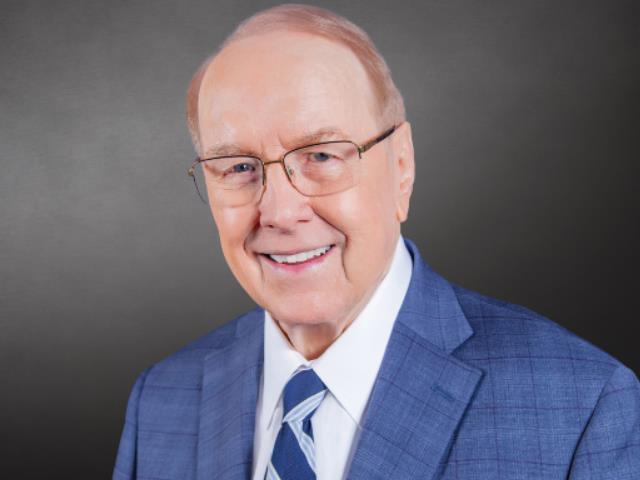
On today’s edition of Family Talk, Roger Marsh welcomes Montell and Kristin Jordan, who traded music stardom for full-time ministry. They share their journey from the Hollywood spotlight to a life of ministry in Atlanta. They also open up about how a sudden cancer diagnosis tested their faith. Through it all, the Jordans learned a powerful truth: we can do hard things, but we were never meant to do them alone.
Dr. James Dobson: Welcome everyone to Family Talk. It's a ministry of the James Dobson Family Institute, supported by listeners just like you. I'm Dr. James Dobson, and I'm thrilled that you've joined us.
Roger Marsh: Well welcome to Family Talk, the broadcast ministry of the Dr. James Dobson Family Institute. I'm Roger Marsh. Now if I mention the name Montell Jordan, many of our listeners will recognize that name because of that 1990s—it's still current today—the song "This Is How We Do It." But for the past 15 years, you might not know that Montell and his wife Kristin have served in a calling far beyond just the music industry. They're pastors, speakers, marriage coaches helping families build strong Christian-centered themes and homes. Today we're going to talk with the Jordans about their journey from the music charts into ministry, and also how a sudden cancer diagnosis really put their faith to the test and what they've learned about guiding children through big fears and why building habits of biblical courage is so vital for families today. They have a brand new children's book out that's called Shilo and the Not-So-Scary Girl Above His Bed. We've got a link for that up at drjamesdobson.org. Montell and Kristin Jordan, welcome to Dr. James Dobson's Family Talk. It's wonderful to meet you and to have you with us on the program today.
Montell Jordan: Thank you so much.
Kristin Jordan: Absolutely our honor.
Montell Jordan: Honor to be here. And you passed up a really good opportunity to sing that song right there.
Roger Marsh: Well...
Montell Jordan: You could have—that was the spot. Lean in, Roger. Lean in.
Roger Marsh: Okay, okay. "This is how we do it." There you go. Did I get it? Okay. I mean that has to be the catchiest hook of the last 30 years. I mean it's everywhere. You play those notes and people just know. Montell, what was the moment like where you knew, "Okay, I've got to record this thing because this is just going to be a monster hit"?
Montell Jordan: College days. I came into the music business during a time when sampling older songs was a part of the hip-hop culture. So even as an R&B singer, I was signed by Russell Simmons at Def Jam Records. I was signed as a rap singer. As a rap singer at that time, we would sample records and the original record, at least that I knew of, was from a rap artist named Slick Rick. Slick Rick the Ruler had a song called "Children's Story." I can remember just being in college whenever that song would come on, it was literally like the atmosphere in the room completely shifted. I always thought if I ever get a chance to sing over that record, I'm going to sing over that record. So that was the moment years before we ever recorded it that we knew that was something that if we could sing over that, we potentially could turn a hit into a classic.
Roger Marsh: Yeah, and you certainly did. For the people who don't know about the Slick Rick version of his song, you took it in a totally different direction but kept the guts of it, the bones if you will, and made something as iconic now as—it's going to outlast you. It'll outlast all of us here. That must be really remarkable. So at what point then did you get the calling that says, "Okay, music is good, but God has a different calling for me that might even be even higher than this one"?
Montell Jordan: Interestingly enough, the calling of ministry was prior to the calling of music. So I was brought up as a church musician. From the time I was nine or 10 years old, I was playing piano in the church and my godbrother Shappelle Crawford, who would also become a music producer who's now a pastor of a church, we were playing piano and organ in a little Baptist church in South Central Los Angeles, California. That was the space that we started and then later in life in music in the 80s and college life, that took me on the journey of—I say that I didn't go to seminary, I went to cemetery. Cemetery for me was the music business where I had to go and a lot of me had to die in order for me to find out who I was supposed to be in ministry. Literally when people see the journey of me going from the music business into ministry, it wasn't a big leap. It actually was a return back to the roots of where I had come from.
Roger Marsh: I love that. Kristin, how did you and Montell meet? I always like to ask her this version of the question because sometimes guys have a slightly different edition of what happened. Kristin, what really happened when you and Montell came together?
Kristin Jordan: What really happened was—no. Ironically, I did not grow up in church, but I definitely—
Montell Jordan: I was flirting to convert, sir. I was flirting to convert.
Roger Marsh: Been there, done that, bought the shirt.
Kristin Jordan: Yes, yes. But it's interesting when I first met Montell, we were actually at a sorority and fraternity ball of which neither of us had any business at. When we met, he asked me to dance. I was not interested in dancing and he kept asking, and his persistence over-won me and then his dance moves over-came me.
Roger Marsh: Oh!
Kristin Jordan: And then we ended up talking all night long. And five kids later, here we are.
Roger Marsh: Oh my goodness. Wow, that's incredible. How many years?
Montell Jordan: 32. We've been married 30 years, together 35.
Kristin Jordan: Yeah.
Montell Jordan: Five kids, five grands.
Roger Marsh: Wow, congratulations. It's wonderful to hear your love story come together. I was self-effacingly saying, "Hey, I know what it's like to do that flirt-to-convert type of thing," because I think just about every guy or girl who grew up in church has been in that situation where you find somebody and say, "Oh my goodness, wouldn't it be great if?" Then you just kind of start praying. But in your case, the Lord brought you two together and Kristin, you were dealing with a guy who wound up having tremendous success in the music industry, had a calling on his life for ministry. Was that a bit daunting for you for someone who didn't grow up in church realizing you were going to be co-laboring in ministry together with him?
Kristin Jordan: Well here's the interesting part. So when we first met I didn't know Jesus, but when we were dating I fell radically in love with Jesus. It was a "wherever you go, I'll go" thing. I had my Ruth 1:19 on. I was, "Let's go!" So I actually was his manager for the duration of his career. So we kind of did everything together. Yeah, and we had this radical faith. Interesting, that CD when we first got it, I would put it in my Bible. I had just gotten saved. So I would put it in my Bible and literally take it with me every single week and pray that the Lord would show me new things. Actually the very first time I audibly heard the voice of the Lord was in regards to tithing and I believe that it was my radical ignorance, I don't know. As hard as I went in the world was as hard as I went for Jesus.
Montell Jordan: That Bible should have burnt up. It should have. That first CD in church in the Bible, it should have spontaneously combusted.
Kristin Jordan: But here's the truth. I think that God knew all along what He was going to do. I think He put His hand on it because He opened doors for us then that we would now walk through, but we would walk through with a different call and a different way, always with Jesus on our mind. It's interesting because when we got into the music business we were giving Bibles and praying for people and they were like, "Wait, what?"
Montell Jordan: If I could just add to that, it really wasn't that I had this career and she came along for the ride. It was like literally we both started together as manager and artist and we built from the ground up together. The entire journey of our success in the music business was us together with her leading, managing, organizing, negotiating, fighting, being the bad guy while I was the more innocent good guy. So that was the journey. She literally was the behind-the-scenes person that helped make this entire journey even possible.
Kristin Jordan: And it's interesting because as we were going through the music business, it wouldn't be until probably 17 years in where I ended up starting to go to Tennessee and minister to women. I was like, "Man, I really love this. This is good." And for the first time out of my mouth I said, "I want to be in full-time ministry." And there was this man who was a prophet who basically said, "Oh, actually within the year you and your husband will be in full-time ministry." I was like, "Oh, I don't think so. You might have missed it on that one." But sure enough, the crazy part was within a year we were in full-time ministry and completely laid down our careers and walked straight into full-time ministry.
Roger Marsh: Boy, that's an inspiring story from Kristin and Montell Jordan today here on Dr. James Dobson's Family Talk. Talking about their life, their marriage, their ministry, their career, and a brand new children's book which we'll get into in just a moment. But I want to get the tracking straight here because as a native Southern Californian myself who's now a Texas transplant, you guys made the decision nearly three decades ago to move to Atlanta. What was that like for you as a couple with your family? What was the story behind that?
Montell Jordan: The move to Atlanta was indeed a God move. It was a—we lived a Hollywood lifestyle. We lived for 30 years doing the Hollywood thing, the music business thing, the film thing, the pretentious—there was a lot of glitz and glamour that surrounded our lives, but literally when it came to our marriage, when it came to our life, there was a lot that was kind of hemorrhaging behind the scenes. There were things that I had kept hidden in our marriages. There were things that I had struggled with in our marriage and from that standpoint, I think God brought us to Atlanta as a reset for us. He wanted to heal us, but he didn't want us to heal in public. I think we needed a sterile environment for us to be able to heal so that it would not get infected with what He wanted to do. So literally we were extracted from California thinking, "Oh, we're going to the new Southern Hollywood. We're going to make records out there and we're going to—real estate is better." We went for all what we thought were the right reasons, but literally it literally was just taking us away from the people we knew, away from the cameras of Hollywood, away from all the common surroundings that we knew so He could tuck us away back in the country somewhere so He could whoop my tail and get me right.
Kristin Jordan: It was a real Genesis 12:1.
Roger Marsh: I was going to say, this is the rod of discipline applied to the seed of knowledge. Call it whatever euphemism you want, but I love the fact that you were led and you went there thinking it's going to be one thing and God has a total different—what is it? "Man makes his plans, but God numbers his steps." Kind of paraphrase the proverb. You were obedient to that and you stayed with it. You didn't try to, "Oh wow, it got a little tough here in Atlanta so let's see what Charlotte looks like," or whatever. You stayed there and you hung in there and this has been home for your ministry for the writing and speaking and counseling and everything that you're doing for so many different people. It's really just incredible and encouraging to see. One of the more inspiring aspects of your story from me personally was Kristin, I want to get your take on this because of Montell's struggle with cancer. The fact that when this medical crisis kind of hit you, a lot of times we look at the person who's going through it and say, "Wow, that's really tough," and of course it is. But you had to really lean on your faith in terms of this is coming and you're thinking, "Okay God, we did not bargain for this." What was it like for you when you got the first diagnosis and treatment was coming?
Kristin Jordan: You know, it's really interesting because when you are faced with this daunting thought of that at 55 that you have there's a finality that comes when you hear these silly words, right? That it's cancer. For me what we realized early on is like, "Okay, this is a fight and God won't bring us to a fight that He won't equip us for." So for us we were like, "Okay, now we just have to figure out how to navigate this and what does that look like?" We were able to do it in a great way, but it's interesting because all the way up to all the decisions we made about what it was going to do, God was so sovereign and He was so good to us. We had made a decision that we were going to do one thing and you know how God gives you the ram in the bush that you don't know you need? What happened is we took this meeting just because of who introduced us to the person. We're like, "Oh, well we revere them and we are grateful for their input in our lives. They've been mentors for us for a long time." So because they set up the meeting we'll go. So we end up going and the gentleman, his name is Dr. Agus, and he says, "Okay, so tell me the treatment that you've decided," and we go through, "This is what we're going to do, this is how it's going to go." And he said, "Understood. I disagree with your treatment." I was like, "What?" And he goes, "Yeah. So how old are you?" And he said, "55." And he says, "Then this is the wrong treatment." I said, "Why can you say that?" He said, "Because I created it. My hand was in it and it is about an eight-year process and unless you want to deal with this again at 63, I suggest that you not do that." It was so mind-blowing because it was like a God minute. But what it did is it reminded me that God's hand was on us even when we were tempted to make a decision that we thought was the right one. All along He was guiding the way. So it was revolutionary for us.
Montell Jordan: And so this journey where I become a cancer patient, she becomes caregiver, I think it's important for people to know that are watching this or listening to this, the thing that we learned from this process is that we can do hard things, but we cannot do hard things alone. Amen. I want somebody to get that. You can do hard things. You were not designed to do hard things alone. That was I think the biggest revelation. Listen, the very one person who could have done it alone did not. He chose 12, right? So the one person that was able and capable didn't. So as a model, we cannot do this alone. That was one of the beautiful things that we learned in this. The day of his surgery I remember praying and the Lord was so kind and so gracious because I was giving Him all my worries and concerns and He said, "He shall recover all." And that was for me it's funny, I went to wake him up and I was like, "Okay, let's go, babe." He's like, "You're a little hyped for this. I don't—"
Montell Jordan: I'm like, "I'm going to get cut on." You're a little too happy. I'm going to get cut on right now.
Kristin Jordan: And my response is, "Listen, the Lord says you should recover all. 'All' means all. We're great!" But it's interesting, I thought it was for that day, but it was actually probably for the second journey which was eight months later when we would get the rediagnosis. For us, what we learned is that our community and the word of God came alive and He gave us Nehemiah 51 and we learned how to war and work at the same time and that we needed good people to come around us and war with us and pick up a hammer and pray at the same time and we were able to overcome this. There is no battle that we face that as long as we have God on our side that we can't overcome. So we learned a lot.
Montell Jordan: And I would even say this that—and once again, not just for us and our journey, but for the purpose of taking what we extracted from our journey to be able to tangibly give it to help somebody else—another thing that we learned is by sharing it with community, by sharing it with other people. I had to realize that I thought I didn't want to share because cancer's a weird thing when you feel like if you share it, like you're giving people cancer. If I share it with my kids, I'm giving my kids cancer. If I share it with a good friend, I'm giving my good friend cancer. I felt like the revelation that the Lord shared with me was that when it comes to me sharing my story with you, I don't need you to carry cancer, I need you to help carry me. And so we were able to speak to my children, to be able to say, "Guys, I don't need you to carry this. Dad is going to carry this. I need you to help carry Dad." Or to my friends, "I don't need you to mope around. Dad—I'm going to do that. As my friend, can you help carry Montell?" And so we had people that were able to rally around because I don't need them to carry cancer. That was the battle that God gave me to carry. And then we needed them to come alongside of us and help carry us in the journey. And that was something they were very capable of doing and they did it and they prayed and they fasted and they divvied up all that work amongst workers and prayers at the same time, workers and warriors all at the same time.
Kristin Jordan: That was one of the things that He gave us that was really interesting, Roger, was is that because when I would share with them the things that were happening, the burden felt heavy, but the Lord said, "You don't share with one person. You ask that person can they join you on this journey for one day? Can they pray and fast for you for one day? And then each person can do that for one day and then by the end of this, you'll be through."
Roger Marsh: I love to hear your encouraging statements, especially in the face of—I love the whole warrior mentality that you have. Because of the fact that, especially when it comes to something like—I mean here we are September, it's Prostate Cancer Awareness Month. You're talking, Montell, about your health journey and you're saying it in a way that says, "Hey look, as a father, as a grandfather, I want you other fathers to know about taking care of your health, but also let's be present with the whole family." Because I know from experience—I had open heart surgery about eight years ago—and I know from experience that our kids look at us, especially like, "Well, Dad's going to be okay. Dad's a superhero. Dad's always got this, right?" And so it's kind of weird when Dad says, "Hey, I need you guys to be praying for me right now. The other stuff's going to get done." And I really commend you for being open about your health journey like this and for other dads for going, "Oh my God, this happened to Montell Jordan, it might happen to me," which is, I know, kind of it's a little silly to think that it wouldn't happen to us. But talk about why this was so important for you to be a spokesman for this cause.
Montell Jordan: I'm definitely an advocate for early detection because early detection helps save lives. Early detection is what helped save my life because I had been going and getting regular screenings almost a decade prior to being diagnosed. Just statistically one in every eight men will be diagnosed with prostate cancer. One in every six man will look like me, will be African American. So that is the hill that I stand on because I want men, I want fathers and husbands and sons and cousins and uncles and pastors, I want men for their lives and their legacy to be preserved. We want that the women, the moms and the sisters and the wives to do their part to help in. So I'm cancer-free now. I am my PSA—prostate-specific antigen level is sub-0.01, which is undetectable. We're trying to be undetectable for life. In that journey we want to take as many people along with us and the earlier you catch it, the more options you have available to you. Most people that have difficulty are because they wait too long, their options are different and some of the nerve-sparing things that come along with that journey to get all cancer removed or treated becomes more difficult the more time goes by.
Roger Marsh: One of the things that you mentioned, Montell, about being a dad, who, even though your children are older now and you've got grandchildren as well, both of you do, it's interesting to see how when you look at the eyes of a child who's a young—maybe one of your grands or our grandkids go anywhere from two and a half all the way up to 16. So we've kind of got a wide age range. But when they're in that two, three, four, five year age range, they're growing up in a world right now where there's a lot of anxiety. But this generation of children is a different breed in terms of the anxieties they're dealing with. I know you've written a new children's book that kind of addresses that. What was the impetus for writing Shilo and the Not-So-Scary Girl Above His Bed, which is kind of a slightly deceptive title because of who Shilo actually is?
Kristin Jordan: Well, this actually came about—my little Shilo guy—it came about when my son was three and he was afraid of the monster under his bed. He would come to our bedroom every night and I was like, "Oh God, please show me what we need to do." I had this epiphany and I said, "Honey, what if the monster that lives under your bed is more afraid of you than you are of him? And maybe one day he could be your friend? Maybe he's just afraid of you being different?" It just—his whole mind was like, "Wait, what?" It just turned—I said, "Yeah, listen. You don't have to be afraid. You don't have to, but maybe you'll have a friend." He was like, "What?" But that it really turned it upside down, but it turned its fear upside down because now he's no longer afraid of the thing that he doesn't know.
Montell Jordan: I think that three-year-old was a lot smarter than me because me, I'm like, "So you are confirming that there is actually a monster that exists? So this is a real thing." No, but I think what you were able to show him is that the things that we fear the most are actually things that may be afraid of us. They're afraid of us conquering a fear of doing this or afraid of us conquering—and we believe that unattended fear as a child becomes trauma as an adult.
Kristin Jordan: Yeah.
Montell Jordan: And becomes anxiety and depression and oppression. And it's not that it's not scary, because it is. But with God, we can take one brave step at a time. If we learn this at a three to five-year-old age that now when we're adults or even when we're in middle school dealing with a bully or high school and we're learning how to go—we want to go to college. The things that we're naturally afraid of—and really what it is is it's a fear of the unknown. But when we invite God and teach them how to invite God into that scenario, it changes everything in their life and how they process.
Kristin Jordan: Shilo teaches us all how to do it afraid.
Montell Jordan: He shows us how to do it afraid, how to take just one brave step at a time and to find out that the thing that you are probably the most afraid of is more afraid of you.
Roger Marsh: Well we've had such a wonderful conversation here with Kristin and Montell Jordan and we've hardly even scratched the surface on their brand new children's book. But we're out of time for today. Can we invite you back to Family Talk again next time so we can continue this conversation?
Montell Jordan: We would love to come back.
Kristin Jordan: Yes, please.
Roger Marsh: "We were never meant to do hard things alone." That's great wisdom from Montell Jordan and his wife Kristin on today's edition of Dr. James Dobson's Family Talk, part one of my conversation about their most recent children's book and about their amazing ministry as well. Now by the way, if you'd like to hear this program again or share it with a friend, go to jdfi.org where you'll find the audio as well as information about their new children's book called Shilo and the Not-So-Scary Girl Above His Bed. Montell and Kristin Jordan were honest today when they were talking about seasons when life simply didn't make sense. It's a diagnosis that they never saw coming, maybe or struggles behind the scenes of their marriage, or a road that looked like nothing that they had planned. Maybe you're in a season like that right now. If so, I want to point you to a free resource that we've put together called When God Doesn't Make Sense. It's a 10-day email series based on Dr. Dobson's best-selling book with that same title. These messages walk you through the heartaches and trials that often leave us asking why, and they show us that even from the darkest valleys, God can lead us to a closer walk with His son Jesus Christ through those trials. To sign up for this 10-day email series based on When God Doesn't Make Sense, simply go to drjamesdobson.org and search for that title. You can also find it when you go to jdfi.org as well. Here at the Dr. James Dobson Family Institute, we are committed to preserving and promoting the institution of the family and the biblical principles upon which it is based. We are also committed to introducing as many people as possible to the gospel of Jesus Christ and to defending the sanctity of human life. But we can't do any of this work without you. Programs like the one you just heard today reach families all across America only because friends like you step forward and donate. So we invite you to partner with us today. Your gift of any amount makes this work possible. You can give securely online when you go to drjamesdobson.org. If it's easier, just use those initials jdfi.org. It'll take you to the exact same place. You can also call a member of our constituent care team. That number is 877-732-6825. That's 877-732-6825. Well I'm Roger Marsh and on behalf of all of us here at Family Talk and the Dr. James Dobson Family Institute, thanks so much for joining us today. Be sure to tune in again next time as I'll conclude my conversation with Montell and Kristin Jordan talking about their journey of faith, music, and cancer. That's coming up right here on the next edition of Dr. James Dobson's Family Talk. The voice you trust for the family you love. This has been a presentation of the Dr. James Dobson Family Institute.
Related Episodes
Stepfamilies of the Bible, Part 2
Wednesday, September 16
Stepfamilies of the Bible, Part 1
Tuesday, September 15
Protecting Your Middle Schooler During Those Turbulent Years
Monday, September 14
Related Videos
About Family Talk
Family Talk is a Christian non-profit organization located in Colorado Springs, Colorado. Founded in 2010 by Dr. James Dobson, the ministry promotes and teaches biblical principles that support marriage, family, and child-development. Since its inception, Family Talk has served millions of families with broadcasts, monthly newsletters, feature articles, videos, blogs, books and other resources available on demand via its website, mobile apps, and social media platforms.
The Dr. James Dobson Family Institute (JDFI) is a Christian non-profit ministry located in Colorado Springs, Colorado. Founded initially as Family Talk in 2010 by Dr. James Dobson, the organization promotes and teaches biblical principles that support marriage, family, and child development. Since its inception, Family Talk has served families with broadcasts, monthly newsletters, feature articles, videos, blogs, books, and other resources available on demand via their website, mobile apps, and social media platforms. In 2017, the ministry rebranded under JDFI to expand its four core ministry divisions consisting of the Family Talk radio broadcast, the Dobson Policy and Education Centers, and the Dobson Digital Library.
Dr. Dobson's flagship broadcast called, “Dr. James Dobson’s Family Talk," is aired on more than 1,500 terrestrial radio outlets and numerous digital channels that reach millions each month.
About Dr. James Dobson
Dr. James Dobson is the Founder Chairman of the James Dobson Family Institute, a nonprofit organization that produces his radio program, “Dr. James Dobson's Family Talk.” He has an earned Ph.D. from the University of Southern California and holds 18 honorary doctoral degrees. He is the author of more than 70 books dedicated to the preservation of the family including, The New Dare to Discipline, Love for a Lifetime, Life on the Edge, Love Must Be Tough, The New Strong-Willed Child, When God Doesn't Make Sense, Bringing Up Boys, Bringing Up Girls, and, most recently, Your Legacy: The Greatest Gift. Dr. Dobson served as an associate clinical professor of pediatrics at the University of Southern California School of Medicine for 14 years and on the attending staff of Children’s Hospital of Los Angeles for 17 years in the divisions of Child Development and Medical Genetics. He has advised five U.S. presidents and served on eight national commissions. Dr. Dobson has been married to Shirley for 64 years, and they have two grown children, Danae and Ryan, and two grandchildren.
Contact Family Talk with Dr. James Dobson
540 Elkton Drive
Suite 201
Colorado Springs, CO 80907
Phone Number
877.732.6825