Stepfamilies of the Bible, Part 2
Ministries > Family Talk with Dr. James Dobson
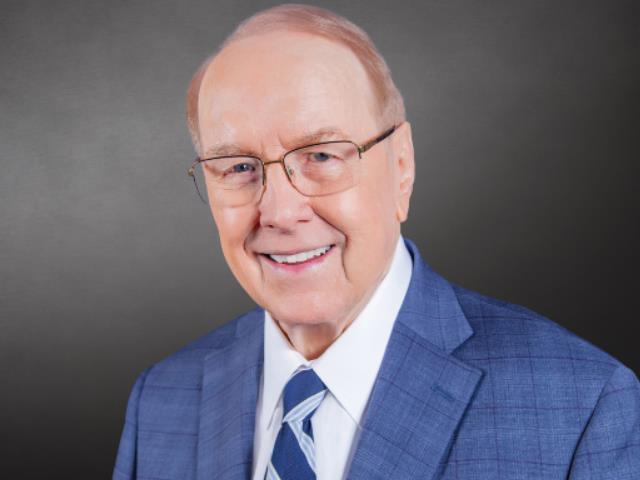
The Bible is full of blended families, and their struggles look a lot like ours. On today’s edition of Family Talk, Roger Marsh continues his conversation with Laura Petherbridge about her book, Stepfamilies of the Bible. She draws on stories like Joseph and his brothers to reveal the timeless wisdom that helps stepfamilies heal, set healthy boundaries, and thrive.
Dr. James Dobson: You're listening to Family Talk, the radio broadcasting division of the James Dobson Family Institute. I am James Dobson, and I'm so pleased that you've joined us today.
Roger Marsh: Welcome to Family Talk, the broadcast ministry of the Dr. James Dobson Family Institute. I'm Roger Marsh. Nearly two out of every three Americans today have a stepfamily relative. That's a lot of people navigating a road that isn't always easy and often doesn't come with a map. On the last edition of Dr. James Dobson's Family Talk, author and speaker Laura Petherbridge shared her own journey from a child of divorce to being a stepmom herself, to eventually becoming one of the most trusted voices on the subject of blended family life. On today's edition of Family Talk, she and I will dig deeper into the pages of Scripture, where stepfamilies show up more often than you might expect. Laura Petherbridge, welcome back to Dr. James Dobson's Family Talk for part two of our conversation on your most recent book called *Stepfamilies of the Bible: Timeless Wisdom for Blended Families*. Laura, it's good to have you back with us again.
Laura Petherbridge: It's wonderful to be here. Thanks for asking.
Roger Marsh: One of the best-known stories in the Old Testament of a blended family is one we don't think about as a blended family, and that's Joseph. He gets two whole chapters in this book because there's bitterness, resentment, sibling rivalry, and half-siblings. Talk about what we can learn from him. God had an amazing plan for him, more amazing than for his brothers. They were counted as the rest of you together make up twelve tribes of Israel. Talk about how he handled it, how his father handled it, and how that same scenario plays out in real-life situations.
Laura Petherbridge: I really could have written the entire book around Joseph because almost every emotion in the book is experienced by the dad, the mother, Joseph and his brother Benjamin, and the half-brothers. Every mistake that stepfamilies make is probably exemplified there. Let's show favoritism to my son with the second wife and make the other brothers angry. Did I do that? Yes. The babies he has with Rachel—he loves Rachel. These are the two kids he has with Rachel, and Dad is showing them favoritism, particularly Joseph. It's very common. It's what we would call today an "ours" baby. Yours, mine, and ours. This is the child that the couple comes together with. They're happy now in the second marriage, as we would call it today, and they have a baby. That's Joseph. And the other brothers and sisters hate him. They're like, "Get this kid out of here." Parents don't want to hear this, but it's very common for a half-brother or sister to not really like the baby that Dad and Stepmom have together because they have formed their own family. I'm outside of that. I'm with the ex-wife; the ex-wife is my mother. That pushes me outside that circle, and I don't like it. I resent it. It feels like I lost my father, and I hate this little kid they just had together. We don't like talking about that. We think adding an "ours" baby is going to make everybody connect, and sometimes it does. But if Dad is showing tremendous favoritism, or once Stepmom has a baby of her own and acts differently, it can cause real tension in the home. Just like we see in Joseph, theirs goes to the extreme where they want to kill him.
Roger Marsh: Literally. They take those steps to put his life in peril so that maybe he isn't dead, but we can't find him. It does seem like an extreme exaggeration, but I wonder how many couples, when they find themselves in a second or third marriage situation, are having that conversation about wanting to continue their family. Do couples think that way when they're remarrying?
Laura Petherbridge: They do. Definitely. It's something that should be discussed way before you say, "I do," because if one wants to add them and the other does not, that can be a disaster. The other thing that I've seen happen many times is it's usually Dad that doesn't want to add more children. Either they agree both of them don't want to add more children, or it's the dad that doesn't want to. He feels like, "My kids have been through enough. I barely get to see them anyway. Adding another baby, I could lose my kids." So that's usually the dynamic that's the most common. What I often see happen is while they're dating, Dad will say, "Okay, we can add another baby." Then they get married and he sees that his kids are not doing well. They are not adjusting to this well. Then he goes, "I've changed my mind. This is already too complicated. Sorry, I don't mean to hurt you, but I've got to pull the pull the plug on that idea because this is going to make my kids really unhappy."
Roger Marsh: That's a common thought for dads, and yet I wonder what Mom does because you've talked to a lot of moms who are remarrying and saying, "No, I love this man, I'm going to get it right this time," or "I miss my first husband, he passed away, and I really want to solidify our family." I would imagine the emotional pull to bring an "ours" baby into a step-relationship is much stronger for a woman.
Laura Petherbridge: It has tremendous implications because the woman views it as, "Now you have solidified." Women are much more cantankerous against the ex or the former, even if she's died, than men are. Men are not nearly as competitive with the biological dad as women are. Women struggle with this more. They still feel in competition with her. They still can feel jealous of her. When's the last time you heard a guy say, "Did you see how short his shorts were when he came to pick up the kids?"
Roger Marsh: I'm laughing because that just sounds ridiculous to me, but I understand that guys don't do that.
Laura Petherbridge: But you can hear a stepmom saying that about an ex when she comes to pick up the kids. And I'm throwing my sisters under the bus here. I get that, and I understand some of the why, because sometimes hubby is giving in to whatever she wants, his ex-wife, just to keep the peace. The guy just wants to keep the peace. And she views that as him favoring his ex. So the dynamic between the two wives is very different than usually the dynamic between the two husbands. And so that is where some of that tension comes from, and it causes big-time explosions. Often the woman feels, "If I add a baby to this dynamic, that will make him mine. It will keep him from feeling like he only has children with his first wife." And the other thing for a woman—totally different for a woman than for a man—is she missed out on being the first to give him a baby. Women have that in them. He got to experience all of that with his first wife, and I never got that with this man who's the love of my life. I didn't get to experience the pregnancy, the delivery room, the first steps—all of these precious moments that a woman cherishes in her heart, she wants to have them with her husband. So this is often what drives the adding of an "ours" baby, which is wonderful. I'm not saying they shouldn't do it. I'm saying you need to be careful that you think through, and Joseph is a classic example of the numerous things that can happen when you add an ours baby. Just be prepared for them.
Roger Marsh: You'll never read the book of Genesis the same way after reading Laura Petherbridge's book called *Stepfamilies of the Bible: Timeless Wisdom for Blended Families*, which we have up at drjamesdobson.org because of that very simple reasoning that you're talking about. These are emotions; we're people created in God's image. Even though the culture has changed a lot, our societal interactions, especially between men and women, husbands and wives, moms and dads, hasn't changed all that much. Dr. Dobson wrote a landmark book years ago—all of his books are landmark books when you think about it—but especially *Love Must Be Tough*. I think about the marriage relationship, and I'm sure there are a lot of blended families who have benefited from that as well. When you look at some of these stepfamily situations in Scripture that you write about in your new book, talk about how tough love can bring that about in terms of saying God has a plan for us. Our family is together. Whether you're David, who couldn't keep his eyes on his own page when it came to women, there are so many different examples in Scripture of situations that get botched for whatever reason, and yet we have this assurance in Scripture that God can work all things together for good. Talk about maybe some of those first steps if someone is listening to this conversation right now and saying, "All right, our blended family isn't blending so well. What are some steps we can take to make it blend better?"
Laura Petherbridge: The number one thing I hear primarily from the stepmom, but even some stepdads will say this to me, is: "My spouse refuses to tell their child no. My spouse refuses to set a boundary. They refuse to allow their child to receive a consequence, even if they threaten." "If you do blank, you're going to lose your phone," and they never follow through. They make the threat or they get that it's not a good idea for the kid to do this, or even that it's dangerous for the child to do this, but they don't have the backbone—in the stepparent's mind, that's what it is—they don't have the backbone to follow through and allow their child to suffer a consequence when they make a poor choice. It is the number one reason why stepfamilies fail because the parent and the stepparent are looking at this child through different lenses. The parent is looking at the child through the lens of love: "I don't want to hurt them, I don't want them to be mad at me, I don't want them to not come over and visit me, it's going to make my ex mad." They just want to keep peace. The stepparent is going, "How is this child ever going to be responsible and a good person and a good Christian if you don't allow them to suffer any pain when they do something wrong? You're being a wimp. You are just letting them get away with murder, and this is not love." So they're each looking at this child through a completely different lens. The parent and the stepparent then turn on each other because, "You're not listening to me. You're not respecting me." This turns into the biggest battle in a stepfamily. It's not there in a biological family because you each brought the child into this together. You're both biologically connected. Even in an adoption, the mother and the father went together and got this child. They're on the same page. So that is without a doubt the biggest battle stepfamilies face, and that is whether the kids are young or even adults.
Roger Marsh: I would imagine this would play out in a different way but the same style if there's a widow situation and they're remarrying in their 60s. Kids are in their 30s. You talked about that kind of family system that had been established. Maybe Stepmom now is looking at her adult children and saying, "Wait, why are we doing this?" and asking the question, and you're saying, "Because we always do it like this." We always have, and Dad hears this word from Mom and says, "I don't want to mess this up because these are my kids and this is what we've always done." The kids get resentful. They've got better vocabularies and deeper pocketbooks now, so they can act a little differently whereas the young child is in there going, "I don't want to lose my iPad."
Laura Petherbridge: It's so hard. The parent thinks the stepparent is being too rigid, and the stepparent thinks the parent is being too lenient. Now it's affecting our marriage. Now it's gone from a parenting problem to a you-and-I problem. I always try to encourage people: if you have not watched your fiancé parent as a single parent, and you don't agree with how they're parenting as a single parent, it is a very bad idea to enter this marriage until that changes.
Roger Marsh: That's a very eye-opening statement from Laura Petherbridge today here on Dr. James Dobson's Family Talk. We're discussing her brand new book called *Stepfamilies of the Bible: Timeless Wisdom for Blended Families*. We've got a link for the book up at drjamesdobson.org. Laura, I would be remiss if we didn't—and I'm glad you brought this up in your new book—the fact that the Lord Himself grew up in what we would call a step or blended family situation. Obviously, the conception was a little bit different than what's happening here, but Mary and Joseph had a family, and Jesus had siblings and step-siblings and that type of thing too. Talk about why it's important for us as Christians to look at that dynamic and, without passing any kind of judgment, just saying, "What can I learn from this? What did you learn in your research from studying the interpersonal relationships of Jesus and his siblings or half-siblings as the case may be?"
Laura Petherbridge: I've been a Christian for 43 years. I was an adult when I gave my life to Christ. So I've been listening to the Christmas story and the life of Jesus for a while. I was shocked at how much I learned about Jesus and his family while asking the Holy Spirit to reveal to me what it was like for Jesus and his half-siblings. Of course, we all tease about: can you imagine having Jesus as your half-brother or half-sister? How would you compete with that? Did Mary have trouble not favoring him because he was perfect? We can go there with the jokes. But the thing that hit me the most was none of his half-siblings are at the foot of the cross. Not one. One of the seven words from the cross is Jesus looking at John and saying, "Behold your mother." Not to his half-siblings. "Here's Mom, take care of her." In that day, a woman was property. She had no way of earning a living or any of that. So he's got to give her to someone because he's the oldest son. He's got to hand his mother off to someone or there won't be any way for her to survive. So he gives her to John, the youngest of them all. At least that's how we're led to believe. And not one of his half-brothers or sisters was there. Could be that the women weren't mentioned, that's possible because sometimes women don't get mentioned, but definitely one of his half-brothers would have been mentioned. In the worst moment of his life, I weeped. There were two times I weeped the hardest while writing this book. It was that scene where Jesus is on the cross, being nailed to the cross, rejected, mocked, ridiculed, in excruciating pain, and not one of his half-siblings is there. After all of these years of doing stepfamily ministry and watching people come to me weeping, "My stepchild doesn't love me even after I've raised them," "My stepbrother doesn't want anything to do with me," "My half-brother has totally kicked me out of his life," and watching people weep over that, I never made the connection that Jesus lived that. Jesus experienced that. He knows what it was to be completely rejected by his own stepfamily. I have a lot of moms that get mad that the step-siblings won't embrace the ours baby. She has a baby, she thinks everybody is going to love it, and then when these kids are like, "I want nothing to do with that kid. You guys went ahead and had a baby, don't expect me to be part of that," she gets so hurt. "Why won't they embrace my baby?" To watch Jesus experience that kind of rejection and pain brought me to my knees. The other experience was Joseph when he has to go to the other room and wail. When it says that the servants are hearing him wailing, it's a guttural, it's that cry where if you've lived very long you've had one of those at least where it's so much pain you're crying so deeply that it's almost animalistic sounds coming out of you. And that's the way Joseph was crying. So those two really brought me to my knees.
Roger Marsh: With the Joseph part, you think about what he went through and what he experienced. He persevered and God moved him in these different areas, and of course, the only way for him to get to where he was going to be was to go through what he went through. But then to come face to face with his brothers and have so much love for them, and at the same time, you realize that he's only human and he's staring face to face with the guys who literally wanted to kill him because of who he was, even though they're brothers. It really is a beautiful moment. Then I think about Jesus, another one of the last words: "My God, my God, why have you forsaken me? Why have you forgotten me?" I always think of that between the Father and Son because of Jesus taking on our sin. I never think of it of the fact that his mother is down there at the foot of the cross, but no one else from his family is. That's breathtaking. What's your hope, Laura Petherbridge? This book is outstanding: *Stepfamilies of the Bible: Timeless Wisdom for Blended Families*. For a family who is going through this or maybe for someone who has an adult child who's going through a divorce and a remarriage, what's your hope for this book?
Laura Petherbridge: If I'm being honest, the real hope, the prayer, would be that pastors and church leaders would finally open up to helping blended families, stepfamilies, and recognize that the dynamics in a stepfamily are totally different than a biological family. Putting these couples in a marriage class that is designed for first-time marriages is not only not helping them, it's often causing more pain or shame. You can't take them to all these marriage classes, whether it be phenomenal things like *Love Languages* or any of Dr. Dobson's stuff, until you take them into surgery and explain how the dynamics, the fractures from the former marriage, have been carried in like a corpse into the second marriage. That has to be healed before you can start walking or skipping or jumping or dancing. The skipping and jumping and dancing are the marriage materials. But if I could get pastors and church leaders and denominations—and my prayer is I think the reason God wouldn't let me go is because this book is about biblical. So maybe it feels a little safer to use these Old Testament families as the illustration, as the foundation to teach. God loved these stepfamilies. He loves your stepfamily. You don't have to go hide in the corner. Maybe you've got some forgiveness and repentance to do about your former marriage. That's between you and God; that's none of my business. My business is to help you survive and thrive and be a godly example for your kids in your current marriage. So if I'm being honest, yes, I want individuals to buy it. Yes, I want people who are in stepfamilies or connected to a stepfamily to learn and grow. But my peak prayer would be: "Dear pastor, dear church leader, hear me. You have an untapped mission field in your backyard that if you would teach stepfamilies how to thrive and deal with the big issues that they're facing, help the children in these families and stop pretending they're like a biological family, if you would address their pain, these families could thrive." A new statistic just came out from Pew Research: 63 percent of Americans have a stepfamily relative.
Roger Marsh: Wow. Two out of three. Incredible.
Laura Petherbridge: And the church has nothing for them.
Roger Marsh: Well, they do now. Laura Petherbridge's outstanding new book called *Stepfamilies of the Bible: Timeless Wisdom for Blended Families*. This is the resource that your family needs, it's the resource your church needs, and we couldn't recommend it more highly. Laura, thank you for the work that you've done and in accepting the challenge and the ministry that God has placed you in. It really is awesome the work that you've done and continue to do. Thank you for being obedient and diligent in your faithfulness to that calling. And thank you for being with us today here on Dr. James Dobson's Family Talk.
Laura Petherbridge: Thank you for asking. I appreciate it.
Roger Marsh: You've been listening to Dr. James Dobson's Family Talk, and we just featured the conclusion of my conversation with Laura Petherbridge about her most recent book called *Stepfamilies of the Bible: Timeless Wisdom for Blended Families*. If you missed part one or you want to hear today's program again to share it with a friend or family member, you'll find both online at drjamesdobson.org. You'll also find information about the book there when you click on as well. Here at the Dr. James Dobson Family Institute, we are committed to introducing people to the Gospel of Jesus Christ, to defending the sanctity of human life, to standing up for religious freedom, and championing righteousness in the culture. Join the mission today with a donation of any amount. You can give securely online at jdfi.org. You can also call a member of our constituent care team. That number is 877-732-6825. I'm Roger Marsh, and on behalf of all of us here at Family Talk and the Dr. James Dobson Family Institute, thanks so much for joining us today. Be sure to join us again next time right here for another edition of Dr. James Dobson's Family Talk, the voice you trust for the family you love.
Dr. James Dobson: This has been a presentation of the Dr. James Dobson Family Institute. This is Roger Marsh from Family Talk. The freedoms we enjoy today were hard-won by those who came before us, and it's up to all of us to protect them. Here at the Dr. James Dobson Family Institute, we're committed to defending religious liberty and the timeless values that shaped our nation. Through our broadcasts, articles, and resources, we equip you to stand for godly principles in your own community. So thank you for partnering with us to protect faith, family, and freedom for future generations.
Related Episodes
Montell and Kristin Jordan: Their Journey of Faith, Music, and Cancer, Part 1
Thursday, September 17
Stepfamilies of the Bible, Part 1
Tuesday, September 15
Protecting Your Middle Schooler During Those Turbulent Years
Monday, September 14
Related Videos

About Family Talk
Family Talk is a Christian non-profit organization located in Colorado Springs, Colorado. Founded in 2010 by Dr. James Dobson, the ministry promotes and teaches biblical principles that support marriage, family, and child-development. Since its inception, Family Talk has served millions of families with broadcasts, monthly newsletters, feature articles, videos, blogs, books and other resources available on demand via its website, mobile apps, and social media platforms.
The Dr. James Dobson Family Institute (JDFI) is a Christian non-profit ministry located in Colorado Springs, Colorado. Founded initially as Family Talk in 2010 by Dr. James Dobson, the organization promotes and teaches biblical principles that support marriage, family, and child development. Since its inception, Family Talk has served families with broadcasts, monthly newsletters, feature articles, videos, blogs, books, and other resources available on demand via their website, mobile apps, and social media platforms. In 2017, the ministry rebranded under JDFI to expand its four core ministry divisions consisting of the Family Talk radio broadcast, the Dobson Policy and Education Centers, and the Dobson Digital Library.
Dr. Dobson's flagship broadcast called, “Dr. James Dobson’s Family Talk," is aired on more than 1,500 terrestrial radio outlets and numerous digital channels that reach millions each month.
About Dr. James Dobson
Dr. James Dobson is the Founder Chairman of the James Dobson Family Institute, a nonprofit organization that produces his radio program, “Dr. James Dobson's Family Talk.” He has an earned Ph.D. from the University of Southern California and holds 18 honorary doctoral degrees. He is the author of more than 70 books dedicated to the preservation of the family including, The New Dare to Discipline, Love for a Lifetime, Life on the Edge, Love Must Be Tough, The New Strong-Willed Child, When God Doesn't Make Sense, Bringing Up Boys, Bringing Up Girls, and, most recently, Your Legacy: The Greatest Gift. Dr. Dobson served as an associate clinical professor of pediatrics at the University of Southern California School of Medicine for 14 years and on the attending staff of Children’s Hospital of Los Angeles for 17 years in the divisions of Child Development and Medical Genetics. He has advised five U.S. presidents and served on eight national commissions. Dr. Dobson has been married to Shirley for 64 years, and they have two grown children, Danae and Ryan, and two grandchildren.
Contact Family Talk with Dr. James Dobson
540 Elkton Drive
Suite 201
Colorado Springs, CO 80907
Phone Number
877.732.6825