How to Help Others Over Life's Humps, Part 2
Ministries > Living on the Edge with Chip Ingram
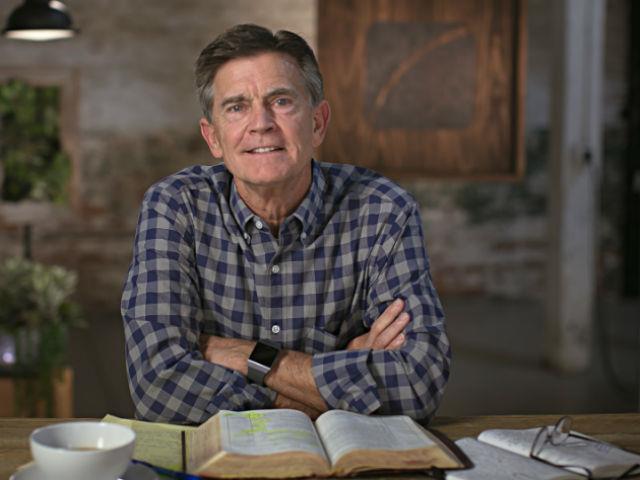
Need a lift today? Join Chip as he shares how giving and receiving encouragement will brighten your day, and perhaps change your life.
Resources
Connect
- 888-333-6003
- Website
- Chip Ingram App
- YouTube
Partner With Us
- Donate Online
- 888-333-6003
Resources Mentioned in Teaching
- BOOK - The One Minute Manager by Ken Blanchard
- BOOK - Raving Fans by Ken Blanchard
References
Chip Ingram: Today on Living on the Edge with Chip Ingram, would you like to motivate someone today? I mean, motivate them right out of their socks? You're going to have to be sneaky, but here's what I want you to do. Today, I'm going to teach you how to catch someone doing something right and then bless them.
Dave Dravecky: I'm Dave Dravecky, and today on Living on the Edge, we're in a series called Building Authentic Community. How to lift up those you love. Chip Ingram will show us two ways the apostle Paul modeled the power of an encouraging word, confidence in someone's faith, and confirmation of the impact their life is making. And from Chip's own experience, we'll see just how effective this motivation can be and how even just a few words from a mentor can shape the rest of someone's entire life. Well, now here's Chip with his Bible open to First Thessalonians chapter 1, for today's message titled, How to Help Others Over Life's Humps.
Chip Ingram: I think there's four clear things that the apostle Paul does to encourage people whose lives have lots of humps. They all have to do with speech. And what I'd like to do now is go through and study it with you. And briefly look at each of these four things out of these 10 verses. And we'll use them as our example about how we're going to talk to one another. We're going to learn how to communicate with our mouth in such a way that every person that you and me get around, we're going to encourage. So let's look at verse one. First of all, I think we need to learn to bestow a blessing. Did you notice how he started it? Paul and Sylvanus and Timothy to the church of the Thessalonians in God the Father and the Lord Jesus Christ. Now, notice what he says. That's the introduction. Grace to you and peace. The root word for grace is the word joy. It's God's blessing and goodness that comes apart from our merit. And we think of peace as the absence of conflict, but this word for peace means the wholeness of God, the Shalom of God. And so the very first thing he does, the first words out of his mouth are, hey, how are you doing? Are you hanging in there? You know, are you getting with the program? huh? What is it? He bestows a blessing. I want to encourage you this week, if you want to speak life into those that you love, bestow a blessing. But it doesn't stop there. Notice verse two and three. Paul's appreciation. He says, we give thanks to God always for all of you, making mention of you in our prayers. Constantly bearing in mind, notice this, your work of faith and labor of love and steadfastness of hope in our Lord Jesus Christ, in the presence of God our Father. Notice the structure here. First of all, he gives thanks. He lets them know, I'm praying and when I pray, you pop up on the screen. That's what he says. When I'm praying Thessalonians, you pop up on the screen. And it's none of this vague, God bless you, aren't you kind of nice people? I think of the specific things that I've seen in your life. He says, I thank God specifically for three things. Number one, he says, your work produced by faith. The word work here, we get our word energy or activity from. But that's not enough. He says, I thank God for your, for your work that is produced by your faith in Christ, but I also thank him for your labor of love. The word labor here prompted by love denotes extraordinary effort. It literally meant to cut, to toil. Ryrie says, it's toiling to the point of exhaustion out of affection for another person. How would you like someone to pray and thank God that when they look at your life, they see activity that is other centered because of your faith in Christ, and they see you with a self-sacrificial toil because you agape, love God and love other people. That'd be pretty encouraging, wouldn't it? Third thing he says though is, he says he also thanks God for their steadfastness of hope, or really it's, uh, uh, patience, or I like, the best translation is endurance. It means holding up or remaining under pressure. It has the idea of when things get hard, when everyone else cops out, you hang in there. It means to be aggressive, to be courageous, to not give up, to not fall into self-pity, you hang in there and keep on doing when you don't feel like keeping on doing, why? Because you're inspired by the certainty of hope. Christ is returning, God is good, God is sovereign. And then notice the last phrase, in the presence, it literally means before the face of our God and Father. He expresses his appreciation for who they are and for what they've done. Do you do that? Boy, I think about this as a father. I hope you have a different personality than mine. I really do. My personality is fairly analytical, and when I see something, the thing that pops out immediately is what's wrong, or how it can be improved. You know, if you're a kid, you know what you hear a lot of? Oh yeah, that's real good except for or yeah, but, you know. Do you know how demotivating that is? You see, people who are constantly expressing appreciation, Thanksgiving. Boy, those are people that motivate and lift up and build up. You know what Paul basically did? He said, this is what you're doing right. And I thank God for it. And I'm not being vague and I'm not blowing smoke. I'm talking about these three specific things. And by the way, it's happening, you want some encouragement? It's happening before the very face of God and he sees what's going on too. Boy, would that be encouraging? Let me give you a practical application. Ken Blanchard, he's the author of, uh, The One Minute Manager and a number of other books. In fact, Raving Fans is one that would, uh, really flow right out of this passage. And he says in that, tell people what they're doing right. Wander around and catch people doing stuff right, and then praise them. And then he says, make it progressive. Don't wait until they have it perfect. When you see people making little inclinations toward doing better, praise them and appreciate them for the progress they're making. Some of us are waiting till people get it completely right. They're never going to get it completely right because they're a lot like us. Right? How are you doing expressing your appreciation? Have you told your parents that lately? Have you told fellow workers, people that you do ministry with lately? How much you really appreciate? And by the way, jot down under that, be specific, not vague. Second, be objective, not just feelings. Specific and objective things they've done, not just, oh, I feel so good, I get to be your dad or I feel so good, we get to work together. That's nice. But be specific, be objective, and then include some biblical truth. Notice how the apostle Paul did that? I thank God for these three things. You want some truth to go along with that? All these things are happening right before God. He sees it too. You can speak life into people's lives if you get in the habit of bestowing a blessing, number one, and number two, expressing your appreciation for who they are and for what they do and what they've done. Third, though, Paul has confidence in their faith. Look at verse four. Knowing, brethren, beloved by God, his choice of you. By the way, before we go on, this word knowing is very interesting. You know, he's thanked God for him. Then he says, knowing. Two words in the New Testament for knowing. One, a knowledge that comes by way of experience, the other, an objective knowledge, it's just fact. You kind of like gravity. You can believe in it, not believe in it, jump off a five-story building. Same effect. That's this word. He says, I know for a fact. What's he know for a fact? Brethren, notice that word of love, beloved by God. Special word only used of kings in the Old Testament. His choice of you. You know, I bet these guys were doubting. I bet there was days they got up and they were just, it just kept coming at him and coming at him and coming at him and they're thinking, you know, maybe I'm not really in the family. The apostle Paul says, I'll tell you something. I know for a fact that you are a part of God's family, that your sins are forgiven, that the Spirit of God dwells in you, that your eternal resting place will be with Jesus in heaven, and all the power in heaven and earth is available for you day by day now. I'm certain of his choice of you. Then you say, well, how can Paul say that? Well, he tells us how he can say that. Look at verse five. For our gospel did not come to you in word only. It just wasn't words. But also in power and in the Holy Spirit and with full conviction, just as you know what kind of men we proved for your sake to be. The fact that the Thessalonians were a part of God's family is shown by the character of the message given and by the sincere acceptance of it received and the transformed lives that followed. Look at the next line. You also became imitators. We get our word mimic from this. You became mimics, exact reproduction of the originals. You also became imitators of us and of the Lord. How did they imitate the Lord? Having received the word in much tribulation with joy of the Holy Spirit. Boy, I'll tell you what, you talk about a shot in the arm. You talk about something that quiets doubts in your heart. He says, I know for certain because when I was preaching, there was not just word, there was power, and not only was there power, but God authenticated in your hearts and in your lives, and then it's been evidenced by how you've lived. You're in. It's clear. Can I encourage you to verbalize your confidence in other people's faith? You know, down deep, everyone thinks someone else is way more spiritual than them. If you're married, you're sure your wife is. And most of us are right. But no matter who you rub up against, the fact of the matter, day in and day out, we honestly believe in our heart that all the people around us, they must know God more than we do. They pray more or better or God listens to them more than we do. And you know, we have a real confidence problem when it really comes with walking with God. One of the reasons is, we don't verbalize to one another what we see in one another's lives. Somehow it makes us feel uncomfortable, doesn't it? Because that that's more than just sort of casual conversation. You know, you don't do stuff like, uh, hey, you want to go out to lunch? Yeah, hey, these tacos are good? Yeah, tacos are great. And hot sauce? Hey, I love the hot sauce. It's really good here. By the way, it's really evident that the power of Jesus Christ is at work in your life. And I just wanted to share that. Would you like another taco? I mean, it's really it's really kind of a a bit you kind of go to that next level with people to say to them. You know, the evidence of the working of the Spirit of God in your life is a deep encouragement to me. When's the last time you told someone how real and how evident the working of God in them is to you? Because you know what we are? We're little mirrors to one another, and we need that.
Dave Dravecky: You're listening to Living on the Edge with Chip Ingram, and we'll get back to today's message in just a moment. But first, did you know you can actually watch Chip teach, not just hear him? Just get on YouTube, search for Chip Ingram, and hit subscribe to his channel. There you'll find full video versions of his Bible teachings, along with entire series on marriage, parenting, leadership, and a whole lot more, ready to watch whenever it works for your schedule. All right, now back to our message.
Chip Ingram: There was a fellow named Don Geiger, and he was the pastor of the church in Dallas. We moved to Dallas and Theresa and I moved there with two kids and a year or so later, had our third and went to seminary there and and we went to this church of about 1,800 or 2,000 people and we were just overwhelmed. Except really, we thought, oh, it's a big church and we'll visit, but we can't go here because, you know, big churches are big and impersonal. And the first week someone introduced themselves and took us home for lunch and the next week they met us and took us home for Sunday night. And what we realized is that it's not the size of the group, it's how connected you are. They had things for our kids that were just phenomenal. And Don Geiger became one of my mentors and heroes and boy, I, he didn't have a lot of time and had a lot of demands. And I'd make a lunch appointment and wait two months to get to see him. And very humble guy, great guy. I did an internship there at that church a little bit later. But he more than any other person, as I was praying this through, has verbalized his confidence in my faith in the areas where I struggled. I was out at the the little church in Texas and and boy, you know, my first everything happened there. My first problem in this area, my first problem in that area, my first problem and I'd call Don. I'd call Don, and he'd take the call and, hey, Don, you know, what do I do? What do I do? You know, and uh, and he would ask some questions, force me to think it through on my own. And I I always remember this phrase. You're a good man, Chip. You're a good man, Chip. And then he'd follow it by, Chip, you got faith. God will show you what to do. And then somewhere in that conversation, he'd always say something like, trust your instincts. God's Spirit will show you. He put you there for a reason and he'll show you whatever you need. And you know, every time I would talk to that man, he always was a mirror that reflected, God was at work when I couldn't see it myself. I didn't think I had what it took to make the decision. I didn't think I had what it took to go to the next level spiritually. What Jesus is saying to you tonight, will you please communicate what you see in brothers and sisters in Christ and confirm and verbalize your confidence in their faith so they can grasp that they really have it? And you will do them a service that is incredible. Fourth thing the apostle Paul does is he affirms not only their faith, but the impact of their life. Look at verse seven. He said, they received the word in much tribulation with joy of the Holy Spirit, verse six, so that you became an example or a model to all the believers in Macedonia and Achaia. Why? For the word of the Lord has sounded forth from you, not only in Macedonia and Achaia, but also in every place your faith toward God has gone forth so that we have no need to say anything. For they, remember it's a cultural center, remember there's all these ships coming in, there's people traveling, 200,000 people. It's a place and they come in and they hear about the faith and these people's lives are dynamically changed and everyone is going out and the word of God sounded, it's in the perfect tense. It's the it's the picture of a trumpet blow or an echo and the idea is the echoes range is going farther and farther and farther. He says, you received the God of eternity in your heart in the midst of a culture where it was tough and you've lived faithfully and you don't even have to tell us what's happened. The impact of your life is so phenomenal. People are coming to us and telling us how our visit went and what's happening in your life. Verse nine, for they themselves report about us what kind of a reception we had with you. And notice their testimony. Not some ooey gooey, well, they had a religious experience. Here's their testimony. How you turned to God from idols. Why? To serve a living and true God. And to wait for his son from heaven, whom he raised from the dead, that is Jesus, who delivers us from the wrath to come. Speaking of judgment. He affirms your life has impact. We always tend to focus on what we're not doing, or we need to do more of this or more of that. The apostle Paul bestows a blessing. The apostle Paul expresses appreciation. The apostle Paul verbalizes his confidence and now he affirms the impact of their life. The single most encouraging thing is those Thessalonians would know that God had actually used them. You know why? Because those of you involved in ministry, there's a great price tag and you're paying a great price tag. And you get opposition and you're putting in tons of hours and you're loving kids and college students and junior highers and you're running tech equipment and you're here early and you're here late and you're doing evangelism out here and you're doing home groups and community groups and Bible study groups and you're giving your life away and the big question that nags you in the back of your mind is, is it for anything? Does it really matter? And we need, oh, we need to communicate to one another the impact of one another's lives. You can't imagine that gift. And you probably are unaware. I get lots of of great encouragement and feedback. Give it to other people. Give it to the people who aren't visible. They need to know that their life is making a difference. By way of conclusion, I think we grossly underestimate the awesome power of an affirming word. We just grossly underestimate it. Secondly, we grossly underestimate how deeply those around us are hurting. Quote, loneliness. It seems like it's the hardest issue of human existence. Well, let's not hear the word without responding. What I would like to ask you now, who needs an affirming word from you today? Who do you know that has some humps to go over that need you to write them a note and tell them what they're doing right? Be specific, be objective, and add an element of God's truth, and we will pray that God will show us what to do and whom to write. Father, thank you for the power of your word. We believe that you will bring to our mind a name of a person that needs a word of encouragement. Help us to write just a brief, encouraging, specific word of appreciation or affirmation that would let someone know we see you working in them. In Jesus' name. Amen.
Dave Dravecky: You're listening to Living on the Edge with Chip Ingram. And a message titled, How to Help Others Over Life's Humps, part of our series, Building Authentic Community. You can go back and catch any part you might have missed or find even more teachings from Chip anytime by going to our website, livingontheedge.org. And if you'd like to hear these messages while you're out on the go or simply get them downloaded automatically, so you never miss a message, be sure to subscribe to the Living on the Edge podcast wherever you listen. Everything Chip talked about today, bestowing a blessing, expressing appreciation, believing in someone before they believe in themselves, it's really just love put into action, the very thing our whole series is built around. And that's exactly the subject of Chip Ingram's book, I Choose Love, How to Love Your Neighbor as Yourself. It challenges the idea that love is a feeling that just happens to you, showing instead that real lasting love is a decision you make, one act of kindness at a time. Be encouraged and equipped to better love the people right in front of you. Get your copy at a special price online at livingontheedge.org/offers. None of this reaches anyone without listeners who choose to stand behind it. For more than three decades, it's been partners like you who've kept this kind of
Related Episodes
How to Help Others Over Life's Humps, Part 1
Thursday, October 1
The Only Person I Can Change is Me, Part 2
Wednesday, September 30
The Only Person I Can Change is Me, Part 1
Tuesday, September 29
About Living on the Edge
Living on the Edge, a discipleship ministry and radio/television program of pastor and author Chip Ingram, is committed to providing everyday believers with tools that help them live like Christians. Each week, Chip will take you through God's Word for insight on topics like strengthening your marriage, understanding love and sex, raising children, and overcoming painful emotions. Today, a daily listening audience of more than one million people can hear Living on the Edge on over 1,100 radio and TV outlets across the United States and internationally.About Chip Ingram
Chip Ingram's passion is to help Christians really live like Christians. As a pastor, author, coach and teacher for more than twenty-five years, Chip has helped people around the world break out of spiritual ruts and live out God's purpose for their lives.
Chip is the author of eleven books and reaches more than one million people each week through online, radio and television outlets worldwide. Chip serves as CEO and Teaching Pastor of Living on the Edge, an international teaching and discipleship ministry. Chip and his wife, Theresa, have four children and twelve grandchildren.
Contact Living on the Edge with Chip Ingram
Mailing Address
Living on the Edge
PO Box 3007
Suwanee, GA 30024
Phone Number
(888) 333-6003